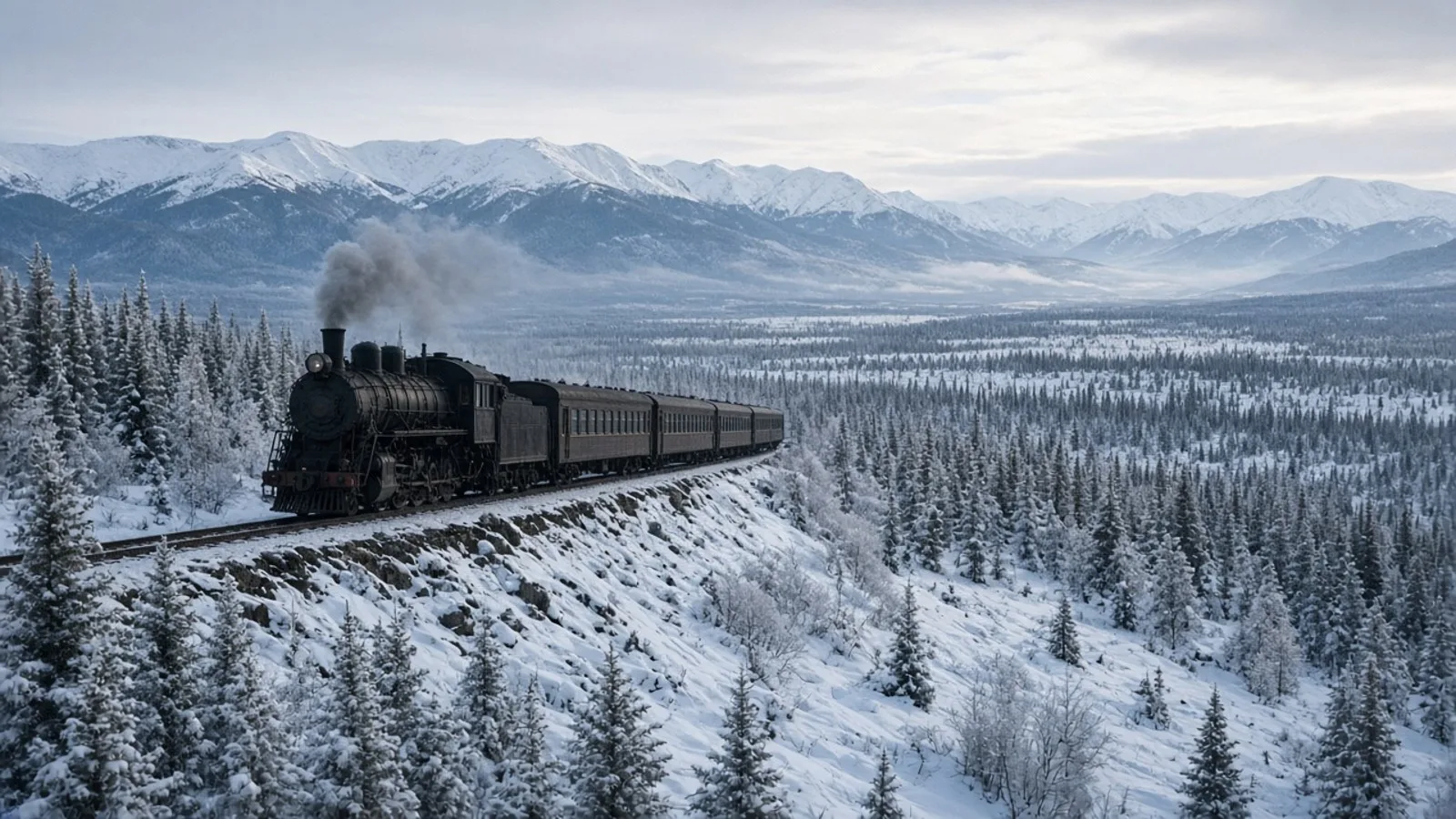
Moscow to Vladivostok: one of the world’s longest railway journeys. Built under the last tsars to bind Siberia to European Russia, the Trans-Siberian carried settlers, soldiers and revolution—and today carries tourists past Lake Baikal.
Building under the Tsars
Construction was formally launched in 1891. Terrain, rivers and climate made it brutal. The Circum-Baikal section was especially hard before later realignments. By the early twentieth century the main spine existed, then kept being upgraded.
Revolutionary backdrop: Europe’s alliance age in pre-1914 Europe.
The Route
Typical passenger spine: Moscow–Yekaterinburg–Novosibirsk–Irkutsk–Ulan-Ude–Khabarovsk–Vladivostok. Branch stories include the Trans-Mongolian and Trans-Manchurian lines popular with travellers.
War and Revolution
Critical in the Russo-Japanese War logistics. In the civil war after 1917, who held the railway often held Siberia. Soviet industrialisation used it as an east–west artery.
Rail comparisons: Nilgiri Mountain Railway, Pamban Bridge. Land corridors: Silk Road.
Tourism Today
Multi-day trains such as the Rossiya remain iconic. Schedules, classes and border rules change—verify before travel.
Final Thoughts
The Trans-Siberian is imperial infrastructure that outlived the empire—steel stitching across a continent.