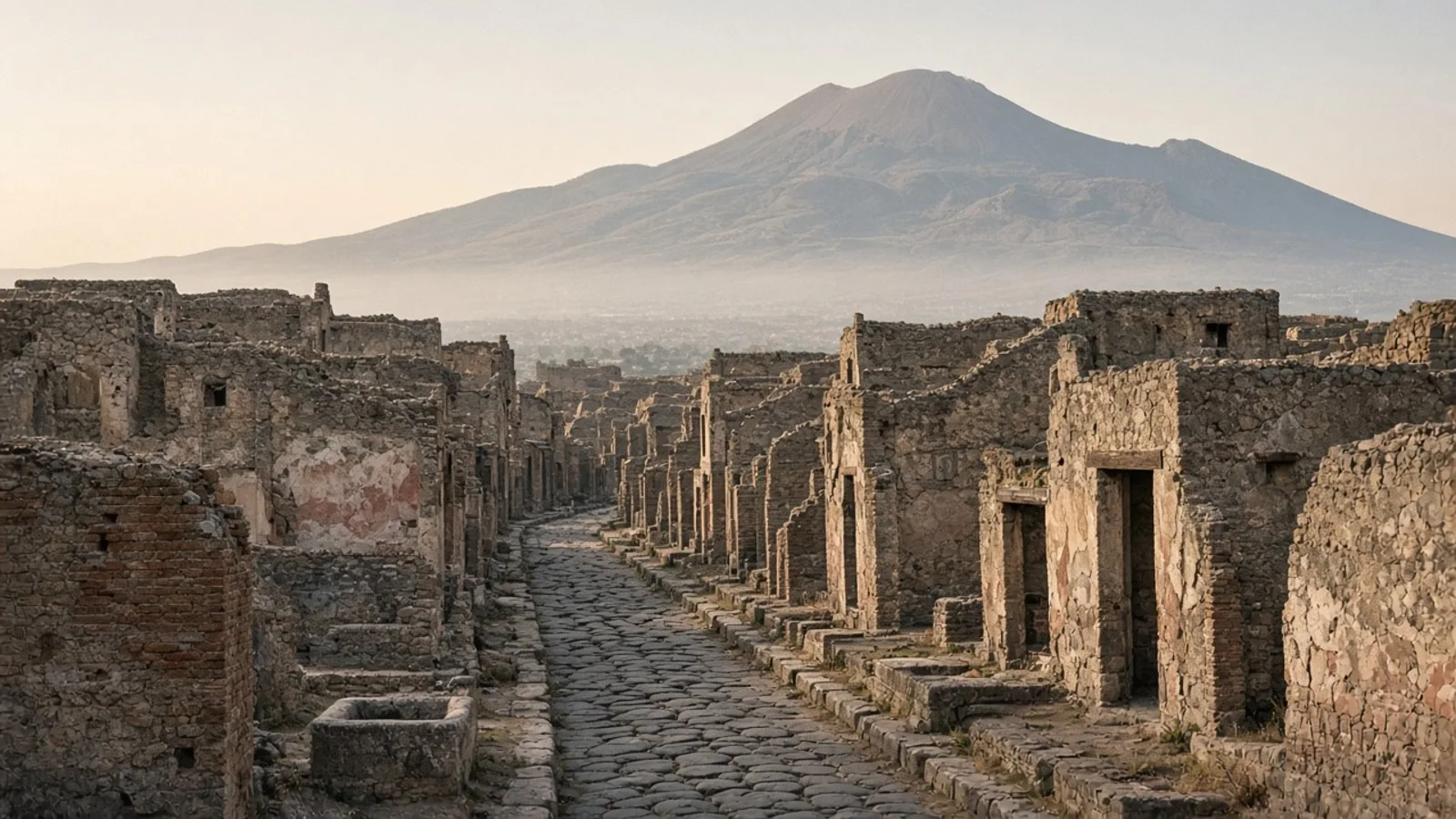
In 79 CE Mount Vesuvius buried Pompeii under ash and pyroclastic surges. Rediscovered centuries later, the city is a freeze-frame of Roman daily life. Death tolls and even the calendar date of the eruption remain debated at the margins.
Vesuvius, 79 CE
Tradition, via Pliny the Younger’s letters, gives 24 August. Some archaeological finds (heating charcoal, autumn fruit, a coin argument) favour an autumn date—often October. Treat the month as unsettled. Herculaneum and other towns also died. Causes of death include heat, ash asphyxia and collapsing roofs.
Death toll: estimates run to the low thousands for Pompeii alone; no precise census survives. Plaster casts preserve voids where bodies decayed.
Rediscovery
Systematic digging accelerated from 1748 under the Bourbons. Work continues; frescoes and streets still emerge. UNESCO World Heritage.
Ancient worlds: Machu Picchu. Disaster memory: Titanic, Kekova.
What the Ruins Show
Shops, baths, villas, election graffiti, mosaics—including the famous cave canem. Ordinary Rome, paused.
Tourism
Among the world’s busiest archaeological sites. Weathering and crowds force hard conservation choices.
Also: Suez.
Final Thoughts
Pompeii is not only a catastrophe site. It is the closest walkable draft of Roman street life we have.