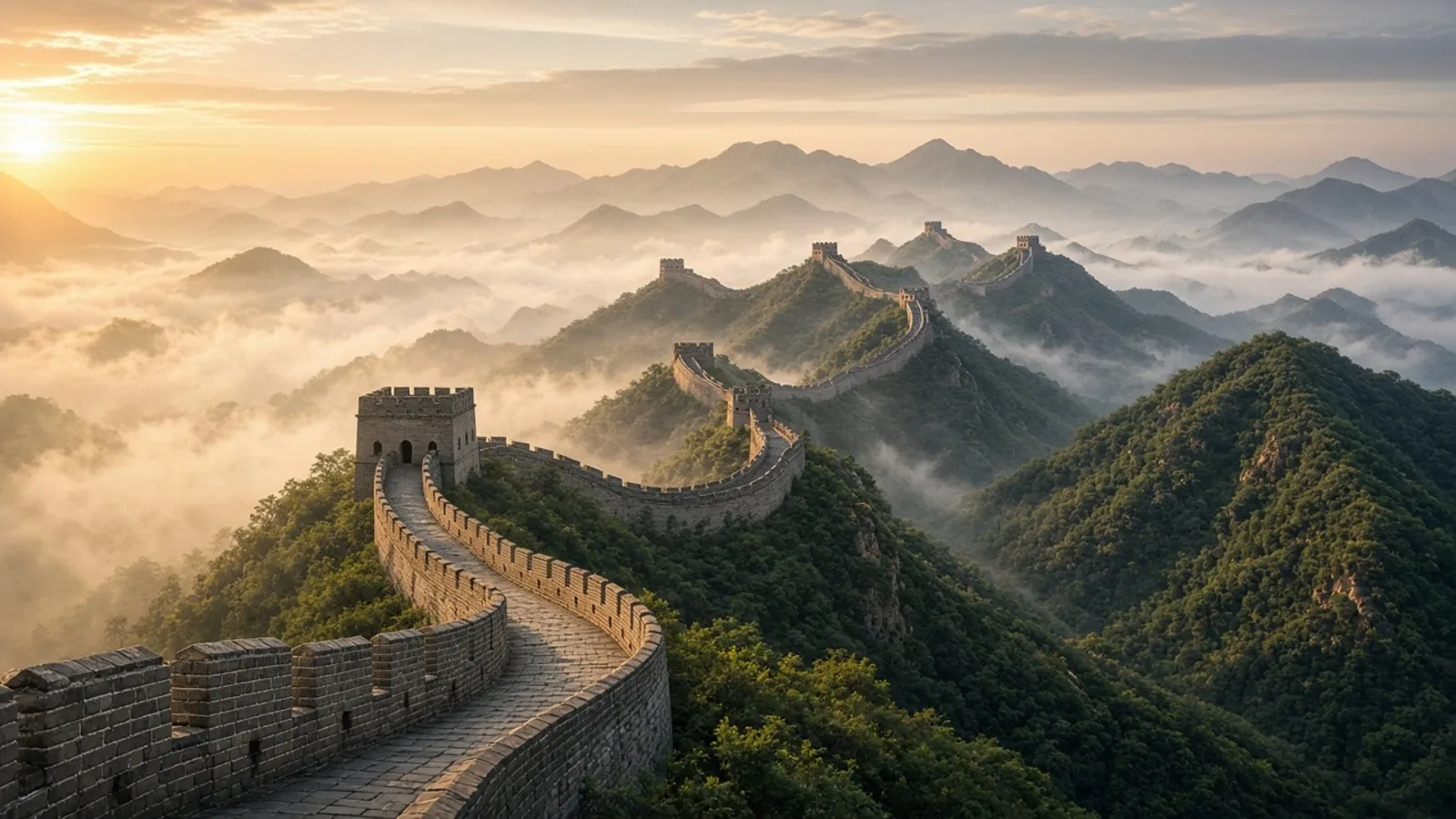
A stone dragon on China’s ridges—the Great Wall is not one wall from one reign. It is centuries of frontier walls, watchtowers and Ming brickwork tourists photograph today. This article covers why it was built, Qin-to-Ming phases, length myths, UNESCO and tourism.
Why Build It?
Northern frontiers faced steppe confederations. Walls slowed raids, channelled trade through gates, and projected imperial power. They were logistics lines as much as barriers—beacon towers, garrisons, roads.
Qin to Ming
Warring States walls predated empire. Qin Shi Huang (3rd century BCE) is traditionally credited with linking and extending them. Han and later dynasties repaired stretches. Most visited brick sections are Ming dynasty (14th–17th centuries). Calling “the Wall” a single Qin monument is a modern simplification.
Eurasian exchange context: Silk Road history. Ambition at altitude elsewhere: Everest 1953. Inca highland estate: Machu Picchu.
Length Myths vs Measurements
“Visible from the Moon” is false folklore; astronauts and NASA notes say naked-eye spotting from the Moon (or even low Earth orbit) is unreliable. Length depends on definition: Ming wall alone runs thousands of kilometres; adding older earthen traces yields larger Chinese survey totals from the 2000s. Treat headline numbers as definition-dependent.
UNESCO and Tourism
Inscribed 1987. Badaling and Mutianyu draw crowds; wilder sections suffer erosion and illegal climbing damage. Conservation is a running challenge.
Also: Suez, Everest 1953.
Key Facts
| Item | Note |
|---|---|
| Qin unification story | ~220s BCE tradition |
| Ming brick sections | Core of tourist image |
| UNESCO | 1987 |
| Moon myth | False |
Final Thoughts
The Wall’s meaning is labour and frontier politics, not a cartoon force-field. Measure it carefully; mythologise it less.