You can plan the perfect cheap trip and still lose a surprising amount of money to exchange rates, card fees and ATM charges. These costs rarely appear as one big bill; they leak out a few euros at a time. In Part 9 of Europe on a Budget, we show you how to pay smartly.
Euro and non-euro countries
Many EU countries use the euro, including France, Germany, Italy, Spain, Portugal, the Netherlands, Austria, Greece, Croatia and, since January 2026, Bulgaria. Montenegro and Kosovo also use the euro.
Others have their own currencies, including:
- United Kingdom (pound sterling)
- Switzerland (Swiss franc)
- Czechia (koruna)
- Poland (złoty)
- Hungary (forint)
- Romania (leu)
- Denmark, Sweden, Norway and Iceland (their own kronor/kroner)
- Serbia, Bosnia and Herzegovina, Albania, North Macedonia and Turkey
Check currencies before you go, and avoid exchanging large amounts of cash for countries where you will spend only a day.
Cards are king, mostly
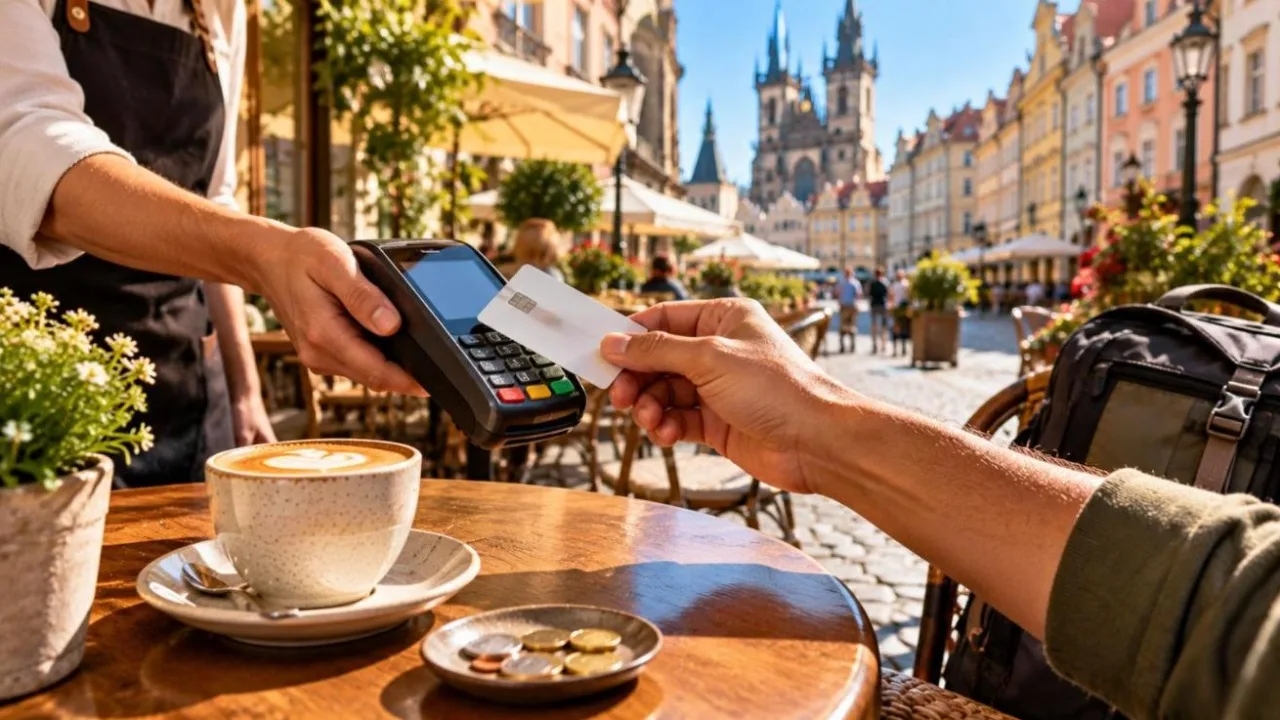
Contactless card payments are widely accepted across most of Europe, including on public transport in many cities. The Nordics are close to cashless. Cash is still useful in parts of Southern, Central and Eastern Europe and the Balkans, at small family businesses, markets, rural areas and for some city taxes.
Choose the right cards
- No foreign transaction fee: many standard cards add around 2 to 3% to every foreign purchase. Look for a credit or debit card that charges no foreign transaction fees.
- Multi-currency or travel cards: app-based accounts and travel cards let you hold or convert money at close-to-market rates. Check their fees and monthly limits.
- Carry two cards from different networks, such as Visa and Mastercard, and keep them in separate places.
- Tell your bank you are travelling if it requires that, and make sure your app and one-time passwords work abroad.
Always pay in local currency
When you pay by card or use an ATM abroad, you may be asked whether to pay in your home currency or the local currency. Choosing your home currency is called dynamic currency conversion (DCC). It feels convenient but usually comes with a poor exchange rate set by the merchant or ATM operator.
The rule: always choose the local currency (for example, euros in Italy or forints in Hungary). Let your card network or bank do the conversion.
Using ATMs wisely
- Prefer ATMs belonging to local banks, ideally inside or attached to a bank branch.
- Be cautious with standalone ATMs in tourist areas that charge high fees and push DCC.
- Withdraw larger amounts less often if your bank charges a fixed fee per withdrawal, while keeping safety in mind.
- Decline the conversion offer and choose to be charged in local currency.
- Cover your PIN and check for anything attached to the card slot.
Avoid airport and tourist-street exchange counters
Currency exchange booths at airports, stations and on main tourist streets often show attractive headline rates but add hidden commissions or poor rates. If you need cash on arrival, a bank ATM is usually better value.
How much cash to carry?
For most trips, a small amount of local cash for a day or two is enough: snacks, small cafés, tips, public toilets and markets. In cash-heavy countries, carry a bit more but keep it split between your wallet and a hidden pocket.
Staying safe with money
- Use a zipped bag worn in front in crowded areas and on public transport.
- Keep a backup card and some emergency cash in a separate place.
- Turn on transaction notifications in your banking app.
- Know how to freeze your cards quickly.
Track your spending
Use a simple spreadsheet or budgeting app to record spending each day. Compare it with the daily budget you set in Part 1. If you overspend in an expensive city, balance it with a few cheaper days.
Quick checklist
- Get a card with no foreign transaction fees.
- Carry two cards on different networks.
- Always pay in local currency.
- Use bank ATMs and avoid exchange booths.
- Carry a little cash, especially in Central and Eastern Europe.
In Part 10, we put everything together into a sample two-week budget itinerary.
Europe on a Budget: the full series
- Part 1: Plan Your Trip and Set a Budget
- Part 2: Visas, Insurance and Paperwork
- Part 3: Finding Cheap Flights
- Part 4: Trains, Buses and Rail Passes
- Part 5: Budget Accommodation
- Part 6: Eat Well for Less
- Part 7: Free and Cheap Sightseeing
- Part 8: The Best-Value Cities
- Part 9: Money, Cards and Fees (you are here)
- Part 10: A Two-Week Budget Itinerary
Prices, fares, fees and entry rules change often. Treat the ranges here as rough guides and check official websites before you book or travel.