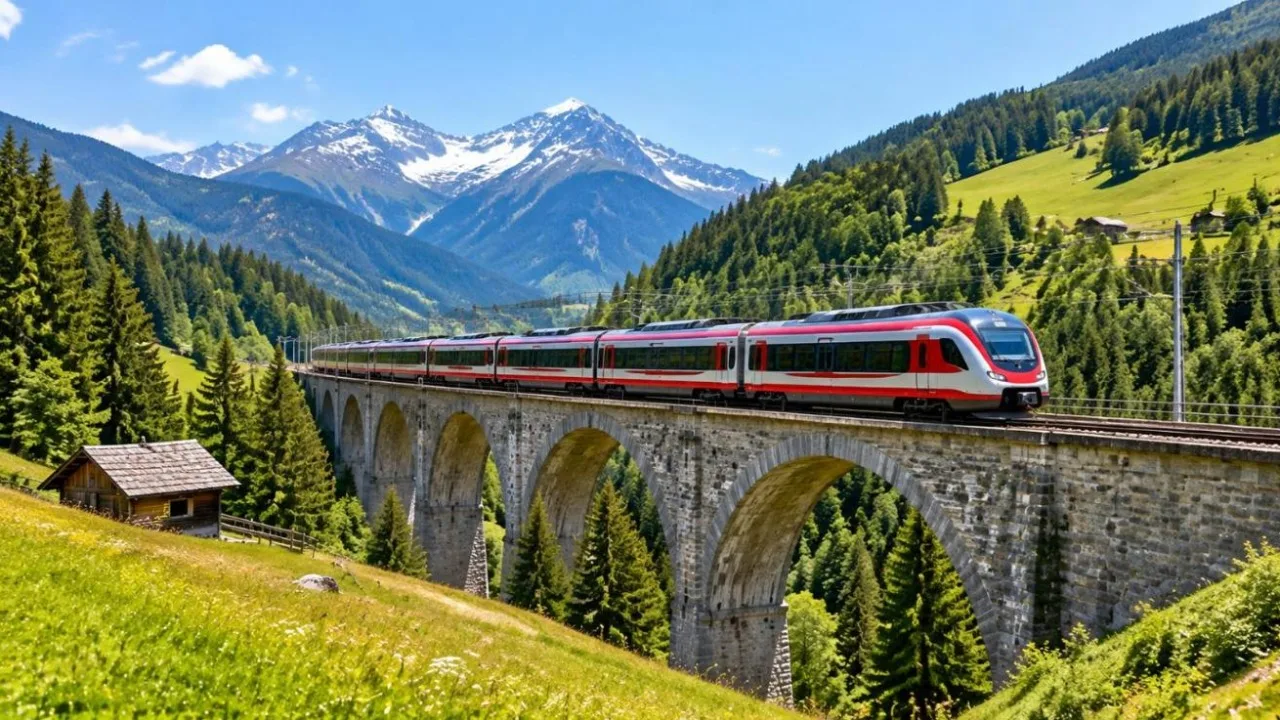
Getting from city to city by train is one of the great joys of travelling in Europe. You see the countryside, arrive in the centre and avoid airport queues. Buses are slower but often even cheaper. In Part 4 of Europe on a Budget, we explain how to use both without overpaying, and when a rail pass makes sense.
How train pricing works
Europe's rail systems vary by country, but there are two broad types of ticket:
- Fixed-price tickets: common on regional trains in many countries. The price is the same whenever you buy, and you can often buy on the day.
- Dynamic or advance fares: common on high-speed and long-distance trains in France, Italy, Spain, Germany, Austria and the UK. Prices rise as the train fills up, so booking weeks or months early can save a lot.
Always try the national rail operator's own website or app. Third-party booking sites can be convenient for multi-country searches but sometimes add booking fees.
Train money-saving tips
- Book early for high-speed routes such as Paris to Lyon, Madrid to Barcelona or Milan to Rome.
- Look at budget high-speed brands. Several countries have low-cost high-speed operators with cheaper basic fares.
- Use regional trains for shorter trips. They are slower but often cheap and need no reservation.
- Check for saver fares with restrictions such as no refunds or fixed trains.
- Look for youth and senior discounts, which many operators offer.
- Validate your ticket where required. In some countries, such as Italy for certain regional tickets, you must stamp a paper ticket before boarding or risk a fine.
Night trains
Night trains are making a comeback across Europe. A sleeper or couchette lets you travel while you sleep and saves a night of accommodation. Seats are cheapest, couchettes (shared bunk compartments) are a good middle ground, and private sleepers are more comfortable but cost more. Book early, as berths are limited.
Long-distance buses
Coach companies such as FlixBus run large networks across Europe, often at very low fares, especially when booked ahead. Buses are usually the cheapest option in Central and Eastern Europe and the Balkans, where trains can be slow or infrequent.
- Check where the bus stop is; it may not be the main station.
- Note luggage allowances and fees.
- Allow for possible delays, especially at non-Schengen borders.
- Overnight buses save a night's rent but are less restful than night trains.
Ride-sharing
Platforms such as BlaBlaCar connect drivers with spare seats to passengers sharing fuel costs. It can be cheap and sociable, especially for routes poorly served by trains. Check driver ratings and meeting points carefully.
Rail passes: Eurail and Interrail
A rail pass gives you a set number of travel days within a period, across many countries. Eurail passes are for people who live outside Europe, while Interrail passes are for European residents.
A pass may be worth it if:
- You plan many long train journeys in a short time.
- You want flexibility to change plans without paying high walk-up fares.
- You travel in countries where full-price tickets are expensive, such as Switzerland, Germany or Austria.
- You qualify for youth pricing.
A pass may not be worth it if:
- You are visiting only a few cities.
- You can book cheap advance tickets with fixed dates.
- You are mainly in Central and Eastern Europe, where point-to-point tickets are already cheap.
Remember that many high-speed and night trains require a seat reservation even with a pass, and the reservation fee can be significant on some routes.
A simple way to decide
- List your planned train journeys.
- Look up advance fares for each on operator websites.
- Add them up and compare with the pass price plus reservation fees.
- Choose whichever is cheaper, or the pass if the difference is small and flexibility matters to you.
City transport
Most European cities have excellent public transport. Day or multi-day passes are often good value if you will use transport several times a day. In many compact old towns, though, walking is the best and cheapest way to explore.
In Part 5, we look at how to find clean, safe and affordable places to stay.
Europe on a Budget: the full series
- Part 1: Plan Your Trip and Set a Budget
- Part 2: Visas, Insurance and Paperwork
- Part 3: Finding Cheap Flights
- Part 4: Trains, Buses and Rail Passes (you are here)
- Part 5: Budget Accommodation
- Part 6: Eat Well for Less
- Part 7: Free and Cheap Sightseeing
- Part 8: The Best-Value Cities
- Part 9: Money, Cards and Fees
- Part 10: A Two-Week Budget Itinerary
Prices, fares, fees and entry rules change often. Treat the ranges here as rough guides and check official websites before you book or travel.