You do not need to choose between eating well and saving money in Europe. Some of the continent's best food is also its cheapest: fresh bread, market fruit, street snacks and hearty local lunches. In Part 6 of Europe on a Budget, we share the habits that keep food costs low without missing out.
1. Make lunch your main meal
In many countries, restaurants offer fixed-price lunch menus on weekdays that cost far less than the same food at dinner. They usually include two or three courses and sometimes a drink.
- Spain: the menú del día.
- France: the formule or plat du jour.
- Italy: look for a menu del giorno or pranzo deals.
- Germany and Austria: Mittagstisch or Mittagsmenü.
- Central and Eastern Europe: "daily menu" or "lunch menu" boards outside restaurants and canteens.
Eat a big lunch, then keep dinner light and simple.
2. Shop at markets and supermarkets
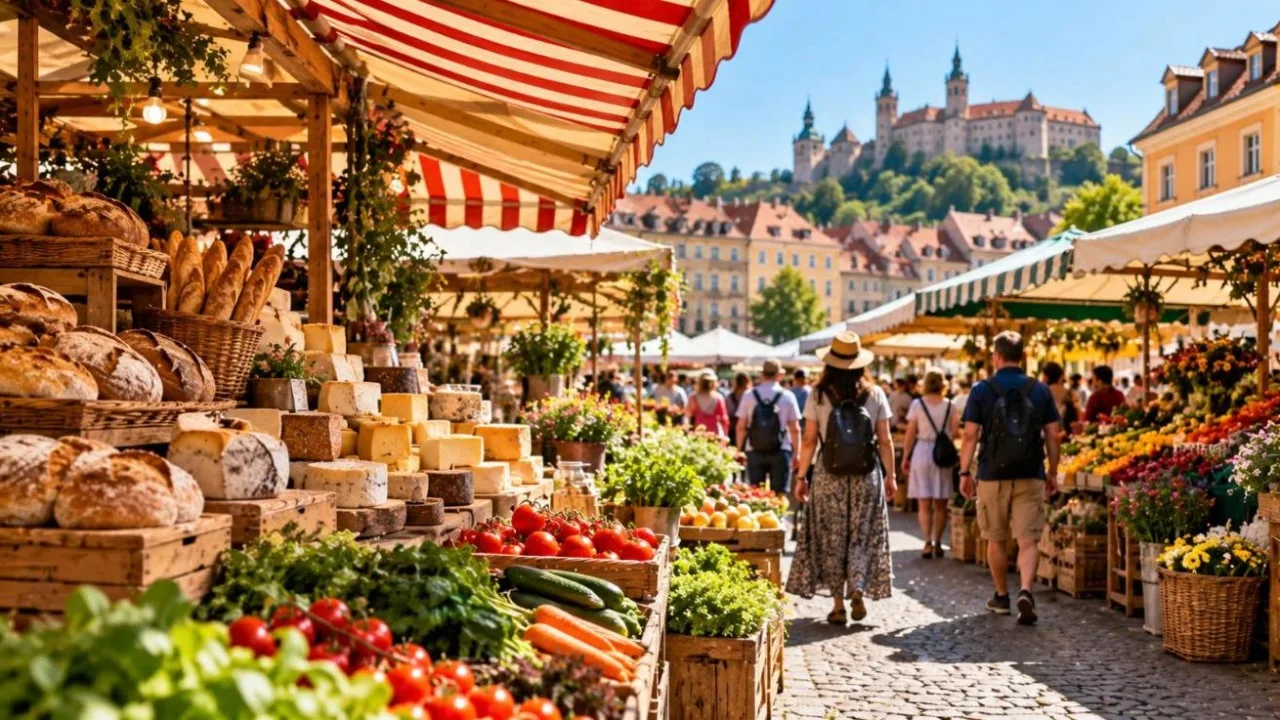
European supermarkets are a budget traveller's best friend. Discount chains often have good bread, cheese, cold meats, salads, yoghurt and fruit at low prices. Covered and open-air markets are great for fresh produce and local specialities.
A picnic in a park or by a river is one of the most memorable meals you can have, and it may cost a fraction of a restaurant meal.
3. Love the bakeries
Bakeries are everywhere and cheap. Breakfast of a pastry and coffee at the counter, or a filled sandwich for lunch, is a classic budget move. In many places, buying bread later in the day can mean discounts.
4. Try local street food
Every region has cheap, filling street food. A few examples:
- Crêpes and galettes in France.
- Pizza by the slice and arancini in Italy.
- Bocadillos and tapas in Spain.
- Bifanas and pastries in Portugal.
- Langos in Hungary.
- Pierogi in Poland.
- Burek and grilled meats in the Balkans.
- Souvlaki and gyros in Greece.
5. Avoid the tourist-trap zone
Restaurants directly on the most famous squares or next to big landmarks often charge more for average food. Warning signs include photo menus in many languages, staff pulling you in from the street and no local customers. Walk two or three streets away and prices often drop while quality rises.
6. Drink smart
- Tap water: safe to drink in most of Western and Central Europe. Carry a refillable bottle and use public fountains where available. In some countries, restaurants may charge for bottled water unless you ask for tap water, which is not always offered.
- Coffee at the bar: in Italy and some other countries, coffee drunk standing at the counter can be cheaper than at a table.
- Wine and beer: local house wine or local beer is usually much cheaper than imported drinks.
- Happy hours and aperitivo: in some Italian cities, buying a drink at aperitivo time can include snacks.
7. Watch for extra charges
- Cover or bread charges: some restaurants, especially in Italy and Portugal, charge for bread or snacks placed on the table. You can usually decline them.
- Table service: eating at a table can cost more than takeaway.
- Tipping: norms differ. Service is often included or tips are modest, such as rounding up or leaving 5 to 10% for good service. Check local customs.
8. Use your kitchen
If your hostel or apartment has a kitchen, cooking breakfast and a few dinners can save a lot. Pasta, eggs, salads and local market produce are cheap and quick.
9. Eat where students and workers eat
University canteens, workers' cafés, food halls and simple self-service restaurants in Central and Eastern Europe offer filling meals at low prices.
A sample cheap food day
- Breakfast: bakery pastry and coffee.
- Lunch: a set lunch menu at a local restaurant.
- Snack: fruit from a market.
- Dinner: supermarket picnic or street food.
In Part 7, we cover free and cheap sightseeing, from walking tours to free museum days.
Europe on a Budget: the full series
- Part 1: Plan Your Trip and Set a Budget
- Part 2: Visas, Insurance and Paperwork
- Part 3: Finding Cheap Flights
- Part 4: Trains, Buses and Rail Passes
- Part 5: Budget Accommodation
- Part 6: Eat Well for Less (you are here)
- Part 7: Free and Cheap Sightseeing
- Part 8: The Best-Value Cities
- Part 9: Money, Cards and Fees
- Part 10: A Two-Week Budget Itinerary
Prices, fares, fees and entry rules change often. Treat the ranges here as rough guides and check official websites before you book or travel.