Somewhere in the western Atlantic, popular culture draws a triangle between Miami, Bermuda and San Juan. Inside it, ships and aircraft are said to vanish without cause—aliens, Atlantis, time warps. The stories sell. The question is simpler: which losses are documented history, which are folklore, and what does science actually say?
This article covers the Bermuda Triangle as myth and as place: where it is said to be, the famous confirmed disappearances (Flight 19, USS Cyclops, and a few others), how the legend grew through Vincent Gaddis and Charles Berlitz, and the environmental and human factors NOAA and naval investigators emphasise. Anything unverified is marked as such.
Where Is the Triangle—and Is It Official?
Writers usually place the corners at Miami (Florida), the island of Bermuda, and San Juan (Puerto Rico). Some stretch the area to roughly 500,000 square miles (about 1.3 million square kilometres). Those borders are not fixed; different books draw different shapes.
The important institutional fact: the U.S. Board of Geographic Names does not recognise “Bermuda Triangle” as an official name and keeps no official file on it. The U.S. Navy and Coast Guard do not treat it as a supernatural zone. NOAA states that there is no evidence of unusually frequent unexplained disappearances in the area. No official chart draws the triangle as a hazard region.
So the ocean is real. The “cursed triangle” is a cultural invention layered on top of real weather, traffic and tragedy.
Confirmed Losses: Documented History
The cases below are real disappearances or wrecks. Causes are clear in some, still incomplete in others. They are not folklore—even when later storytellers wrapped them in mystery.
USS Cyclops (March 1918)
USS Cyclops was a large U.S. Navy collier. On 4 March 1918 she left Barbados for Baltimore with a cargo of manganese ore and about 306 crew and passengers. Her last known position was in the region of the West Indies. No distress call was received. No wreck has been positively identified.
Navy historical summaries call this one of the service’s largest peacetime personnel losses of that era. Later explanations have pointed to unexpected storm, cargo stability problems, or structural issues. University of Southampton researchers have shown in tank tests that rogue waves can break large ships quickly; that is a plausible mechanism in the Atlantic, but it has not been proven as Cyclops’s cause.
Bottom line: confirmed loss; exact cause still unknown. “Unknown” is not the same as “paranormal.”
Flight 19 (5 December 1945)
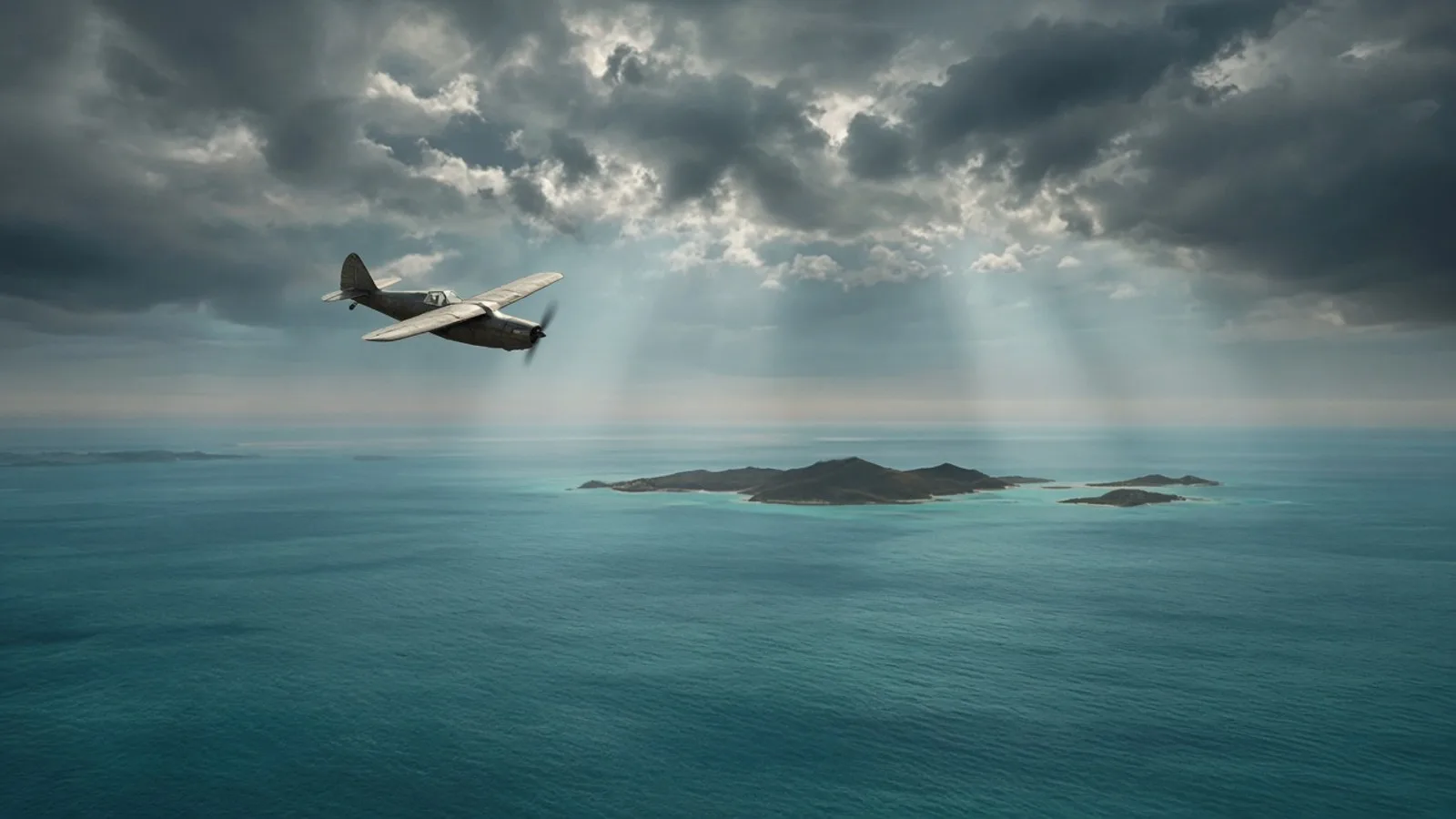
This is the centrepiece of the Triangle legend. Five Grumman TBM Avenger trainers left Naval Air Station Fort Lauderdale, Florida, on a routine navigation exercise. Fourteen Navy and Marine airmen were aboard. The flight instructor was Lieutenant Charles Taylor.
The plan was straightforward: fly over the sea, practice a bombing run on a training target, then return. Around 3:40 pm, radio traffic showed the flight was lost. Pilots argued about direction. Some compass readings were reported as unreliable. National Archives summaries of the official record note that Taylor became “uncertain as to in what position lay the Peninsula of Florida,” turning the flight repeatedly as daylight faded.
Weather worsened; fuel ran low. One of the last monitored transmissions urged the planes to stay close and ditch together when the first aircraft dropped below ten gallons. None of the five returned. No wreckage has been conclusively recovered.
A PBM Mariner flying boat sent to search exploded in flight, killing thirteen. The Navy attributed that crash to a faulty fuel system. Its conclusion on Flight 19 itself: navigational error and fuel exhaustion, ditching in darkness and rough seas.
Bottom line: confirmed loss of twenty-seven lives (fourteen plus thirteen). No evidence supports alien abduction. The remaining “mystery” is mainly the absence of wreckage—plausible in deep water and strong currents.
SS Marine Sulphur Queen (February 1963)
This civilian tanker, carrying molten sulphur, vanished after leaving Florida with about thirty-nine crew. The full wreck was not located, but life jackets and other debris were recovered. Navy and Coast Guard summaries treat it as a documented loss often listed in Triangle discussions. Investigations focused on the ship’s condition, cargo and weather—not the supernatural.
Other Frequently Cited Cases
- Star Tiger and Star Ariel (1948–49): British South American Airways passenger aircraft lost over the Atlantic. Confirmed losses; causes never fully settled. Whether they fall “inside” every version of the Triangle is debated.
- Carroll A. Deering (1921): Often called a ghost ship after being found aground without her crew. Details and geography vary by retelling. Treating it as proof of a Triangle curse is unreliable.
Folklore: Stories That Do Not Hold Up
- Mary Celeste: Found abandoned in 1872 near the Azores—not in the Bermuda Triangle. Linking her to the legend is a geographic error.
- Ellen Austin and the abandoned prize ship: Retold in many versions; historians note a lack of solid primary evidence. Treat as folklore.
- Aliens, time portals, Atlantis energy: Entertainment, not science. Atlantis itself is an unverified ancient story.
For another maritime disaster where myth and engineering reality collide, see our full Titanic history and, for deep-time shipwreck science, the Kekova Bronze Age wreck. Wartime and naval context around the early twentieth-century Atlantic appears in our SMS Emden and Madras 1914 piece.
How the Legend Grew
Ships have always been lost at sea. The branded “Bermuda Triangle” is mid-twentieth-century packaging.
- 1964: Writer Vincent Gaddis popularised the name in an Argosy magazine article, “The Deadly Bermuda Triangle.”
- 1970s television and magazines amplified the mystery tone.
- 1974: Charles Berlitz’s bestseller The Bermuda Triangle compiled disappearances and leaned into the unexplained. Critics later argued the book misplaced wrecks, downplayed storms, and bundled unrelated accidents into one mythic zone.
- 1975: Librarian Lawrence David Kusche’s The Bermuda Triangle Mystery — Solved checked many claims against primary records and found errors, exaggerations and ordinary weather or navigation causes.
- Internet era: Recurring headlines that “science finally explained the Triangle” often recycle rogue-wave or methane ideas. Some are plausible mechanisms in open ocean; few are proven for specific historic cases. Fact-checkers such as Snopes have flagged overstated versions of these claims.
What Science and Official Sources Say
Heavy traffic, not a curse
The region is one of the world’s busiest shipping and aviation corridors between the United States, the Caribbean and Europe. More traffic means more absolute accidents—even if the rate is not unusually high. NOAA finds no evidence of abnormal unexplained loss rates. Navy historical notes also report that Lloyd’s of London is not known to charge special Triangle premiums for the area.
Australian science communicator Karl Kruszelnicki and others have argued that disappearance rates look ordinary once traffic volume is considered. Thousands of commercial flights cross the region safely every year.
The Gulf Stream
This fast, warm current can change weather quickly, push small craft off course, and sweep wreckage away or into deep water—making “vanished without a trace” more likely after an ordinary sinking.
Storms and sudden weather
Many Atlantic tropical storms and hurricanes track through the area. Before modern forecasting, they sank countless ships. Squalls remain dangerous. Search aircraft looking for Flight 19 reported overcast skies, showers, turbulence and rough seas that night.
Shallow reefs
Caribbean shallows and coral can wreck ships that stray at night or in storms.
The compass story
Some writers claim compasses here point to true north instead of magnetic north, confusing pilots. NOAA mentions magnetic variation as a possible environmental factor in places—but not as proof of a supernatural zone. Magnetic declination varies worldwide. Modern navigation uses GPS and multiple systems. Flight 19’s Navy conclusion centred on getting lost and running out of fuel, not on a unique Triangle magnetism.
Human error
Bad navigation, maintenance failures, inexperience and flying or sailing into known bad weather dominate maritime and aviation accidents globally. The Navy and Coast Guard line is blunt: nature plus human fallibility outdo science fiction.
Rogue waves and methane—hypotheses
Rogue waves can exceed design loads and break ships; tank studies support the physics. Methane blowouts reducing water density have been speculated; they are not proven explanations for the famous Triangle cases. Treat both as possible ocean hazards, not as “the mystery solved.”
Reading the Radio Traffic: Why Flight 19 Stayed Lost
Primary-record summaries paint a human, not supernatural, disaster. After the practice run, the flight’s sense of position broke down. Some pilots thought they were north of the Bahamas; Taylor appears to have interpreted landmarks as if he were still in the familiar Florida Keys training area. Over open water, islands can look alike. Once the sun set, that confusion became lethal.
Rank and radio discipline also mattered. Taylor was the instructor, but he was not the senior officer in the formation—an awkward structure when decisions had to be made fast. The flight kept changing headings while fuel burned. By the time ditching was inevitable, seas were rough enough that rafts and debris could vanish overnight. Searchers arriving around 7:30 pm reported poor visibility and heavy weather. Absence of wreckage the next day fed decades of speculation; it does not overturn the Navy’s navigation-and-fuel conclusion.
Later popular accounts sometimes claim the flight reported “everything looks wrong” or white water that “didn’t look right.” Treat dramatic quotes with care unless they appear in the official record. The documented core is enough: lost bearings, darkness, fuel exhaustion, ditching, no recovery.
Insurance, Maps and the “Special Risk” Claim
A persistent talking point says insurers charge extra to cross the Triangle. Navy historical FAQs have long noted that Lloyd’s is not known to treat the area as a special surcharge zone, and that no official U.S. geographic file defines the Triangle. If the world’s specialist marine insurers do not price a unique curse, that is strong market evidence against the legend—even before NOAA’s environmental briefing.
Likewise, search-and-rescue statistics are easy to misuse. Counting raw incidents without dividing by flight hours or ship-days invents a hotspot. Busy airspace near Florida and the Caribbean will always produce more absolute emergencies than empty ocean—just as busy motorways produce more crashes than desert tracks.
How Many Transit Safely?
Legends list the missing and ignore the millions of uneventful passages. That is selection bias. Cruise ships, cargo vessels and airliners use these routes daily with radar, satellite links and air-traffic control—tools Flight 19 did not have in 1945. The fair question is not “why do people vanish here?” but “why do a few deep-water losses look mysterious when traffic is this dense?” Usually the answer is weather, navigation, wreckage dispersal—and writers who bundled them into one brand.
Sea engineering and coastal risk also shape Indian Ocean history; see the Pamban Bridge story for how storms remade a sea crossing.
Key Numbers at a Glance
| Detail | Note |
|---|---|
| Usual corners | Miami, Bermuda, San Juan (not official) |
| Name status | Not recognised by U.S. Board of Geographic Names |
| USS Cyclops | March 1918; ~306 people; wreck not found |
| Flight 19 | 5 Dec 1945; 5 aircraft, 14 airmen; search plane +13 |
| Navy conclusion (Flight 19) | Navigation error / fuel exhaustion / ditching |
| Marine Sulphur Queen | Feb 1963; ~39 crew; debris recovered |
| Name popularised | Gaddis 1964; Berlitz book 1974 |
| NOAA stance | No evidence of unusual mysterious losses |
Timeline
- March 1918: USS Cyclops disappears.
- 1921: Carroll A. Deering incident (often mis-linked).
- 5 December 1945: Flight 19 and search-plane loss.
- 1948–49: Star Tiger and Star Ariel losses.
- February 1963: SS Marine Sulphur Queen.
- 1964: Gaddis article popularises the name.
- 1974–75: Berlitz bestseller; Kusche’s critical reply.
- Today: NOAA and Navy reject supernatural explanations; heavy safe traffic continues.
Myths and Facts
- “Nothing survives the Triangle”: False. Vast numbers of ships and aircraft cross safely.
- “It appears on official charts”: False.
- “Flight 19 was abducted”: No evidence. Navy: lost and out of fuel.
- “Lloyd’s charges extra”: Widely claimed; Navy notes do not support a special Triangle surcharge.
- “Cyclops proves the paranormal”: It proves a tragic unresolved sinking—not magic.
- “Mary Celeste vanished in the Triangle”: Wrong ocean region and century of myth-mixing.
Frequently Asked Questions
Does the Bermuda Triangle exist?
As a stretch of Atlantic ocean, yes. As an officially recognised supernatural hazard zone, no.
What happened to Flight 19?
According to the Navy investigation, the flight became lost, ran low on fuel, and ditched in darkness and bad weather. Wreckage was not recovered.
Why is wreckage often missing?
Depth, the Gulf Stream and storms can scatter or bury debris quickly. That is ordinary oceanography, not proof of portals.
Is it dangerous to travel there today?
All sea and air travel carries risk. This region is not a banned “cursed” zone; modern navigation and forecasting support daily commercial traffic.
Should I trust Berlitz?
The book was popular. Many historians and researchers treat its mystery framing as unreliable next to primary Navy, Coast Guard and weather records.
Final Thoughts
The Bermuda Triangle is a powerful story. Powerful stories are not the same as good science. Honour the real dead of Cyclops and Flight 19. Then look first at storms, currents, reefs, navigation error and traffic density before reaching for aliens. The ocean is dangerous enough without inventing a curse.