The most effective natural ways to lower cholesterol are these:
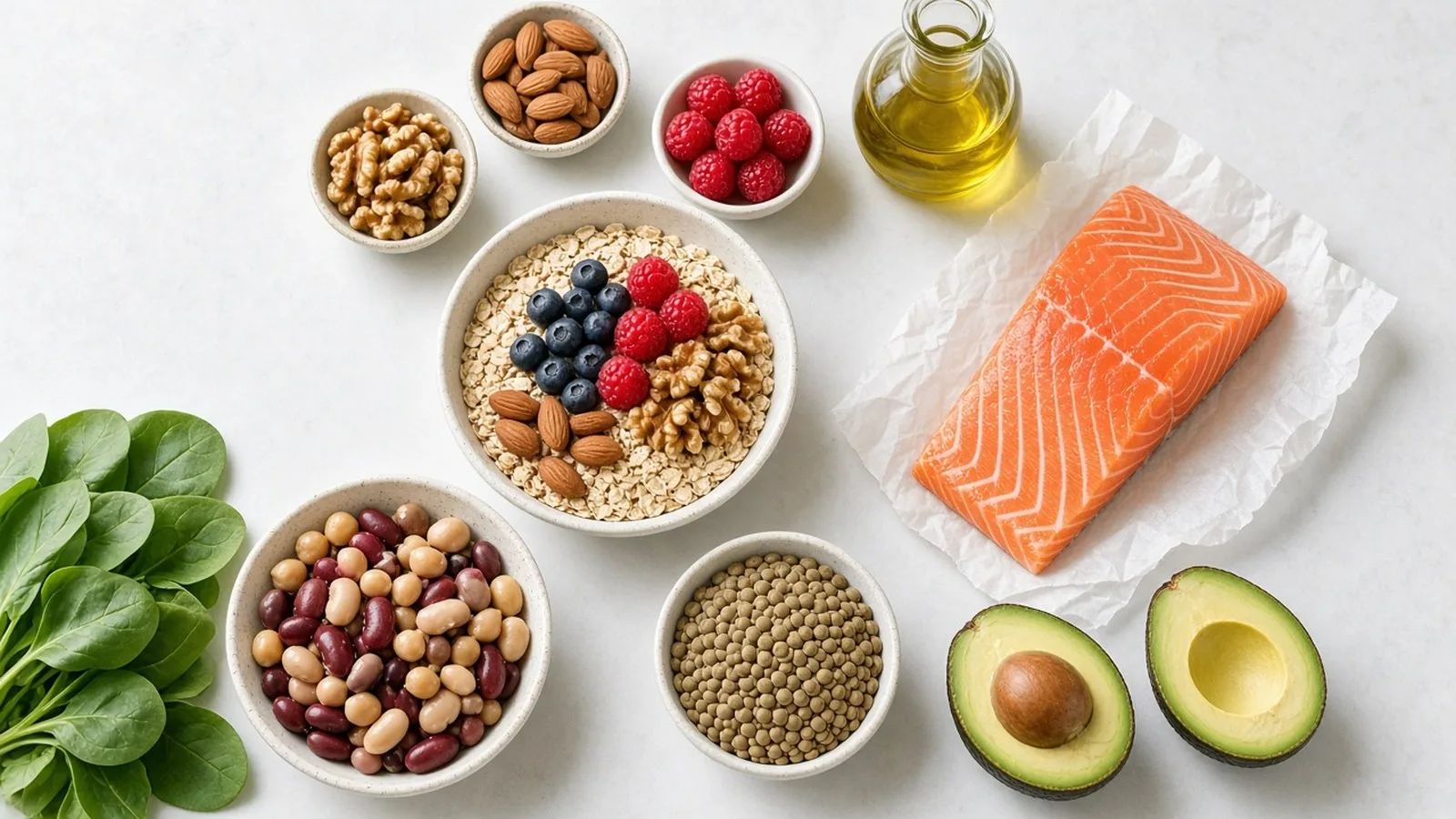
- Cut saturated and trans fats and replace them with unsaturated fats from plant oils, nuts, seeds and oily fish.
- Eat more soluble fibre from oats, barley, beans and lentils.
- Exercise for at least 150 minutes a week.
- Stop smoking and keep alcohol low.
- Lose weight if you carry extra.
Together these can lower LDL ("bad") cholesterol meaningfully. For some people, especially those with a high heart-disease risk or an inherited cholesterol problem, lifestyle alone is not enough and a doctor will add medicine such as a statin. This guide covers what to change, how big the effects are and when to get checked.
Cholesterol in plain words
Cholesterol is a fatty substance your body needs to build cells and make hormones. Your liver makes most of it. It travels in the blood in particles called lipoproteins:
- LDL cholesterol can build up in artery walls and form plaques that narrow the arteries. This raises the risk of heart attack and stroke. Lowering LDL is the main goal.
- HDL cholesterol helps carry cholesterol back to the liver.
- Triglycerides are a different blood fat. They rise with excess calories, refined carbohydrates, sugar and alcohol.
The NHS notes that high cholesterol usually causes no symptoms. A blood test is the only way to know your numbers. If you have had a lipid profile and are not sure what it means, read our explainer on the lipid profile test.
What raises cholesterol?
- A diet high in saturated fat, such as fatty meat, butter, ghee, cream, cheese, coconut oil, palm oil and many baked goods
- Low physical activity and carrying extra weight, especially around the waist
- Smoking
- Drinking too much alcohol
- Genes. Familial hypercholesterolaemia is an inherited condition that causes very high LDL from a young age, even in slim, active people.
- Other conditions, such as an underactive thyroid, type 2 diabetes, or kidney or liver disease
1. Change the fats you eat
This is the dietary change with the biggest effect on LDL. The WHO recommends that saturated fat makes up no more than 10% of your total energy intake and trans fat less than 1%. It also advises replacing them with unsaturated fats from plant sources.
| Eat less of | Swap towards |
|---|---|
| Butter, ghee, vanaspati, lard | Small amounts of olive, rapeseed (canola), mustard, groundnut or sunflower oil |
| Fatty and processed meats (sausages, salami) | Fish, skinless chicken, beans, lentils, tofu |
| Cream, full-fat cheese, rich desserts | Low-fat curd or yoghurt, smaller portions of cheese |
| Cakes, biscuits, pastries, fried snacks | Nuts, seeds, roasted chana, fruit |
| Foods cooked in coconut or palm oil | Dishes cooked with unsaturated oils, steamed or grilled |
The NHS also suggests eating more oily fish such as mackerel and salmon, as well as nuts and seeds, whole grains, fruit and vegetables. Oily fish mainly helps heart health and triglycerides rather than LDL itself; our omega-3 explainer covers the details.
A note on eggs and dietary cholesterol: for most people, the cholesterol in food affects blood cholesterol less than saturated fat does. Moderate egg intake fits a healthy diet for many people. If you have diabetes or very high LDL, ask your doctor what suits you.
2. Eat more soluble fibre, especially oats and barley
Soluble fibre forms a gel in the gut that binds bile acids, which are made from cholesterol. This nudges the liver to pull more LDL out of the blood. The best-studied soluble fibre is oat beta-glucan.
A meta-analysis of 28 randomised trials in the American Journal of Clinical Nutrition found that eating at least 3 g of oat beta-glucan a day lowered LDL cholesterol by an average of 0.25 mmol/L (about 10 mg/dL). It did not change HDL or triglycerides. The effect was larger in people who started with higher LDL.
Good sources of soluble fibre:
- Oats and oat bran (porridge, overnight oats, oats added to upma or idli batter)
- Barley
- Beans, lentils, chickpeas and rajma
- Psyllium husk (isabgol)
- Apples, citrus fruits, guava and pears
- Okra and aubergine (brinjal)
Increase fibre gradually and drink enough water to avoid bloating.
3. Consider plant sterols and stanols (with realistic expectations)
Plant sterols and stanols are natural compounds that partly block cholesterol absorption in the gut. Some yoghurt drinks and spreads are fortified with them. A meta-analysis of 124 studies in the British Journal of Nutrition found that intakes of 0.6–3.3 g a day gradually lowered LDL by an average of 6–12%, with the effect levelling off at around 3 g a day.
They work best alongside a healthy diet, not instead of one. Fortified products cost more and are not needed by everyone. Discuss them with your doctor first, especially if you take cholesterol medicine.
4. Get moving: 150 minutes a week
The NHS recommends at least 150 minutes of moderate-intensity exercise or 75 minutes of vigorous activity a week. Good options include brisk walking (fast enough to raise your heart rate), swimming and cycling. Regular activity can help raise HDL, lower triglycerides and support weight loss, and it lowers heart risk in its own right.
- Start with 10-minute walks and build up. See our beginner's walking plan.
- Add muscle-strengthening work on two days a week.
- Choose something you enjoy. Consistency matters more than intensity.
5. Stop smoking, and keep alcohol low
The NHS says smoking can raise cholesterol and makes heart attacks and strokes more likely. Quitting is one of the best things you can do for your arteries. For alcohol, the NHS advises not regularly drinking more than 14 units a week, spreading it over three or more days, and having several drink-free days. Heavy drinking raises triglycerides in particular.
6. Lose weight if you need to
Losing extra weight, particularly around the waist, tends to lower LDL and triglycerides and raise HDL. Small, steady changes in portion size, sugary drinks and snacking, combined with activity, are more sustainable than extreme diets.
How much can lifestyle changes lower cholesterol?
Results vary from person to person. Here is a rough guide based on the evidence above:
| Change | Typical effect on LDL | Notes |
|---|---|---|
| Swapping saturated for unsaturated fat | Often the largest single dietary effect | Depends on how much saturated fat you ate before |
| At least 3 g a day of oat beta-glucan | About 0.25 mmol/L (~10 mg/dL) on average | Bigger effect when LDL starts higher |
| Plant sterols/stanols, 0.6–3.3 g a day | About 6–12% on average | Plateaus around 3 g a day |
| Exercise and weight loss | Modest on LDL; better on HDL and triglycerides | Large overall benefit to heart risk |
Combined, these changes can add up. But if your LDL is very high or your overall heart risk is high, diet alone rarely brings it to target.
When medicine is needed
Doctors look at your overall cardiovascular risk, not just one number. That includes your age, blood pressure, diabetes, smoking, family history and existing heart disease. If your risk is high, or you have an inherited condition such as familial hypercholesterolaemia, they may recommend a statin or another cholesterol-lowering medicine alongside lifestyle changes. The NHS describes statins as the most common medicine for high cholesterol; they reduce the amount of cholesterol your body makes and are usually taken as a daily tablet. Lifestyle changes remain important even if you take medicine. Don't stop a prescribed medicine without talking to your doctor.
Get your numbers checked
- Ask your doctor how often you should have a lipid profile. It depends on your age and risk factors, and is more frequent if you have diabetes, high blood pressure or a family history of early heart disease.
- Recheck after about 2–3 months of consistent lifestyle change to see your progress.
- Check your blood pressure too, as it adds to heart risk. See our guide on high blood pressure numbers and how to lower them.
Frequently asked questions
How quickly can I lower my cholesterol naturally?
Blood lipids respond within weeks to consistent diet changes. Most doctors recheck after two to three months. How far your numbers fall depends on your starting point, your genes and how many changes you sustain.
Is ghee bad for cholesterol?
Ghee is high in saturated fat, and the NHS lists it among the fats to cut down on if you want to lower cholesterol. Small amounts can fit into an otherwise healthy diet. Using mostly unsaturated oils for everyday cooking is the better choice.
Do garlic, apple cider vinegar or other home remedies work?
Evidence for most home remedies is weak or inconsistent, and the effects reported are usually small. They are not a substitute for proven diet changes or prescribed medicine. Tell your doctor about any supplements you take, as some interact with medicines.
I am slim and active. Why is my cholesterol high?
Genes play a big role. Familial hypercholesterolaemia can cause high LDL regardless of lifestyle. If your LDL is very high or close relatives had heart disease at a young age, ask your doctor about further assessment.
Can I stop my statin if my cholesterol improves?
Only with your doctor's advice. Your improved numbers may be partly due to the medicine, and stopping it can raise your risk again.
Disclaimer: This article is for general information only and is not medical advice. It does not replace a diagnosis or treatment plan from a qualified professional. Please consult your doctor before changing your diet, exercise, medicines or supplements, and seek urgent care for any warning signs mentioned above.
Related reading on HorizonDesk
- Lab tests explained: the lipid profile (cholesterol) test
- High blood pressure explained: numbers and ways to lower it
- Vitamins and minerals explained: omega-3
Sources
- NHS: How to lower your cholesterol
- NHS: High cholesterol overview
- NHS: Statins
- World Health Organization: Healthy diet fact sheet
- Whitehead A et al., American Journal of Clinical Nutrition: Cholesterol-lowering effects of oat beta-glucan, a meta-analysis
- Ras RT et al., British Journal of Nutrition: LDL-cholesterol-lowering effect of plant sterols and stanols across dose ranges