No single food "boosts" your immune system, but a varied diet rich in fruit, vegetables, pulses, whole grains, nuts, seeds and enough protein gives your immune system the nutrients it needs to work normally. The nutrients with the best evidence are vitamin C, vitamin D and zinc, and the main benefit comes from avoiding a deficiency rather than taking extra. Supplements have only modest effects: regular vitamin C slightly shortens colds, vitamin D slightly reduces respiratory infections, and zinc lozenges may speed recovery if started early. Sleep, activity, a healthy weight, not smoking and recommended vaccines matter at least as much as what is on your plate.
"Immune-boosting" is one of the most common claims on food and supplement labels. This guide separates what research supports from marketing, using information from the US National Institutes of Health (NIH), the World Health Organization (WHO) and systematic reviews.
What "boosting" your immune system really means
Your immune system is a complex network of cells and proteins that defends you against infection. It does not work like a dial that you can turn up with one food. An overactive immune response is not desirable either; it is involved in allergies and autoimmune conditions. What a healthy diet can do is make sure your immune cells have the building blocks they need. People who are malnourished or deficient in certain nutrients are more vulnerable to infection, so correcting a shortfall can make a real difference. Taking more than you need, on the other hand, has not been shown to give extra protection.
Nutrients that support normal immune function
| Nutrient | Food sources | What the evidence says |
|---|---|---|
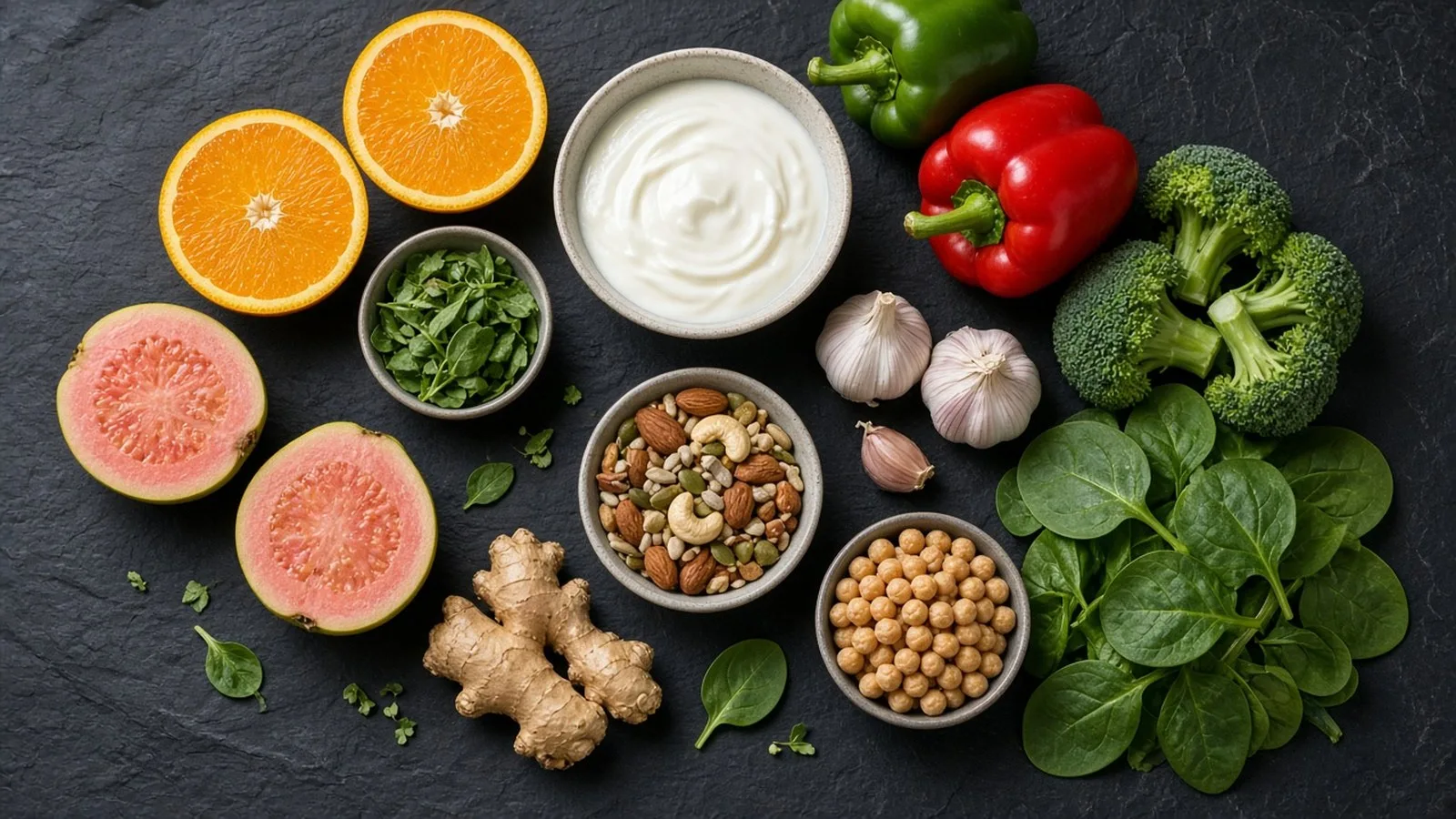
| Vitamin C | Guava, amla, oranges, kiwi, peppers, broccoli, tomatoes | Regular supplements did not prevent colds in most people but slightly shortened them |
| Vitamin D | Sunlight on skin, oily fish, egg yolks, fortified foods, some mushrooms | Supplements slightly reduced the risk of respiratory infections in a large meta-analysis |
| Zinc | Meat, fish, poultry, seafood, beans, nuts, whole grains, eggs, dairy | Lozenges or syrup may speed recovery from colds if started early |
| Protein | Dal, beans, eggs, fish, chicken, paneer, curd, tofu | Needed for antibodies and immune cells; deficiency weakens defences |
| Fibre and fermented foods | Whole grains, pulses, vegetables, curd, other fermented foods | Support a healthy gut; probiotic evidence for colds is low quality |
Vitamin C
Vitamin C is involved in many immune functions, and the NIH Office of Dietary Supplements notes that it has been widely studied for the common cold. A Cochrane review of trials with more than 11,000 participants found that taking vitamin C regularly did not reduce the chance of catching a cold in the general population. However, it shortened colds by about 8% in adults and 14% in children. Interestingly, in people under heavy physical stress, such as marathon runners and soldiers in subarctic conditions, regular vitamin C roughly halved the risk of colds. Taking vitamin C only after a cold has started showed no consistent benefit.
Most people can get enough vitamin C from food. Guava, amla, citrus fruits, peppers and green vegetables are excellent sources; see our explainer on vitamin C for more.
Vitamin D
The NIH explains that the immune system needs vitamin D to fight off invading bacteria and viruses. A 2021 meta-analysis in The Lancet Diabetes & Endocrinology, covering 43 trials and over 48,000 participants, found that vitamin D supplements reduced the risk of acute respiratory infections, though the reduction was small (61.3% of people in the vitamin D groups had at least one infection, compared with 62.3% on placebo). Daily doses appeared to work better than occasional large doses.
Very few foods naturally contain much vitamin D. Fatty fish, egg yolks and fortified foods help, and your skin makes it in sunlight. The NIH lists 15 micrograms (600 IU) a day as the recommended amount for most adults aged 19 to 70. Too much from supplements can be harmful, so do not take high doses without medical advice. Our guide to vitamin D deficiency: symptoms, tests and food sources explains who may need testing.
Zinc
Zinc is needed for immune cells to develop and work. The NIH says some studies suggest zinc lozenges or syrup speed recovery from a cold if taken at the start, although they do not seem to reduce how severe symptoms are, and the best dose and form are still unclear. Adult women need about 8 mg a day and men about 11 mg, which most people get from a varied diet including pulses, nuts, whole grains, dairy, eggs, meat or fish. Too much zinc over a long time can cause problems, including, paradoxically, lower immunity and low copper levels.
Protein
Antibodies and many immune cells are made from protein, so eating enough matters, especially for older adults and people who are ill or recovering. Include a protein source at each meal; our guide to how much protein you need gives practical amounts.
Popular "immune foods": what the evidence shows
Probiotics and fermented foods
The US National Center for Complementary and Integrative Health (NCCIH) reports that a 2015 evaluation of 12 studies (3,720 participants) suggested people taking probiotics may have fewer and shorter upper respiratory infections, but the quality of evidence was low. Curd and other fermented foods can be part of a healthy diet. Probiotic supplements are not risk-free for people with serious illness or weakened immune systems, who should ask a doctor first.
Garlic
Garlic is often promoted as an immune booster. NCCIH says very little research has been done; a 2022 review found only two small studies with weaknesses suggesting a possible benefit for colds. Enjoy it in your cooking, but do not rely on it to prevent illness.
Echinacea
According to NCCIH, echinacea may slightly reduce your chances of catching a cold, but it is unclear whether it shortens colds. Some people have allergic reactions, which can be severe. Ask a doctor before giving it to children.
Turmeric, ginger and "kadha"
Spices such as turmeric and ginger are widely used in home remedies. NCCIH states that we do not know enough to conclude whether turmeric or curcumin is beneficial for any health purpose, and some highly absorbable curcumin supplements have been linked to liver damage. Using spices in food is generally fine; be cautious with concentrated supplements.
A practical eating pattern
The WHO's healthy diet advice offers a sound foundation: eat plenty of fruit, vegetables, legumes, nuts and whole grains, and limit free sugars, salt and unhealthy fats. In practice, that could look like:
- Breakfast: vegetable poha or upma with peanuts, plus a guava or orange.
- Lunch: dal, a vegetable sabzi, roti or brown rice, salad and curd.
- Snack: roasted chana or a handful of nuts and seeds with fruit.
- Dinner: fish, eggs, paneer or tofu with plenty of vegetables and a whole grain.
Variety matters more than any single "superfood".
Lifestyle habits that matter as much as food
- Sleep: in a study where healthy volunteers were exposed to a cold virus, those who slept less than 6 hours a night beforehand were more likely to develop a cold than those sleeping more than 7 hours. See how much sleep you need.
- Physical activity: the WHO recommends that adults get 150 to 300 minutes of moderate activity a week for overall health.
- Do not smoke, and limit alcohol.
- Keep up to date with recommended vaccines, which give targeted protection that no food can match.
- Wash your hands regularly, especially before eating and after coughing or sneezing.
Who might need a supplement?
Most healthy people can meet their needs from food. A doctor may recommend a supplement if you have a confirmed deficiency, limited sun exposure, a restricted diet (for example a vegan diet without fortified foods), certain medical conditions, or are pregnant, breastfeeding or older. Supplements can interact with medicines, so check with a doctor or pharmacist before starting one, and avoid high doses unless advised.
Frequently asked questions
What is the best food to boost the immune system?
There is no single best food. A varied diet with plenty of fruit, vegetables, pulses, whole grains, nuts and enough protein supports normal immune function better than any one item.
Does vitamin C prevent colds?
For most people, no. A Cochrane review found regular vitamin C did not reduce the number of colds, but it shortened them slightly. Taking it only once symptoms start showed no consistent effect.
Should I take vitamin D for immunity?
Vitamin D supplements slightly reduced respiratory infections in trials. If you have little sun exposure or may be deficient, ask your doctor about testing and the right dose.
Do immune-boosting supplements work?
Most have limited or low-quality evidence. Correcting a deficiency helps; extra doses beyond your needs have not been shown to add protection and can sometimes cause harm.
Can stress weaken immunity?
Long-term stress can affect health in many ways. Managing it, alongside good sleep and regular activity, is a sensible part of staying well; our guide to everyday stress management has simple techniques.
Disclaimer: This article is for general information only and is not medical advice. It does not replace a diagnosis or treatment plan from a qualified professional. Please consult your doctor before changing your diet, exercise, medicines or supplements, and seek urgent care for any warning signs mentioned above.
Sources
- NIH Office of Dietary Supplements: Vitamin C fact sheet
- NIH Office of Dietary Supplements: Vitamin D
- NIH Office of Dietary Supplements: Zinc
- Hemilä H, Chalker E. Vitamin C for preventing and treating the common cold. Cochrane Database Syst Rev, 2013
- Jolliffe DA et al. Vitamin D supplementation to prevent acute respiratory infections. Lancet Diabetes Endocrinol, 2021
- Prather AA et al. Behaviorally assessed sleep and susceptibility to the common cold. Sleep, 2015
- NCCIH: Probiotics, usefulness and safety
- NCCIH: Echinacea
- NCCIH: Garlic
- NCCIH: Turmeric
- World Health Organization: Healthy diet fact sheet
- World Health Organization: Physical activity fact sheet