Health note: this article summarises official guidelines and published research for general information. If you have kidney disease, are pregnant, or have another medical condition, ask your doctor or a registered dietitian what protein intake is right for you.
Protein is having a moment. The new US Dietary Guidelines, released in January 2026, raised their protein advice well above the old minimum. Supermarket shelves are full of high-protein everything, and millions of people taking weight-loss drugs are being told to protect their muscle. At the same time, India's national nutrition institute warns people against protein powders for building muscle.
So how much do you actually need? The honest answer is: it depends on your age, how active you are, and whether you are losing weight. This guide sets out what the main health bodies and studies say, with simple calculations, food tables and a sample day.
Contents
- The quick answer
- The baseline: what official guidelines say
- Why 0.8 g/kg is a minimum, not a target
- Older adults and muscle loss
- Exercise and building muscle
- Weight loss and GLP-1 drugs
- Pregnancy and breastfeeding
- Kidney disease: when less is better
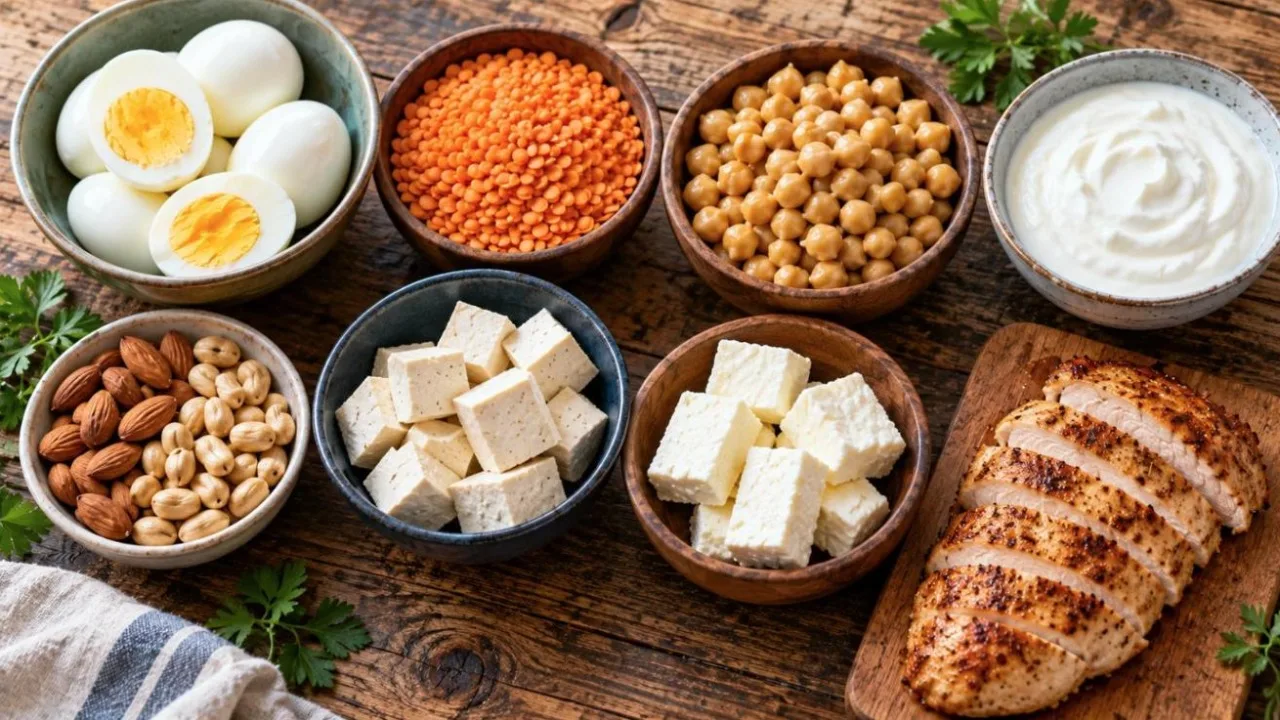
- Protein in common foods
- Plant vs animal protein
- A sample day
- Protein powders: useful or risky?
- Five protein myths
- FAQ
The quick answer
Protein needs are usually given in grams per kilogram of body weight per day (g/kg). Here is what different guidelines and studies suggest for a 70 kg (154 lb) adult:
| Situation | Guideline | Daily protein for 70 kg |
|---|---|---|
| Healthy adult, minimum (US RDA) | 0.8 g/kg | 56 g |
| Healthy adult (EFSA and India’s ICMR) | 0.83 g/kg | 58 g |
| Mainly cereal-based diet (ICMR) | 1.0 g/kg | 70 g |
| Older adult over 65 (PROT-AGE, ESPEN) | 1.0–1.2 g/kg | 70–84 g |
| Regular exercise (ISSN) | 1.4–2.0 g/kg | 98–140 g |
| Building muscle: where gains level off (Morton 2018) | About 1.6 g/kg | About 112 g |
| Losing weight / US Dietary Guidelines 2025–2030 | 1.2–1.6 g/kg | 84–112 g |
| Chronic kidney disease, stages 3–5 (KDIGO) | 0.8 g/kg | 56 g |
To work out your own number, multiply your weight in kilograms by the figure for your situation. If you weigh 60 kg and exercise regularly, 1.4–2.0 g/kg works out at 84–120 g a day.
The baseline: what official guidelines say
| Body | Recommendation for healthy adults |
|---|---|
| US National Academies (RDA) | 0.8 g/kg/day; no upper limit set |
| European Food Safety Authority (EFSA) | 0.83 g/kg/day, including older adults |
| WHO/FAO/UNU (2007) | Average requirement 0.66 g/kg/day; the safe level adds a margin on top |
| ICMR-NIN, India (2020) | 0.83 g/kg/day; 1.0 g/kg/day for cereal-based diets with lower-quality protein |
| UK (cited by the British Heart Foundation) | 0.75 g/kg/day, about 45 g for a 60 kg woman and 55 g for a 75 kg man |
| US acceptable range | 10–35% of daily calories from protein |
For Indians, ICMR's reference weights (65 kg for men, 55 kg for women) give about 54 g and 46 g a day. ICMR's higher 1 g/kg figure for cereal-based diets matters, because many Indian diets get much of their protein from rice and wheat, which are lower in some essential amino acids.
Why 0.8 g/kg is a minimum, not a target
The RDA is set at the average requirement plus a safety margin, so that it covers nearly all healthy people. It is designed to prevent deficiency. Harvard's Nutrition Source describes it as "a minimum" rather than an ideal. It was not designed to answer questions like how to keep muscle as you age, how to build strength, or how to protect muscle while dieting. That is why the recommendations for those situations are higher.
Older adults and muscle loss
From middle age, people gradually lose muscle mass and strength, a process that can become sarcopenia. Two expert groups recommend more protein for older adults than the standard RDA:
- PROT-AGE Study Group (2013): at least 1.0–1.2 g/kg/day for people over 65; at least 1.2 g/kg if they exercise; 1.2–1.5 g/kg for those with acute or chronic illness. The exception is people with severe kidney disease who are not on dialysis.
- ESPEN (2014): at least 1.0–1.2 g/kg/day for healthy older adults, and 1.2–1.5 g/kg for those who are ill or malnourished, alongside regular physical activity.
Older muscles also respond less to a small dose of protein, an effect researchers call "anabolic resistance". One study found older men needed about 0.4 g/kg in a single meal to get the maximum muscle-building response, compared with about 0.24 g/kg for younger men. In practice, that means an older adult does better with a decent serving of protein at each meal, perhaps 25–30 g, rather than a light breakfast and lunch followed by a large dinner. EFSA, by contrast, keeps the same 0.83 g/kg figure for older adults, so not all bodies agree.
Exercise and building muscle
| Source | Recommendation |
|---|---|
| International Society of Sports Nutrition (2017) | 1.4–2.0 g/kg/day for most people who exercise; 20–40 g per serving every 3–4 hours |
| ACSM, Academy of Nutrition and Dietetics and Dietitians of Canada (2016) | 1.2–2.0 g/kg/day for athletes, with about 0.3 g/kg per meal spread through the day |
| Morton et al., British Journal of Sports Medicine (2018) | Muscle gains from extra protein levelled off at about 1.6 g/kg/day (upper confidence limit about 2.2 g/kg) |
The Morton analysis is the most cited study on this question. It pooled 49 randomised trials with 1,863 people doing resistance training. Adding protein increased gains in muscle mass and strength, but only modestly, and the benefit flattened out at about 1.6 g/kg of total daily protein. Beyond that, extra protein made little difference for most people. Lifting weights matters far more than the protein itself.
How you spread it matters too. Researchers Brad Schoenfeld and Alan Aragon suggest about 0.4 g/kg per meal across at least four meals. For a 70 kg person that is about 28 g per meal, four times a day, or 112 g in total.
What about timing? A 2013 meta-analysis of 23 studies found that once total daily protein was accounted for, eating protein right after a workout made no significant difference to muscle growth. The "30-minute anabolic window" is much less important than getting enough protein across the whole day.
Weight loss and GLP-1 drugs
When you eat fewer calories, your body loses some muscle and other lean tissue along with fat. Eating more protein and doing strength training helps limit that loss.
This matters especially for people taking GLP-1 drugs such as Wegovy or Zepbound, who often eat much less because their appetite falls. In the STEP 1 trial of semaglutide, about 38% of the weight lost was lean mass, according to a 2025 joint advisory from four US obesity and nutrition societies. Our guide to the new weight-loss drugs covers this in more detail.
What that advisory says about protein:
- The adult RDA is 0.8 g/kg/day, but "higher targets, such as 1.2–1.6 g/kg/d, have also been proposed" during active weight loss.
- An absolute target of about 80–120 g a day is another option.
- Intake should not fall below 0.4–0.5 g/kg/day, and prolonged intake at or above 2 g/kg/day should be avoided.
- Protein should be paired with strength training.
A separate 2024 review published in the journal Obesity suggested more than 60–75 g of protein a day, or 0.8–1.5 g/kg, for people on these medicines. If you take a GLP-1 drug, discuss a target with your doctor or dietitian, particularly if you have kidney problems.
The new US Dietary Guidelines
The Dietary Guidelines for Americans 2025–2030, released on 7 January 2026, recommend 1.2–1.6 g/kg/day for adults, up from the 0.8 g/kg used before, and protein foods at every meal. Not everyone agrees. Harvard's Nutrition Source warned of "protein hype", pointing out that many Americans already eat enough and that the source of protein matters for long-term health. A commentary in the Journal of Nutrition noted that the evidence behind the target comes mostly from short-term trials on weight and lean mass, not long-term disease outcomes.
Pregnancy and breastfeeding
| Body | Extra protein |
|---|---|
| US National Academies | 1.1 g/kg/day in pregnancy and breastfeeding |
| EFSA | +1 g, +9 g and +28 g a day in the 1st, 2nd and 3rd trimesters; +19 g a day in the first 6 months of breastfeeding |
| ICMR-NIN (India) | +9.5 g (2nd trimester) and +22 g (3rd trimester) a day; +16.9 g a day in the first 6 months of breastfeeding |
Most of the extra need comes in the second half of pregnancy. A pregnant woman's diet should be planned with her doctor or midwife.
Kidney disease: when less is better
For people with healthy kidneys, a 2018 meta-analysis of 28 studies with more than 1,300 participants found no evidence that high-protein diets (1.5 g/kg or more, or 100 g or more a day) harmed kidney function.
Chronic kidney disease (CKD) is different. The international KDIGO 2024 guideline suggests keeping protein at 0.8 g/kg/day for adults with CKD stages 3–5 and avoiding more than 1.3 g/kg/day in people at risk of their disease getting worse. If you have CKD, do not raise your protein intake without medical advice.
Protein in common foods
Values below are approximate, based on USDA food composition data. Actual amounts vary by brand and preparation.
| Food | Protein per 100 g | Typical serving |
|---|---|---|
| Chicken breast, roasted | 31 g | 100 g cooked: about 31 g |
| Salmon, cooked | 22 g | 100 g: about 22 g |
| Tofu, firm | 17 g | 100 g: about 17 g |
| Paneer | Roughly 18–25 g, depending on how it is made | 100 g: about 18–25 g |
| Egg, whole | 12.6 g | 1 large egg: about 6 g |
| Greek yogurt, plain, non-fat | 10 g | 170 g pot: about 17 g |
| Lentils (dal), boiled | 9 g | 1 cup cooked: about 18 g |
| Chickpeas, boiled | 8.9 g | 1 cup cooked: about 14.5 g |
| Milk, whole | 3.2 g | 250 ml glass: about 8 g |
| Peanuts | About 26 g | 30 g handful: about 7.7 g |
| Almonds | About 21 g | 28 g (about 23 nuts): about 6 g |
| Whey protein isolate | Varies by brand | 1 scoop (about 28 g): typically 20–25 g |
Plant vs animal protein
Proteins differ in quality, meaning how well they supply the essential amino acids your body cannot make and how well they are digested. Scientists use scores such as PDCAAS and the newer DIAAS, which the FAO recommended in 2013. Milk, eggs, whey and soy score at or near the top; most beans, lentils and grains score lower on their own.
That does not make plant protein a poor choice. Combining sources, such as rice with dal or roti with chickpeas, fills the gaps, and eating slightly more protein makes up the rest. That is the reasoning behind ICMR's 1 g/kg figure for cereal-based diets.
For long-term health, the source of protein appears to matter more than the amount. Harvard's Nutrition Source notes that replacing red and processed meat with beans, nuts, fish or poultry is linked to a lower risk of disease.
A sample day
Here is how a 70 kg vegetarian could reach roughly 84 g, the lower end of the 1.2–1.6 g/kg range:
| Meal | Food | Protein |
|---|---|---|
| Breakfast | 2 boiled eggs and a 250 ml glass of milk | About 20 g |
| Lunch | 1 cup of lentil dal with rice or roti, plus a 170 g bowl of Greek yogurt or hung curd | About 35 g |
| Snack | A 30 g handful of peanuts | About 8 g |
| Dinner | 100 g of tofu or paneer with vegetables | About 17–25 g |
| Total | About 80–88 g |
A non-vegetarian could swap the tofu for 100 g of chicken (about 31 g) and easily pass 90 g. Grains and vegetables add a few extra grams that are not counted here. For a paneer idea, try our quick paneer bhurji.
Protein powders: useful or risky?
Protein powders are convenient, but most people can meet their needs from food. They can help when food alone falls short, for example in older adults with small appetites, people on GLP-1 drugs who struggle to eat, or vegans and athletes who want a quick 20–40 g serving.
There are some cautions:
- India's guidance: the ICMR-NIN Dietary Guidelines for Indians (2024) advise against using protein supplements to build body mass and say protein needs "are not so high as commonly perceived".
- Heavy metals: a January 2025 Clean Label Project report tested 160 powders and found 47% exceeded California's Proposition 65 limit for lead. Plant-based and chocolate-flavoured powders tended to contain more. Consumer Reports found similar patterns in October 2025, while noting that the levels were not an immediate danger; the concern is long-term exposure.
- Labelling: a 2024 study of 36 Indian protein supplement brands found about 70% had inaccurate protein claims. In the US, the FDA does not approve dietary supplements before they go on sale.
If you use a powder, choose one with independent third-party testing, prefer simple ingredients, and treat it as a top-up rather than a main source. For a wider view, see our article on whether you need supplements.
Five protein myths
1. "High protein damages healthy kidneys"
Not according to the evidence. A meta-analysis of 28 studies found no harm to kidney function in people without kidney disease. People who already have CKD are the exception.
2. "Protein weakens your bones"
A 2017 meta-analysis supported by the US National Osteoporosis Foundation found no harmful effect of higher protein intake on bone health, and possibly a small benefit for the spine. See our guide to calcium for more on bone health.
3. "Your body can only use 30 g at a time"
A 2023 study in Cell Reports Medicine gave people 100 g of protein after exercise and found a larger and longer-lasting muscle-building response, over 12 hours, than with 25 g. The researchers concluded the response "is not capped". Spreading protein through the day is still sensible, but a bigger meal is not wasted.
4. "You must eat protein within 30 minutes of training"
Total daily intake matters far more than precise timing.
5. "More is always better"
For muscle building, benefits level off around 1.6 g/kg/day. The GLP-1 advisory also recommends avoiding prolonged intake of 2 g/kg/day or more.
FAQ
How much protein do I need a day?
At least 0.8 g per kg of body weight for healthy adults. Many people benefit from more: about 1.0–1.2 g/kg after 65, 1.2–1.6 g/kg while losing weight, and 1.4–2.0 g/kg if you exercise regularly.
How much protein should I eat per meal?
Roughly 0.3–0.4 g/kg, or about 20–40 g for most adults. Older adults may need the upper end.
Is 100 g of protein a day too much?
For a healthy adult weighing 60 kg or more, 100 g is within the ranges recommended for active people or those losing weight. People with kidney disease should follow their doctor's advice.
Can vegetarians get enough protein?
Yes. Dairy, eggs, pulses, soy, nuts and seeds can easily provide 70–90 g a day. Combining grains with pulses improves protein quality.
Do I need protein powder?
Usually not. It can be a convenient top-up, but choose third-party-tested products and get most of your protein from food.
Should I eat more protein on Ozempic or Wegovy?
Medical societies suggest paying close attention to protein and doing strength training to protect muscle. Proposed targets range from about 1.2–1.6 g/kg or 80–120 g a day. Agree a target with your doctor.
Information checked in October 2026. This article is for general education and is not a substitute for advice from a doctor or registered dietitian.
Sources
- National Academies: Dietary Reference Intakes for protein (summary)
- Harvard T.H. Chan School of Public Health: The Nutrition Source — Protein
- EFSA: Dietary reference values for protein
- WHO: Protein and amino acid requirements in human nutrition (TRS 935)
- ICMR-NIN: Recommended Dietary Allowances 2020
- British Heart Foundation: How much protein do I need?
- PROT-AGE Study Group: Recommendations for dietary protein in older people (2013)
- ESPEN Expert Group: Protein intake in ageing (2014)
- ISSN Position Stand: Protein and exercise (2017)
- Morton et al., BJSM 2018: Protein supplementation and resistance training
- Schoenfeld & Aragon, JISSN 2018: How much protein per meal?
- Obesity Medicine Association: Nutritional priorities to support GLP-1 therapy
- AAFP: Dietary Guidelines for Americans 2025–2030 summary
- Harvard Nutrition Source: Dietary Guidelines 2025–2030 commentary
- NephJC: KDIGO 2024 CKD guideline, part 2
- McMaster University: High-protein diet does not affect kidney function
- Academy of Nutrition and Dietetics: High-protein diet and bone health
- Trommelen et al., Cell Reports Medicine 2023
- ICMR-NIN: Dietary Guidelines for Indians 2024
- HealthDay: Clean Label Project protein powder report (2025)
- KPBS/NPR: Consumer Reports finds lead in protein powders (2025)
- FDA: Questions and answers on dietary supplements