Most constipation eases with a few simple changes: add fibre gradually (fruit, vegetables, whole grains, pulses, oats or linseed), drink plenty of fluids, move more, and give yourself a regular, unhurried time to use the toilet without ignoring the urge. The NHS says these steps can take from a few days to a few weeks to work, and a pharmacist can suggest a short course of laxatives if they don't. See a doctor if constipation keeps coming back, does not improve with treatment, or comes with blood in your poo, unexplained weight loss, a sudden change in bowel habit or ongoing tummy pain.
Constipation is one of the most common digestive complaints, and it is usually harmless and short-lived. This guide explains what counts as constipation, why it happens, which foods and habits help, how laxatives fit in, and the warning signs that mean you should get checked.
What counts as constipation?
"Normal" bowel habits vary a lot from person to person, so constipation is judged against what is usual for you. According to the NHS, you are probably constipated if:
- you have not had a poo at least 3 times in the last week, or you are going less often than usual
- your poo is unusually large or small, and dry, hard or lumpy
- you are straining or it hurts to go
- you feel as though you have not fully emptied your bowels
You may also have stomach ache, feel bloated or feel sick. These symptoms usually settle once the bowels start moving more easily.
Common causes of constipation
Most constipation is linked to everyday factors rather than disease. The NHS and the US National Institute of Diabetes and Digestive and Kidney Diseases (NIDDK) list these common causes:
- Not enough fibre in your diet, especially if you eat a lot of processed or fast food.
- Not drinking enough fluids, which matters even more in hot weather.
- Not moving enough, including long periods of sitting or bed rest.
- Ignoring the urge to go, or not having the time or privacy to use the toilet.
- Changes in routine or diet, such as travel.
- Stress, anxiety or depression.
- Pregnancy and the weeks after birth; constipation is also more common in people over 65.
Medicines that can cause constipation
Many medicines slow the gut. NIDDK lists, among others: antacids containing aluminium or calcium, anticholinergic medicines, some anti-seizure medicines, calcium channel blockers, diuretics, iron supplements, medicines for Parkinson's disease, opioid (narcotic) painkillers and some antidepressants. If you think a medicine is the cause, do not stop it on your own; talk to your doctor or pharmacist about alternatives or a suitable laxative.
Health conditions linked to constipation
Constipation can also be a symptom of an underlying condition. NIDDK mentions an underactive thyroid (see our guide to hypothyroidism symptoms and tests), diabetes, irritable bowel syndrome (IBS) and pelvic floor problems. Rarely, the NHS notes, it can be caused by conditions such as diverticular disease or bowel cancer, which is why persistent changes deserve a check-up.
Foods that help with constipation
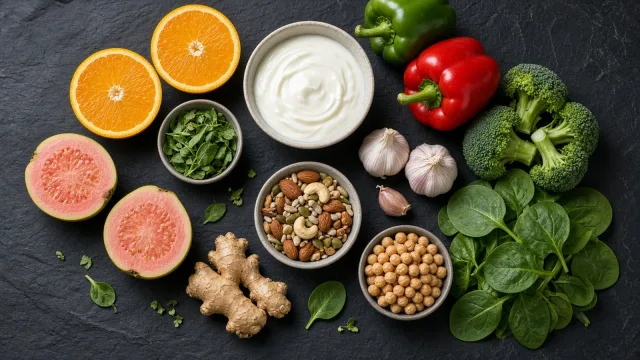
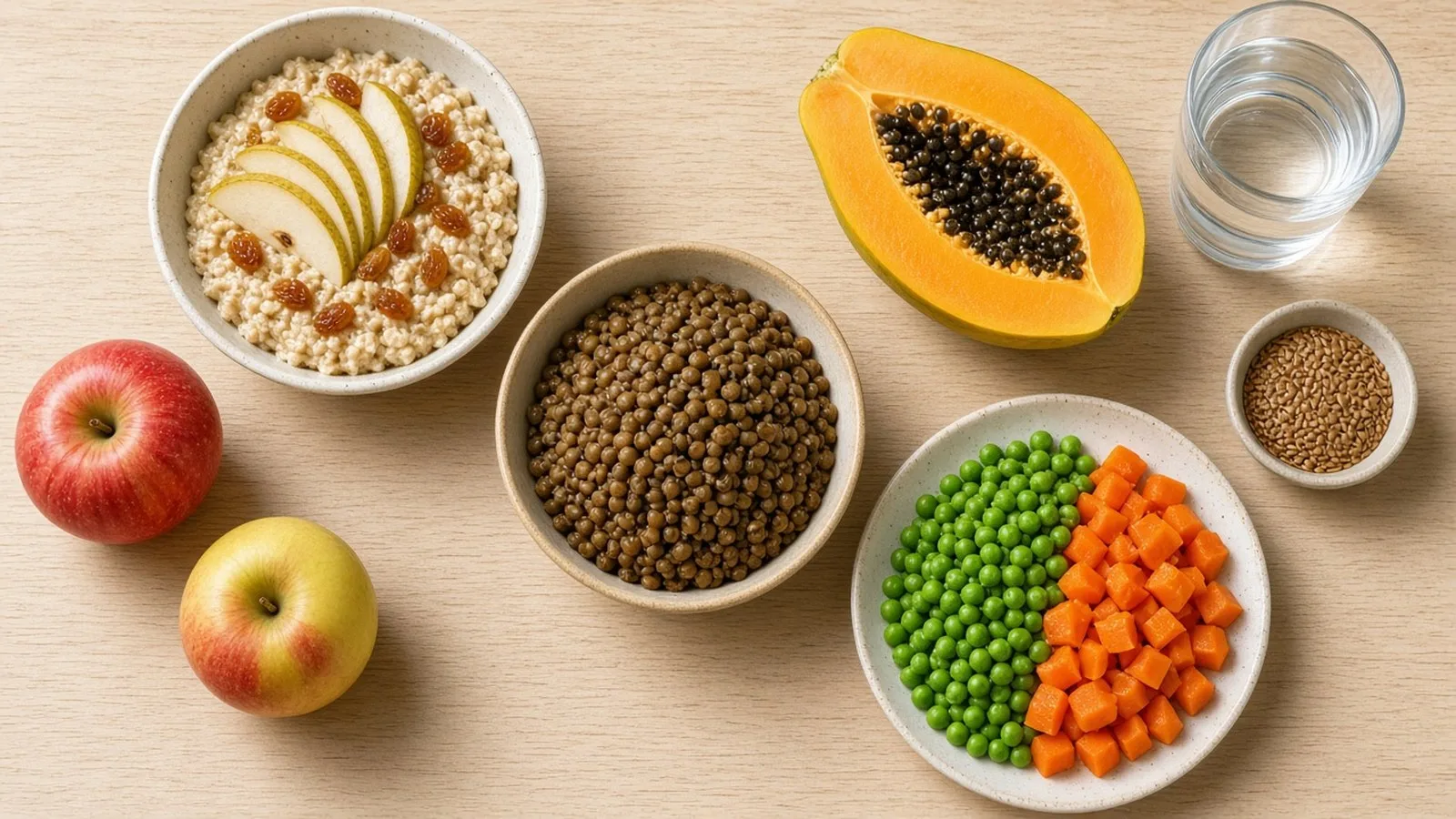
Fibre adds bulk and holds water in the stool, making it softer and easier to pass. NIDDK says most adults need about 22 to 34 grams of fibre a day, depending on age and sex. Good sources include:
| Food group | Everyday examples | Tip |
|---|---|---|
| Whole grains | Oats, whole-wheat atta, brown rice, millets, wheat bran | Swap refined flour and white bread for whole-grain versions |
| Pulses (legumes) | Dal, rajma, chana, moong, lobia | Add a bowl to at least one meal a day |
| Fruit | Apples, pears, guava, papaya, berries, raisins | Eat whole fruit rather than juice for the fibre |
| Vegetables | Leafy greens, peas, carrots, beans, okra | Fill half your plate with vegetables |
| Nuts and seeds | Almonds, peanuts, linseed (flaxseed) | A spoon of ground linseed can be stirred into curd or porridge |
The NHS specifically suggests fruit containing sorbitol, a natural sugar that draws water into the bowel, such as apples, apricots, grapes (and raisins), raspberries and strawberries. It also suggests adding wheat bran, oats or linseed to your diet.
Add fibre slowly and drink with it
Increasing fibre too quickly can cause wind, bloating and cramps. Both NHS and NIDDK advice is to increase it gradually over a few weeks so your gut can adjust. Fibre needs fluid to work, so drink plenty through the day; water is ideal. Our guide on staying well hydrated in the Indian summer has practical tips. The NHS also advises cutting down on alcohol, which can be dehydrating.
Foods to limit
NIDDK suggests limiting foods that contain little or no fibre, such as chips and other packaged snacks, fast food, meat, and prepared or processed foods. You do not need to cut these out completely, but if they make up most of your diet, constipation is more likely.
Daily habits that help
- Keep a regular toilet routine. NIDDK suggests trying to have a bowel movement 15 to 45 minutes after breakfast, when the gut is naturally more active. Never ignore the urge to go.
- Get your position right. Resting your feet on a low stool so your knees are above your hips can make it easier to pass a stool, according to the NHS. An Indian-style toilet already puts you in a similar squatting position.
- Move every day. The NHS suggests a daily walk or run. If you are starting from scratch, our beginner's walking plan is an easy place to begin.
- Give yourself time. Try not to rush. Relax and allow a few minutes.
- Look after your overall gut health. Regular meals, enough sleep and stress management all play a part; see our tips for better digestion naturally.
The NHS says these diet and lifestyle changes are safe to try during pregnancy too.
What about home remedies?
Many households have favourite remedies, such as warm water first thing in the morning, soaked raisins or figs, or isabgol (psyllium husk). Some overlap with the evidence: dried fruit adds fibre and sorbitol, and psyllium is a type of fibre supplement. But home remedies vary widely, and there is little good evidence for many of them. If you try one, introduce it gradually, drink enough fluid, and stop if it causes discomfort. Speak to a doctor before using any remedy if you are pregnant, have a long-term condition or take regular medicines.
Laxatives: when and how
If diet and lifestyle changes have not helped, a pharmacist can recommend a laxative. The NHS notes that most laxatives start working within 3 days and should only be used for a short time. The main types described by NIDDK are:
- Fibre (bulk-forming) supplements, such as psyllium, which add bulk. Take them with plenty of water.
- Osmotic agents, which draw water into the bowel to soften stools.
- Stool softeners, which help water mix into the stool.
- Lubricants, which coat the stool so it moves more easily.
- Stimulant laxatives, which make the bowel muscles contract. NIDDK suggests these only if constipation is severe or other treatments have not worked.
Ask a pharmacist or doctor before using laxatives if you are pregnant, breastfeeding, giving them to a child, or have a medical condition. If you have been using laxatives for a long time and find it hard to go without them, NIDDK advises talking to your doctor about how to stop slowly rather than suddenly.
Prescription treatments
For long-term (chronic) constipation that does not respond to over-the-counter options, doctors may prescribe other medicines that work in different ways. NIDDK lists options such as lubiprostone, linaclotide, plecanatide and prucalopride. Where pelvic floor muscles are not coordinating properly, biofeedback therapy can help retrain them. Surgery is rarely needed.
When to see a doctor
See a GP or doctor if:
- your constipation is not improving with treatment
- you are often constipated or bloated
- you have blood in your poo
- you have lost weight without trying
- you feel tired all the time
- a medicine, such as an opioid painkiller, seems to be causing it
- you have had a sudden change in your bowel habit
- you have pain in your tummy
NIDDK also advises seeing a doctor right away if constipation comes with rectal bleeding, constant abdominal pain, being unable to pass wind, vomiting, fever, lower back pain or weight loss. Tell your doctor if you have a family history of bowel (colon) cancer.
Complications of untreated constipation
Long-lasting constipation can lead to faecal impaction, where dry, hard stool builds up in the rectum. The NHS explains that this can cause watery leakage ("overflow diarrhoea"), which is sometimes mistaken for diarrhoea. Impaction is treated with stronger laxatives, suppositories, a mini enema or, occasionally, manual removal by a health professional.
Frequently asked questions
How many times a week should I poo?
There is no single normal, and what matters most is a change from what is usual for you. The NHS uses fewer than 3 times in a week, or less often than usual for you, as a sign of constipation.
How quickly do diet changes work?
According to the NHS, diet and lifestyle changes can take from a few days to a few weeks to make a difference. Increase fibre gradually and keep up your fluid intake.
Is it safe to take laxatives every day?
Most laxatives are meant for short-term use. If you need them regularly, see a doctor to look for a cause and to plan treatment, especially before stopping long-term use.
Can stress cause constipation?
Yes. The NHS lists stress, anxiety and depression among the common causes. Changes in routine and ignoring the urge to go during busy days also play a part.
Is constipation in pregnancy normal?
It is common during pregnancy and after giving birth. The NHS says it is safe to try diet and lifestyle changes, but ask a pharmacist, midwife or doctor before taking any laxative.
Disclaimer: This article is for general information only and is not medical advice. It does not replace a diagnosis or treatment plan from a qualified professional. Please consult your doctor before changing your diet, exercise, medicines or supplements, and seek urgent care for any warning signs mentioned above.
Related reading on HorizonDesk
- Better digestion naturally: everyday habits for a happier gut
- Acid reflux and heartburn: causes, relief and foods to avoid