Melasma is a common skin condition that causes flat brown or grey-brown patches, usually on the cheeks, forehead, nose, chin or upper lip. It is triggered mainly by sunlight (including visible light), hormones (pregnancy and birth control pills) and genetics. It is most common in women and people with medium to dark skin, including many South Asians. Melasma cannot be cured permanently, but it can be faded. Dermatologists combine strict daily sun protection, ideally with a tinted sunscreen containing iron oxide, with prescription creams such as hydroquinone, tretinoin or azelaic acid, and sometimes procedures or tranexamic acid. Results usually take 3 to 12 months, and patches often return without sun protection.
This guide explains what causes melasma, how it is diagnosed, which treatments have evidence behind them, and how to prevent it from coming back.
What is melasma?
The American Academy of Dermatology (AAD) describes melasma as patches and freckle-like spots that are darker than your natural skin tone. They can be tan, brown, grey-brown or bluish-grey, and usually appear on both sides of the face in a fairly symmetrical pattern. Less often, they appear on the forearms or neck.
Melasma is not contagious, not cancer and not a sign of skin cancer, according to the AAD. Because it often first appears during pregnancy, it is sometimes called the "mask of pregnancy". Many people notice the patches darken in summer and fade in winter.
What causes melasma?
The exact cause isn't fully understood. The AAD explains that the skin's pigment cells (melanocytes) become overactive in melasma, and that certain triggers seem to push them into overdrive.
Common triggers
- Sunlight. Ultraviolet (UV) light stimulates pigment production, which is why melasma appears on sun-exposed areas. DermNet NZ notes that visible light also promotes melanin production, which is why ordinary sunscreens alone may not be enough.
- Pregnancy. Rising oestrogen and progesterone levels are thought to trigger it.
- Hormonal medicines. These include birth control pills and, according to DermNet, other hormone-containing contraceptives and hormone replacement therapy.
- Medicines that increase sun sensitivity, including some antibiotics, some blood pressure medicines and retinoids (see our retinol guide for sun-safety tips), and anti-seizure medicines.
- Thyroid disease. The AAD notes that a thyroid problem may raise the risk.
- Stress. This is controversial, but some research suggests a link.
- Tanning beds and sunlamps, which can produce strong UV.
- Irritating or scented products. DermNet lists perfumed soaps and toiletries among possible factors. The AAD warns that anything that burns or stings can darken spots.
Who is most at risk?
- Women, especially between the ages of 20 and 40.
- People with medium or darker skin tones, including those of Asian, Latin, Black or Native American heritage.
- People with a blood relative who has melasma. In one study of 324 patients cited by the AAD, 48% had an affected relative.
Melasma vs other dark spots
| Condition | Typical look | Key clue |
|---|---|---|
| Melasma | Larger, blotchy brown or grey-brown patches on both cheeks, forehead or upper lip | Symmetrical; worse with sun and hormones |
| Post-inflammatory hyperpigmentation | Dark marks where acne, a rash or an injury used to be | Follows skin inflammation |
| Sun spots (solar lentigines) | Small, well-defined brown spots on sun-exposed skin | More common with age and sun damage |
| Suntan / uneven tone | General darkening of exposed areas | Fades gradually with sun protection |
For general tan and uneven tone, see our guide to managing a tan and uneven skin tone. If a spot is changing, growing, bleeding or looks different from your other marks, see a doctor promptly.
How melasma is diagnosed
A dermatologist can usually diagnose melasma by examining your skin, sometimes with a Wood's lamp or a dermatoscope. These tools help show how deep the pigment sits, which affects how well it responds to treatment. If the diagnosis is uncertain, a small skin biopsy may be taken to rule out other conditions.
Melasma treatment: what dermatologists use
The AAD says there is no single best treatment. The most effective plans usually combine sun protection with medicines applied to the skin, and sometimes a procedure. Treatment is tailored to your skin tone, the depth of the pigment and your triggers.
1. Sun protection (the foundation)
Every treatment fails without it. Dermatologists advise:
- a broad-spectrum, water-resistant sunscreen with SPF 30 or more every day, even on cloudy days, reapplied at least every two hours outdoors
- a tinted sunscreen containing iron oxide, which helps block visible light. The AAD says visible light has been shown to worsen melasma, especially in darker skin tones. Mineral filters such as zinc oxide and titanium dioxide are also recommended.
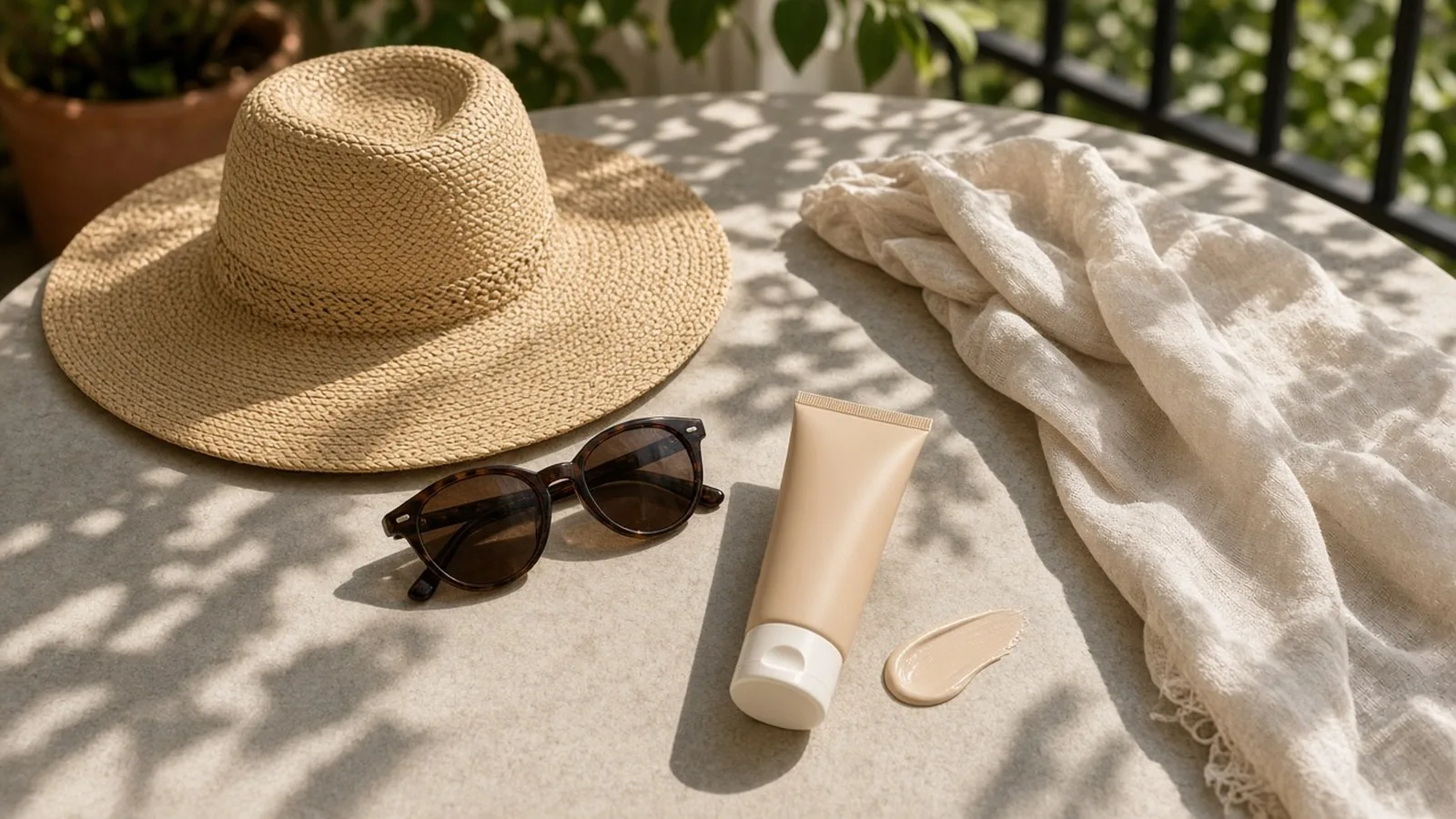
- a wide-brimmed hat, sunglasses and shade
- no tanning beds or sunlamps
Our sunscreen guide for India covers how much to apply.
2. Prescription creams
- Hydroquinone: a common pigment-reducing treatment. The AAD notes it is no longer available without a prescription in the United States. It should be used only under medical supervision.
- Triple-combination cream: hydroquinone, tretinoin (a retinoid) and a mild corticosteroid. DermNet reports that this combination clears or improves melasma in 60–80% of people in studies.
- Tretinoin with a mild corticosteroid.
- Gentler options: azelaic acid, kojic acid, vitamin C and topical tranexamic acid, among others listed by DermNet.
Corticosteroid-containing creams should be used only for the period your doctor advises. Long-term unsupervised use of steroid "fairness" creams can damage the skin.
3. Procedures
For stubborn melasma, a dermatologist may add a chemical peel, microneedling, laser or light treatment, or platelet-rich plasma. The AAD stresses that these should be done only by a board-certified dermatologist. DermNet warns that peels and lasers can sometimes worsen melasma or cause new dark marks, particularly in darker skin, so they need careful selection.
4. Tranexamic acid tablets
For hard-to-treat melasma, dermatologists may prescribe oral tranexamic acid, usually alongside creams and sun protection. The AAD notes that studies show it can reduce patches when other treatments have failed. It is a prescription medicine, and your doctor will check your medical history first, especially any history of blood clots. Don't take it without medical advice.
How long does melasma take to fade?
According to the AAD, it usually takes 3 to 12 months to see results with a treatment plan, and longer if you have had melasma for many years. The AAD advises treating it sooner rather than later. When melasma is caused by pregnancy or a medicine, it may fade on its own after the baby is born or the medicine is stopped.
Melasma during pregnancy
The AAD advises waiting until after the baby is born to treat melasma, because it can be hard to know whether an over-the-counter product is safe in pregnancy, and melasma often improves after delivery. In the meantime, focus on sun protection with a mineral, tinted sunscreen, a hat and shade.
How to prevent melasma from coming back
- Use sunscreen every day, all year, and choose a tinted iron-oxide formula if you can.
- Limit sun at peak hours and use hats and shade, especially during the Indian summer.
- Choose gentle, fragrance-free products and avoid anything that stings or burns.
- Avoid harsh scrubs, home peels and DIY lemon or bleach treatments, which can irritate skin and worsen pigmentation.
- Talk to your doctor if a hormonal medicine seems to be a trigger. Don't stop prescribed medicines on your own.
- Use maintenance treatment as your dermatologist advises once the patches fade.
The AAD suggests applying products in this order: melasma medicine first, then sunscreen, then camouflage makeup if you wish to cover the patches while treatment works.
Frequently asked questions
Can melasma be cured permanently?
No. Treatment can fade melasma substantially, but the AAD notes it can come back, especially after time in the sun without protection. Long-term sun protection is the key to keeping results.
Do home remedies like lemon juice or potato work for melasma?
There is no good evidence that they work, and acidic or irritating home remedies can inflame the skin and make pigmentation worse. Stick to sun protection and products recommended by a dermatologist.
Is vitamin C serum good for melasma?
Vitamin C is one of the gentler agents dermatologists may use. It is usually milder than prescription options and works best combined with daily sun protection.
Can men get melasma?
Yes, although it is much more common in women. The same principles of sun protection and dermatologist-guided treatment apply.
Does melasma go away after pregnancy?
It often fades after delivery, but not always. If it persists, a dermatologist can recommend treatment, taking breastfeeding into account.
Can I cover melasma with makeup?
Yes. The AAD says camouflage makeup can help while you wait for treatment to work, applied after your medicine and sunscreen. Choose non-irritating, fragrance-free products; a dermatologist can suggest ways to get a natural-looking result.
Disclaimer: This article is for general information only and is not medical advice. Skin differs from person to person. Patch-test new products, and consult a dermatologist or doctor for persistent, painful or worsening skin problems, or before using active ingredients if you are pregnant, breastfeeding or on prescription treatment.
Related reading on HorizonDesk
- Sunscreen made simple: how to choose and use it in India
- Gentle ways to manage a tan and uneven skin tone
- A basic skincare routine for Indian weather