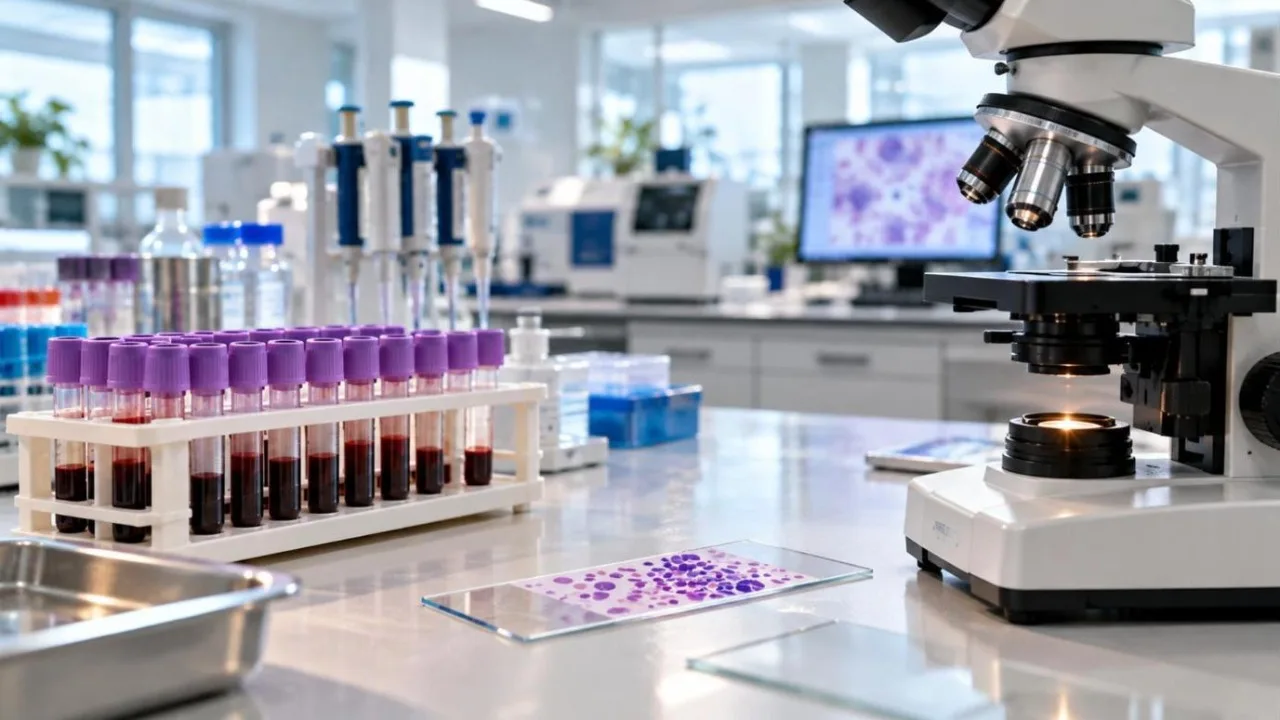
Welcome to Lab Tests Explained, a HorizonDesk series that helps you read your own medical reports with confidence. We start with the most common blood test of all: the complete blood count (CBC). Doctors order it for fevers, tiredness, routine checkups, before surgery and to monitor many illnesses.
What does a CBC measure?
A CBC looks at the three main types of cells in your blood:
- Red blood cells (RBCs) carry oxygen using a protein called haemoglobin.
- White blood cells (WBCs) fight infection.
- Platelets help your blood clot.
Typical adult reference ranges
| Test | Men | Women |
|---|---|---|
| Haemoglobin (Hb) | 13.0 – 17.0 g/dL | 12.0 – 15.5 g/dL |
| RBC count | 4.5 – 5.9 million/µL | 4.0 – 5.2 million/µL |
| Haematocrit (PCV) | 40 – 50% | 36 – 46% |
| Total WBC count | 4,000 – 11,000 /µL | |
| Platelet count | 1.5 – 4.5 lakh /µL | |
| MCV (average red cell size) | 80 – 100 fL |
Haemoglobin: the number most people look at
Low haemoglobin means anaemia. The World Health Organization uses below 13 g/dL for men and below 12 g/dL for non-pregnant women. Common causes include iron deficiency, vitamin B12 or folate deficiency, blood loss and chronic illness. High haemoglobin can occur with dehydration, smoking, living at high altitude or certain lung and bone marrow conditions.
Red cell indices: clues to the cause of anaemia
- Low MCV (small cells): often points to iron deficiency or thalassaemia trait.
- High MCV (large cells): can suggest vitamin B12 or folate deficiency, alcohol use or thyroid problems.
- MCH and MCHC show how much haemoglobin each cell carries; low values suggest pale (hypochromic) cells.
- RDW shows variation in cell size; a high RDW often appears in early iron deficiency.
White blood cells and the differential count
A high WBC count usually signals infection or inflammation, but it can also rise with stress, steroids or, rarely, blood cancers. A low count can follow viral infections, some medicines or bone marrow problems. The differential count breaks WBCs into types:
- Neutrophils (roughly 40–75%): rise in bacterial infections.
- Lymphocytes (roughly 20–45%): often rise in viral infections.
- Eosinophils (up to about 6%): rise with allergies and worm infestations.
- Monocytes and basophils: smaller groups with specific roles.
Platelets
Platelets are closely watched during dengue, when counts can fall sharply. Low platelets increase bleeding risk, while very high counts can occur with infection, inflammation or iron deficiency. A falling platelet count with fever needs prompt medical attention.
Tips before the test
- No fasting is needed for a CBC alone.
- Tell your doctor about recent fever, medicines or supplements.
- Compare results with previous reports; trends matter more than a single value.
When to see a doctor
Seek advice if your haemoglobin is low, your WBC or platelet count is outside the range, or you have symptoms such as tiredness, breathlessness, frequent infections, easy bruising or bleeding. A single slightly abnormal value is common and often harmless, but your doctor can decide whether repeat tests are needed.
Lab Tests Explained: the full series
- Part 1: CBC (Complete Blood Count) (you are here)
- Part 2: Lipid Profile
- Part 3: Liver Function Test
- Part 4: Kidney Function Test
- Part 5: Urine Routine Test
- Part 6: Iron Studies and Ferritin
- Part 7: Vitamin B12
- Part 8: Full-Body Checkup by Age
Related reads: Blood sugar levels and HbA1c · Thyroid tests · Vitamin D test · Uric acid
Disclaimer: This article is for general information only and is not medical advice. Reference ranges vary between laboratories, so always read your report against the range printed on it and discuss results with a qualified doctor.