The most reliable way to get glowing skin naturally is to protect it from the sun every day, cleanse gently, moisturise, avoid smoking, and support it from the inside with a diet rich in fruit, vegetables and healthy fats, regular exercise, enough sleep and less alcohol. Dermatologists at the American Academy of Dermatology (AAD) say daily sun protection is the single most important step, because UV damage dulls and ages skin. There is no overnight fix, but these habits, kept up over weeks and months, help skin look clearer, smoother and more even.
"Glow" is not a medical term. It usually describes skin that looks even in tone, smooth in texture and comfortably hydrated, and that reflects light rather than looking dull, rough or blotchy. This guide sets out the evidence-based habits that help, what to eat, and which popular shortcuts to skip.
Why skin looks dull
Several everyday factors can make skin look tired or uneven:
- Sun damage. The AAD describes sun exposure as a major cause of premature skin ageing; dermatologists call this photoageing. It leads to uneven pigmentation, fine lines and rough texture.
- Smoking. The AAD says smoking greatly speeds up skin ageing and causes wrinkles and a dull, sallow complexion.
- Irritation. Harsh scrubbing and products that sting or burn irritate the skin, and the AAD notes that irritation can make skin look older.
- Dryness. Dry skin looks flaky and reflects less light.
- Lifestyle. Heavy drinking, poor sleep and stress can all show up in the skin.
Daily habits for healthy, glowing skin
1. Protect your skin from the sun every day
The AAD calls sunscreen "the closest thing we have to a fountain of youth" because it can slow skin ageing and help prevent skin cancer. It recommends a broad-spectrum, water-resistant sunscreen of SPF 30 or higher on all exposed skin every day, plus shade and protective clothing such as a wide-brimmed hat and sunglasses. In India's strong sun this matters all year round; our guide to choosing and using sunscreen in India covers how much to apply and when to reapply.
2. Skip tanning
The AAD says every tan, from the sun or a tanning bed, prematurely ages the skin. If you like a tanned look, it suggests a self-tanner instead.
3. Cleanse gently, twice a day
The AAD recommends washing your face when you wake up, before bed and after heavy sweating. Use lukewarm water and a mild cleanser, apply it with your fingertips, rinse thoroughly and pat dry. Do not scrub: scrubbing irritates the skin and can worsen conditions such as acne.
4. Moisturise daily
Moisturiser traps water in the skin, which the AAD says gives it a more youthful appearance. Choose a texture that suits your skin type: a lightweight gel or lotion for oily skin, and a richer cream for dry skin. If your skin reacts easily, see our skincare routine for sensitive skin. Our season-by-season skincare routine for Indian weather explains how to adjust through summer, monsoon and winter.
5. Use products that match your skin
The AAD advises choosing products formulated for your skin type (oily, dry, normal, combination or sensitive) and stopping products that sting or burn, unless a dermatologist has prescribed them and told you to expect it.
6. Don't smoke, and drink less alcohol
Smoking damages skin in several ways; the AAD describes "smoker's face" as a dull, dry complexion with loss of firmness and premature lines. The AAD also says alcohol dehydrates and, over time, damages the skin.
What to eat for glowing skin
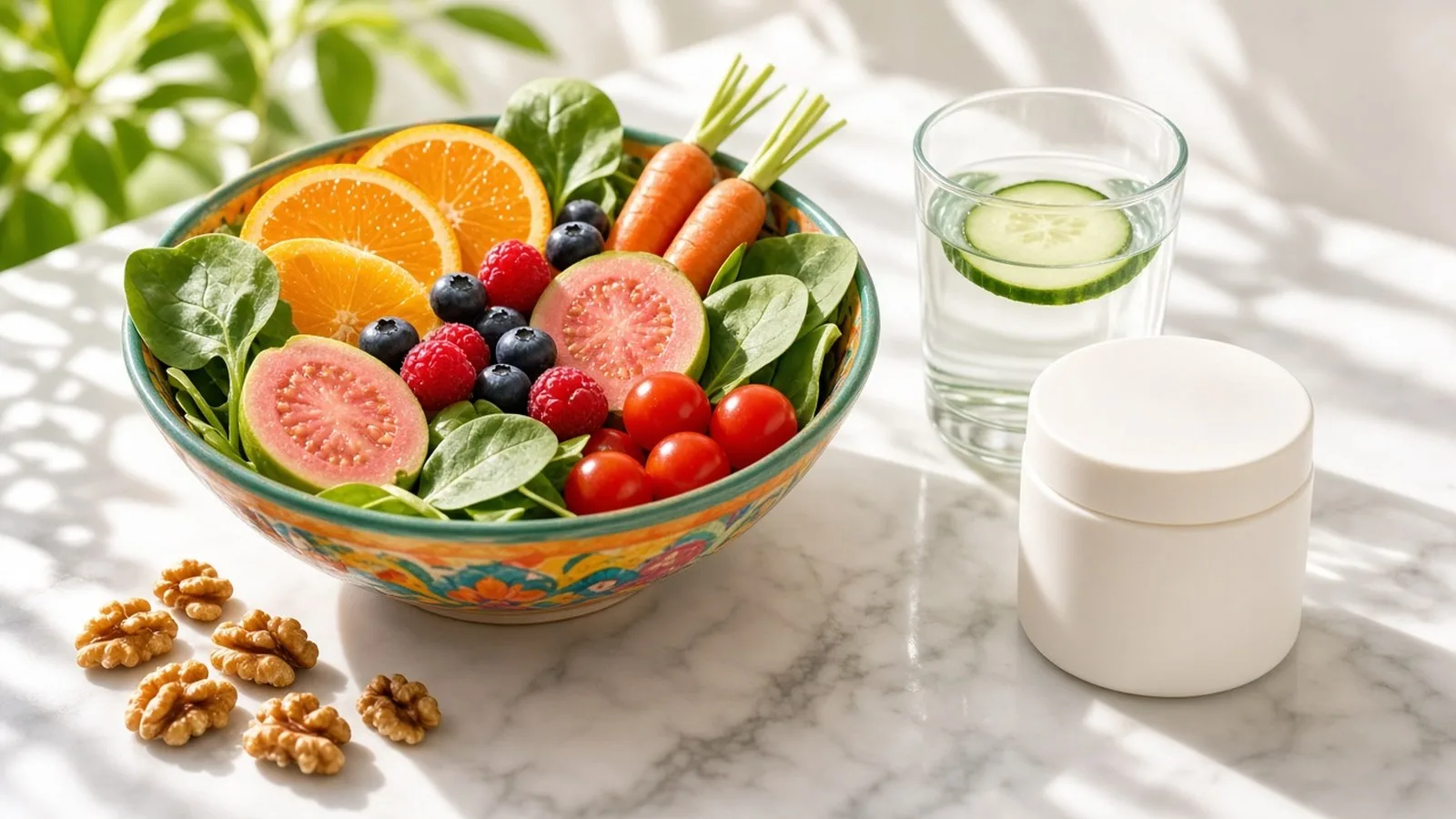
No single food produces glowing skin, but the overall pattern of your diet matters. The AAD says findings from a few studies suggest that eating plenty of fresh fruit and vegetables may help prevent damage that leads to premature skin ageing, and that a diet high in sugar or other refined carbohydrates may accelerate ageing. It recommends fruit, vegetables, lean proteins and healthy fats.
| Eat more | Examples | Why it may help |
|---|---|---|
| Colourful fruit and vegetables | Guava, oranges, amla, papaya, tomatoes, carrots, leafy greens | Linked in some studies with less skin ageing; good sources of vitamin C and other antioxidants |
| Healthy fats | Nuts, seeds, fish, mustard or groundnut oil in moderation | Part of a healthy dietary pattern recommended by the AAD |
| Lean protein | Dal, eggs, fish, paneer, curd, chicken | Part of the balanced diet the AAD recommends for healthy skin |
| Whole grains and pulses | Millets, oats, brown rice, rajma, chana | Lower glycaemic load than refined carbohydrates |
| Eat less | Examples | Why |
|---|---|---|
| Added sugar and refined carbs | Sweets, sugary drinks, white bread, biscuits | Linked in research with faster skin ageing; high-glycaemic diets may worsen acne in some people |
| Alcohol | Spirits, beer, wine | Dehydrates and, over time, damages skin (AAD) |
The WHO similarly advises plenty of fruit, vegetables, legumes, nuts and whole grains, and limiting free sugars and salt, which supports overall health as well as skin. Vitamin C deserves a special mention because the body needs it to make collagen; according to the US National Institutes of Health; our explainer on vitamin C covers food sources.
Diet and acne
If breakouts are dulling your skin, diet may play a part for some people. The AAD reports that a few small studies suggest a low-glycaemic diet (fewer sugary foods and refined carbohydrates) may reduce acne, although other studies found no link and more research is needed. Cow's milk may also be linked to acne in some people: in one large study of 47,355 women, those who drank two or more glasses of skimmed milk a day were 44% more likely to have acne. The AAD says there is no evidence that yogurt or cheese worsens acne. If you suspect a food, try cutting it back for a while and see whether your skin changes, rather than removing whole food groups.
What about water?
Drinking enough fluids is important for health, but there is limited evidence that drinking extra water beyond your needs makes skin glow. Moisturiser is a more direct way to hydrate the skin's surface.
Lifestyle: exercise, sleep and stress
- Exercise most days. The AAD notes that a few studies suggest moderate exercise can improve circulation and support the immune system, which may give skin a more youthful appearance. The WHO recommends adults get at least 150 to 300 minutes of moderate activity a week. Wash your face after heavy sweating.
- Sleep well. The AAD says sleep gives your body time to refresh and renew itself. Our guide to how much sleep you need explains recommended hours by age.
- Manage stress. The AAD notes that stress can trigger flare-ups of skin conditions such as acne, eczema, psoriasis and rosacea. Finding healthy ways to manage it can help your skin too.
A simple routine for glowing skin
| Time | Step |
|---|---|
| Morning | Gentle cleanser, then moisturiser, then broad-spectrum SPF 30+ sunscreen |
| Through the day | Reapply sunscreen if outdoors; wash after heavy sweating |
| Evening | Remove sunscreen and makeup with a gentle cleanser, then moisturiser |
Once this basic routine suits you, a dermatologist may suggest adding an active ingredient for specific concerns, such as uneven tone or fine lines. Introduce one new product at a time and patch-test it first.
Natural remedies to be careful with
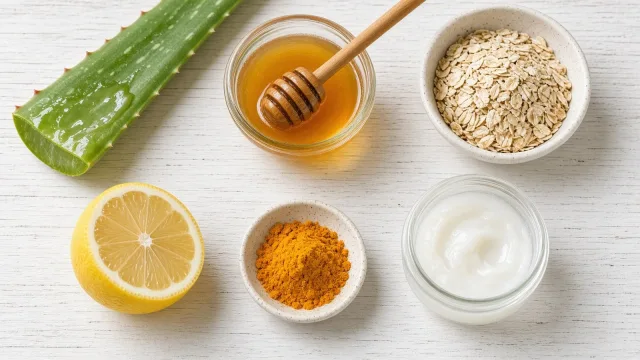
Kitchen ingredients are often recommended for glowing skin. Some, like a plain yogurt or besan face pack, are generally gentle for many people, but evidence for their benefits is limited. Be cautious with:
- Acidic ingredients such as lemon juice applied directly to the face.
- Undiluted essential oils.
- Rough scrubs made from sugar, salt or crushed shells; the AAD advises against scrubbing.
The common thread is irritation: the AAD notes that skin that stings or burns is irritated, and irritation can make skin look older.
Patch-test anything new on a small area for a few days first, and stop if it stings, burns or causes a rash.
When to see a dermatologist
See a dermatologist if dullness comes with persistent acne, patches of darker skin, redness, flaking or itching, or if a spot or mole changes, itches or bleeds. The AAD also recommends checking your skin regularly for new or changing spots, which can help find skin cancer early.
Frequently asked questions
How long does it take to get glowing skin?
There is no fixed timeline. Gentle cleansing and moisturiser can make skin look more comfortable within days, but improvements from sun protection, diet and lifestyle changes build over weeks and months.
Which foods give glowing skin?
No single food does. A pattern rich in fruit, vegetables, lean protein, whole grains and healthy fats, with less sugar and refined carbohydrates, is what the evidence and the AAD support.
Does drinking more water make skin glow?
Staying hydrated matters for your health, but there is little evidence that extra water beyond your needs changes how skin looks. Moisturiser helps more directly.
Is sunscreen needed indoors or on cloudy days?
The AAD advises applying sunscreen every day to all skin that clothing will not cover before you go outdoors, whatever the errand. Making it part of your morning routine is the easiest way not to forget.
Can I get glowing skin without products?
Lifestyle habits make a big difference, but sun protection and a basic cleanser and moisturiser are the foundation dermatologists recommend.
Disclaimer: This article is for general information only and is not medical advice. Skin differs from person to person. Patch-test new products, and consult a dermatologist or doctor for persistent, painful or worsening skin problems, or before using active ingredients if you are pregnant, breastfeeding or on prescription treatment.
Sources
- American Academy of Dermatology: 11 ways to reduce premature skin aging
- American Academy of Dermatology: 10 skin care secrets for healthier-looking skin
- American Academy of Dermatology: Skin care in your 40s and 50s
- American Academy of Dermatology: Can the right diet get rid of acne?
- World Health Organization: Healthy diet fact sheet
- World Health Organization: Physical activity fact sheet
- NIH Office of Dietary Supplements: Vitamin C