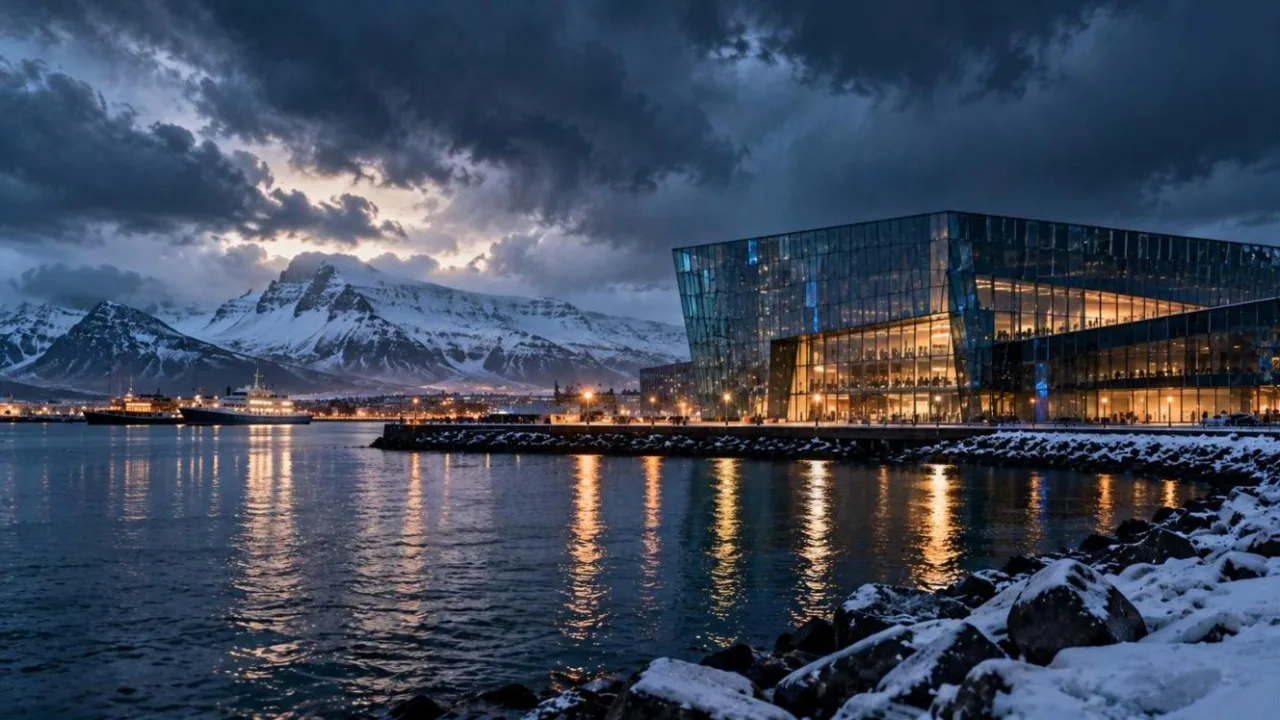
Iceland is a small island nation with a population of only a few hundred thousand people. Yet in the 2000s its banks became international giants. When the global financial crisis hit in 2008, all three major banks collapsed in a single week, and the country's currency and economy went into freefall. In Part 17 of Great Financial Crises, we look at Iceland's extraordinary banking collapse.
From fishing to finance
For most of its history, Iceland's economy relied on fishing. In the late 1990s and early 2000s, the government privatised the banks and deregulated the financial sector. The three largest banks, Kaupthing, Landsbanki and Glitnir, expanded rapidly abroad, buying businesses and lending across Europe.
According to a US Congressional Research Service report, by the eve of the crisis the three banks had combined assets of more than $168 billion, about 14 times Iceland's GDP. Nearly half of their assets were held by foreign subsidiaries.
How they funded growth
The banks relied heavily on borrowing in international wholesale markets. By the end of 2007, according to the CRS report, short-term financing made up about 75% of their funds. They also attracted deposits from savers abroad through high-interest online accounts, most famously Landsbanki's Icesave accounts in the UK and the Netherlands.
Icelandic households and businesses also borrowed heavily, often in foreign currencies such as euros and Swiss francs, attracted by lower interest rates than on krona loans.
The warning signs
In 2006, ratings agencies and analysts raised concerns about Icelandic banks' reliance on short-term funding, sometimes called the "Geyser crisis". The banks survived that scare, but vulnerabilities remained. The Icelandic krona began falling against major currencies from early 2008, and sharply from mid-2008.
October 2008: the collapse
After Lehman Brothers failed in September 2008 (Part 16), global wholesale funding dried up. Iceland's banks could not roll over their debts, and the country's central bank was far too small to act as lender of last resort for banks many times the size of the economy.
In October 2008, Iceland's Financial Supervisory Authority took control of Glitnir, Landsbanki and Kaupthing within days. The government passed emergency legislation that prioritised domestic deposits and split the banks into new domestic banks and old banks holding foreign assets and debts.
The Icesave dispute
When Landsbanki failed, savers in the UK and the Netherlands with Icesave accounts could not access their money. The UK government used anti-terrorism legislation to freeze Landsbanki's assets in Britain, a move that angered many Icelanders.
Britain and the Netherlands compensated their own depositors and then sought repayment from Iceland, a total of more than $5.3 billion according to the CRS. Icelandic voters rejected repayment deals in referendums, including about 98% opposed in March 2010. The dispute went to the EFTA Court, which in 2013 ruled in Iceland's favour on the main question, while the claims were largely paid over time from Landsbanki's estate.
The economic shock
- The krona lost much of its value against major currencies, and inflation reached about 12% to 13% in 2008 and 2009.
- The central bank raised interest rates to 18%.
- Real GDP shrank about 7% in 2009.
- Households with foreign-currency loans saw their debts soar.
- Unemployment rose sharply from very low levels.
International support and capital controls
In November 2008, Iceland agreed a $6 billion stabilisation programme, including a $2.1 billion loan from the IMF and about $2.5 billion from Nordic countries. Iceland also imposed strict capital controls to stop money fleeing the country and stabilise the krona. These controls lasted until they were largely lifted in 2017.
An unusual recovery
Iceland's response differed from many countries:
- It let its banks fail rather than guaranteeing all their foreign debts.
- It protected domestic depositors.
- Some bank executives were later prosecuted and jailed.
- Debt relief was provided to households.
Helped by a weaker krona, a tourism boom and fishing exports, Iceland's economy recovered within a few years, and it repaid its IMF loans early.
Lessons for investors today
- Banks can become too big to save. When banking assets dwarf the economy, governments may be unable to rescue them.
- Short-term funding is fragile, especially in a global crisis.
- Foreign-currency borrowing is dangerous when your income is in a currency that can collapse.
- High-interest deposits can carry hidden risks. Check who guarantees your savings.
In Part 18, we look at the eurozone debt crisis, when Greece and other countries struggled to repay their debts.
Sources
- US Congressional Research Service – Iceland's Financial Crisis (2010)
- Seven Pillars Institute – Case study: Iceland's banking crisis
Great Financial Crises: the full series
- Part 1: Tulip Mania (1637)
- Part 2: The Mississippi and South Sea Bubbles (1720)
- Part 3: The Panic of 1907
- Part 4: The Wall Street Crash and Great Depression
- Part 5: Weimar Hyperinflation (1923)
- Part 6: The 1970s Oil Shocks and Stagflation
- Part 7: The Latin American Debt Crisis (1982)
- Part 8: Black Monday (1987)
- Part 9: Japan's Bubble and Lost Decades
- Part 10: The Savings and Loan Crisis
- Part 11: The Mexican Peso Crisis (1994)
- Part 12: The Asian Financial Crisis (1997)
- Part 13: Russia's Default and LTCM (1998)
- Part 14: The Dot-Com Bubble (2000)
- Part 15: Argentina's Collapse (2001)
- Part 16: The Global Financial Crisis (2008)
- Part 17: Iceland's Banking Collapse (2008) (you are here)
- Part 18: The Eurozone Debt Crisis
- Part 19: The Covid Crash (2020)
- Part 20: The 2023 Banking Turmoil
This series is for education only and is not investment advice. Figures are taken from the sources listed and other commonly cited historical records, and may vary slightly between sources.