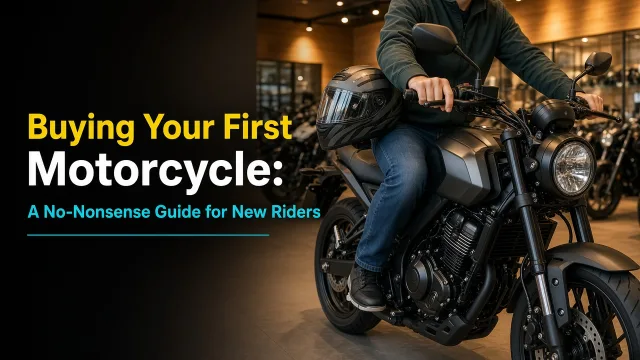
A first motorcycle purchase is often driven by looks and brand reputation, but the bikes that make new riders miserable, or worse, get them hurt, are rarely picked for the wrong colour. They are picked because they are too heavy, too powerful, or too demanding for someone still learning clutch control and road awareness at the same time. A clearer set of priorities helps.
Start With What You'll Actually Use It For
Before comparing models, define the job. A bike bought mainly for a short daily commute on city roads has very different needs from one meant for weekend highway trips or occasional off-road use. Riders who buy for the trip they take twice a year instead of the commute they do every day often end up with a bike that is uncomfortable or impractical most of the time.
- City commuting: favours a lighter, narrower bike that is easy to filter through traffic and park.
- Mixed city and highway: favours a bit more engine capacity and wind protection for sustained higher speeds.
- Occasional touring: favours comfort, luggage capacity, and a more upright seating position.
Engine Size: Bigger Is Not Better for a Beginner
A larger engine is not inherently better for a new rider; it is simply more power and torque arriving faster than a beginner's reflexes may be ready to manage smoothly. Most riding instructors recommend starting on a smaller-capacity bike specifically because it is more forgiving of the small mistakes every new rider makes, from grabbing too much throttle to misjudging a low-speed turn.
Weight and Seat Height Matter More Than Specs
A spec sheet will tell you horsepower and torque, but it will not tell you how a bike feels at a dead stop with both feet barely touching the ground, or how heavy it feels when you have to walk it backwards out of a parking spot. For a new rider, the ability to comfortably flat-foot the bike and manage its weight at walking speed matters more day to day than outright performance figures.
| Bike Type | Typical Strength | Typical Trade-off |
|---|---|---|
| Commuter / standard | Light, easy to handle, fuel-efficient | Less comfortable at sustained high speed |
| Naked / street | Balanced power and agility | Can be more than a beginner needs |
| Cruiser | Comfortable, low seat height, relaxed riding position | Heavier, less nimble in tight traffic |
| Adventure / dual-sport | Versatile on mixed road surfaces | Often taller seat height, more weight |
New vs Used for a First Bike
A used bike from a well-maintained example is often excellent value for a first motorcycle, since depreciation on two-wheelers is steep in the first couple of years, and a beginner is statistically more likely to drop or scrape a bike while learning. A new bike offers warranty peace of mind and the latest safety features, but a well-chosen used bike can let a new rider learn without the emotional weight of worrying about every scratch.
If you do buy used, have it inspected by a mechanic you trust, check the service history, and confirm the chain, brakes, and tyres are not close to needing replacement.
Budgeting Beyond the Purchase Price
The purchase price is only the starting number. A realistic first-bike budget also includes insurance, registration, routine servicing, tyre replacement, and gear. Riders who spend their entire budget on the bike itself often end up skimping on gear, which is exactly the wrong place to cut costs.
Gear and Training Are Part of the Purchase
A helmet, jacket, gloves, and proper footwear are not optional accessories; they are part of what makes riding viable at all. Equally, a basic riding course, even an informal one with an experienced rider, teaches habits that are much harder to unlearn once formed incorrectly through trial and error alone.
Wrap-Up Checklist
- Match the bike to your actual, most frequent use case, not your occasional one.
- Choose a manageable engine size and confirm you can flat-foot the bike comfortably.
- Weigh new versus well-inspected used based on your budget and risk tolerance.
- Budget for insurance, servicing, tyres, and gear alongside the purchase price.
- Invest in proper gear and basic training before logging serious road time.