
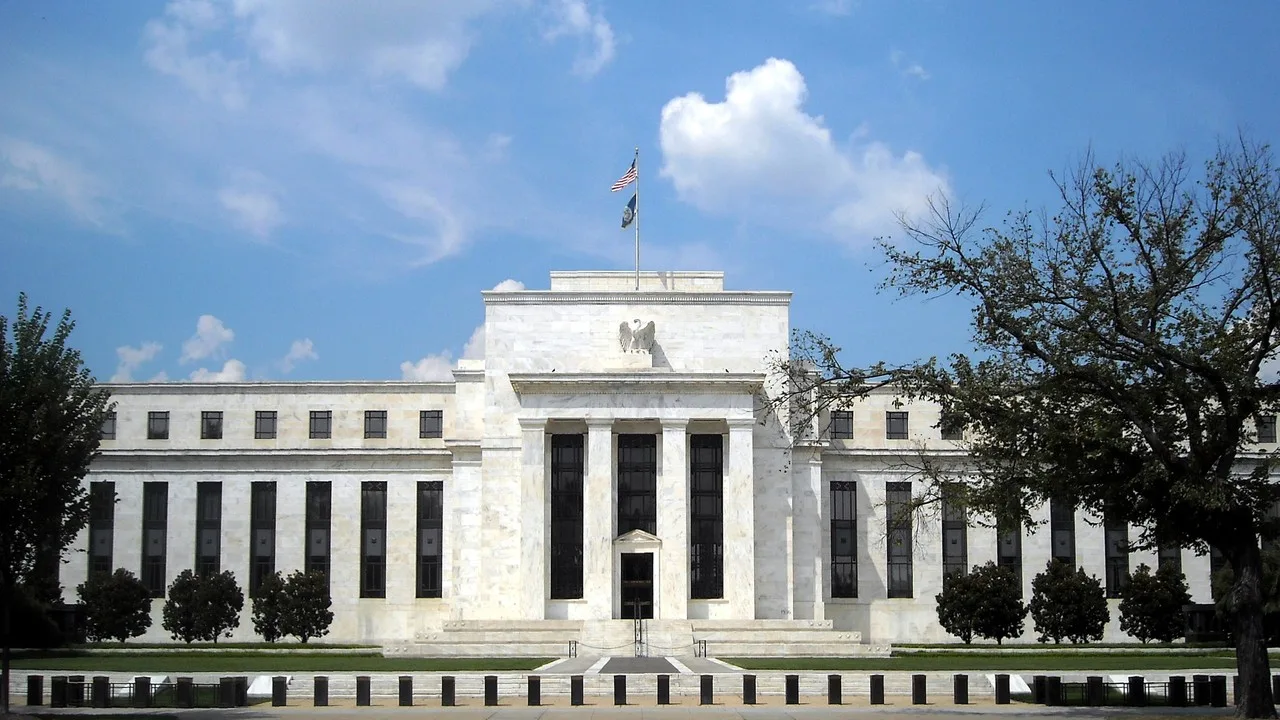
As of about 5:00 PM IST, Saturday 14 November 2026. Based on the U.S. Bureau of Labor Statistics Producer Price Index release of Friday, 13 November, and Reuters reporting of remarks by San Francisco Federal Reserve President Mary Daly.
Prices received by U.S. producers rose more slowly in October than they had in September, but they are still climbing at the fastest 12-month pace in almost four years. The Producer Price Index for final demand increased 0.3% in October, seasonally adjusted, the Bureau of Labor Statistics reported on Friday. From a year earlier, the index was up 6.5%, the largest 12-month advance since a 7.4% rise in November 2022.
That combination — a softer month, a hotter year — is why the report did little to change expectations for the Federal Reserve. The central bank raised its policy rate in September and held it steady in October. Reuters reported that financial markets are betting heavily on quarter-point increases at the Fed's 8–9 December and 26–27 January meetings. San Francisco Fed President Mary Daly said on Friday that her "bias" is that more tightening will be needed.
What the October report actually showed
The monthly gain was led by goods. The index for final demand goods rose 0.5% in October, after a 2.5% jump in September, and more than 60% of that advance came from goods excluding foods and energy, which also rose 0.5%. Food prices were stronger still, up 1.3%. Energy was the exception, edging down 0.1%. Services, which have more weight in the headline index, rose 0.2% for a fifth straight month.
Two closely watched "core" measures tell slightly different stories. Prices for final demand less foods and energy rose 0.3% on the month and 5.0% over 12 months. A broader official gauge that also strips out trade services rose 0.5% in October, the same as in September, and was up 4.9% from a year earlier. Figures for June through September have been revised; September's 1.4% monthly increase sits in that window.
The year-on-year picture is still dominated by energy and freight
Look at the 12-month rates, and October does not look like a pause. Final demand goods were up 10.2% from a year earlier, the largest such increase since October 2022. Final demand energy was up 37.0%. Even when a single month's energy index slips, the yearly rates remain severe: gasoline prices were 75.9% higher than a year earlier, and No. 2 diesel fuel, which fell 7.9% in October, was still up 115.2% over 12 months.
Services are not quiet either. Final demand transportation and warehousing services rose 2.0% in October and 18.5% from a year earlier. The bureau said three-fourths of the October services increase could be traced to that category, and that more than 80% of the services rise was attributable to truck transportation of freight, which jumped 3.9%. When freight stays expensive, a one-month dip in energy is slower to show up as relief for consumers.
Why a cooler month did not settle the inflation argument
Producer prices measure what sellers receive, not what shoppers pay, and they can diverge from the consumer price index for several reasons. Even so, a 6.5% year-on-year rise in final demand prices is a signal that cost pressure is still working through the pipeline.
Daly, speaking at a forecast event at the University of Nevada, Las Vegas, put that transmission risk in plain terms. "Producers are telling us more and more that they're running out of room to take it out of margins, and they really want to consider passing along this to consumers. So that's the inflationary impulse we want to avoid," she said, according to Reuters. She also pointed to services inflation excluding housing, which she said was "not moving in the correct direction."
Reuters noted that the core consumer price index, which excludes food and energy, has risen about 0.3% month over month in each of the last three months, a pace officials see as too high to be consistent with the Fed's 2% target. Friday's producer-price report does not replace that consumer data. It does make it harder to argue that last month's heat was only a temporary burst in energy.
What this means for the Federal Reserve
"We're going to need to, in all likelihood, raise rates; I will deliberate this with my colleagues in December at our meeting and in all future meetings and make the collective decision that we judge is most appropriate for the economy that is evolving," Daly said. She did not commit to the size or the exact date of the next move.
That leaves December as a live decision. Officials raised rates in September, paused in October, and now have a producer-price print that cooled on the month but set a new cycle high on the year. Daly said she is also watching consumer spending, which she called "surprisingly resilient," and whether households "give up" or "keep going even if prices rise" around the holiday season. She added that she was starting to hear, in Las Vegas and in other states, that "the consumer may be running out of gas."
Those observations pull in opposite directions. If spending stays strong while firms pass on costs, the case for another increase strengthens. If households finally pull back, the Fed has more room to move carefully. Daly said the central bank has time to calibrate its decisions. Markets, as Reuters described them, have already priced a quarter-point move in December and another in January.
Where the pressure shows up for borrowers and savers
A tighter path for policy does not stay inside the Fed's building. It shows up in the cost of revolving credit, car loans and new mortgages, which is why the headline rate on a loan is a poor guide to what it actually costs, as we have set out in a guide to how APR works. If official rates are heading higher, the case for holding a properly sized emergency fund in a liquid account is also stronger, because a household that has to borrow after a shock will do so at a steeper price. When inflation stays high enough to keep the Fed tightening, long-duration assets can also reprice quickly. That is a practical reason to have a method for rebalancing, rather than reacting to a single data release. They do say that the inflation problem the Fed is managing is still present at the producer level, especially in energy, freight and core goods.
What to watch next
The next official producer-price report, covering November, is scheduled for 15 December at 8:30 a.m. Eastern Time, after the December meeting. The questions are whether the 12-month PPI rate rolls over or stays near this week's 6.5%, whether trucking and core goods prices cool, and whether Daly's warning about squeezed margins shows up in consumer inflation. Friday's report was not a shock in the monthly numbers, and it was not a comfort in the yearly ones. It leaves the Fed heading into December with wholesale inflation still far above a 2% pace, and with at least one senior official already biased toward another increase.
Disclaimer: This article is for general information only and is not financial or investment advice. Inflation data, interest rates and asset prices can change quickly, and past performance does not guarantee future results. Please consult a qualified financial adviser before making any investment or borrowing decisions.
Sources
- U.S. Bureau of Labor Statistics: Producer Price Indexes — October 2026
- U.S. Bureau of Labor Statistics: Latest PPI News Releases
- Reuters, via Investing.com: Fed likely to need to raise rates amid worsening inflation, Daly says
Featured image: The Marriner S. Eccles Federal Reserve Board Building in Washington, D.C., 13 August 2008, AgnosticPreachersKid, CC BY-SA 3.0, via Wikimedia Commons (cropped).