As of about 8:30 AM IST, Thursday 19 November 2026. Based on Anthropic's pricing announcement and reporting by CNBC, Bloomberg News, the BBC and IPOScoop.
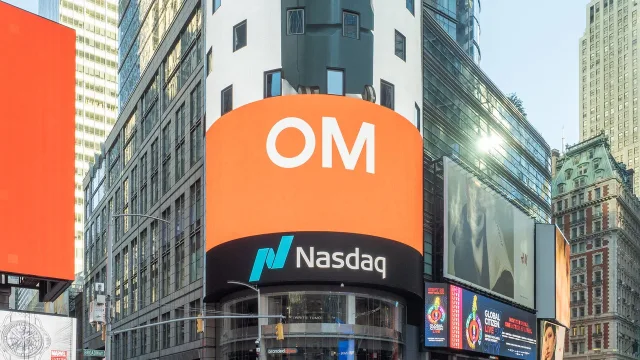
Anthropic has priced the largest initial public offering on record. The maker of the Claude AI models said on Wednesday, 18 November, that it sold its Class A shares at $83 each, $5 above the top of the $70 to $78 range it marketed to investors last week. It also increased the number of shares on offer. The stock is due to start trading on the Nasdaq under the ticker "ANT" on Thursday, 19 November, which is Thursday evening in India.
The pricing settles the first big question about the deal: whether institutional investors would pay up for a loss-making AI company in a market that has been selling AI stocks for weeks. They did. The harder question, how the shares trade once ordinary investors can buy them, starts tonight.
The deal in numbers
According to Anthropic's announcement, the offering consists of 980 million shares. Of these, 956,351,354 are being sold by Anthropic and 23,648,646 by selling stockholders, from whom the company receives nothing. CNBC reported that the sellers are Anthropic's seven co-founders, each selling about 3.38 million shares for combined proceeds of about $1.96 billion.
- Amount raised: about $81.3 billion at $83 a share, CNBC reported. By our arithmetic, roughly $79.4 billion of that goes to Anthropic before fees.
- Upsizing: the company had planned to sell 825 million shares including the founders' stock, CNBC said. Bloomberg put the marketed figure at 801.4 million new shares plus the founders' 23.6 million.
- Valuation: about $1.5 trillion on a fully diluted basis, which counts every share that could eventually exist, according to CNBC and Bloomberg.
- Extra shares: underwriters have a 30-day option to buy up to 147 million more shares. If they use all of it, that would add about $12.2 billion at the IPO price.
- Timing: trading is due to begin on Thursday and the offering is expected to close on Friday, 20 November.
Goldman Sachs and Morgan Stanley led the deal, with more than 20 other banks in the syndicate, IPOScoop reported.
Bigger than SpaceX
The record had belonged to SpaceX, which raised $75 billion in its June IPO and $85.7 billion in total after its underwriters bought extra shares, according to CNBC. Anthropic's $81.3 billion already beats the first figure. If its own underwriters exercise their full option, the total would pass the second as well.
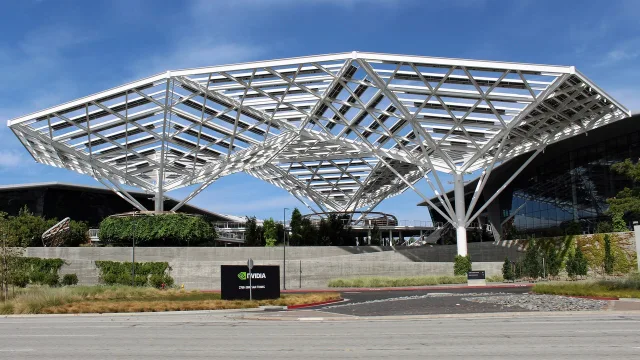
Anthropic is also raising $26 billion in a private placement of non-voting Class N stock at the same $83 price. IPOScoop, citing the prospectus, said Google and Nvidia are each buying $10 billion, AMD $2.5 billion, Broadcom, Micron and Microsoft $1 billion each, and a TSMC affiliate $500 million. Bloomberg added the two together and put the total at a record $107.3 billion.
The SpaceX comparison is a useful warning as well as a benchmark. The BBC noted that SpaceX shares fell significantly in the weeks after its debut. Our analysis of SpaceX's first months as a public company shows how quickly sentiment can swing after a record listing.
How strong was demand?
Pricing above the range and selling more shares are the two clearest signals of demand, and Anthropic did both. Beyond that, the figures come from people close to the deal rather than from the company. An early investor told the BBC, on condition of anonymity, that the offering was more than 10 times oversubscribed. IPOScoop said talk on Wall Street before the weekend was of roughly 10 times demand and that price talk on Wednesday had moved to $80 to $85. Bloomberg had earlier reported orders of close to seven times the shares available, as covered in our pricing-week preview.
Oversubscription in a deal this size does not guarantee a first-day jump. Large investors often put in inflated orders expecting to be cut back. The real test is whether buyers who missed out in the allocation chase the stock in the open market.
What buyers are paying for
Anthropic's growth is the main argument for the price. For the nine months to 30 September it reported revenue of $33.24 billion, up roughly 1,200% from a year earlier, CNBC said, citing the prospectus. In an amended filing it said annualised run-rate revenue reached about $81 billion at the end of October, $10 billion more than a month earlier. Much of the growth has come from business customers and from its coding tool, Claude Code.
The losses are just as large on paper. Anthropic reported a $104 billion net loss for the nine months, although CNBC noted that most of it came from changes in the fair value of convertible notes and derivative liabilities rather than day-to-day operations. IPOScoop put the 12-month net loss at $120.9 billion on revenue of $35.28 billion. The company is also committed to buying huge amounts of computing power, and Counterpoint Research analyst Yang Wang told the BBC the central issue is whether the business "can keep pace" as hundreds of billions of dollars in obligations come due over the next couple of years.
Founders keep control
Public shareholders will have limited say. IPOScoop, quoting the prospectus, reported that Dario Amodei, Daniela Amodei and five other founding shareholders jointly hold a single share of Class F stock carrying 50.1% of the total voting power on most matters, including the election of most directors. Board members and affiliated entities have indicated interest in buying up to $303 million of stock in the IPO.
Retail investors were offered access through Charles Schwab, Fidelity, Robinhood, SoFi and E*TRADE, IPOScoop said. With demand this strong, many individual applicants are likely to receive small allocations or none.
Why the timing matters
The listing lands at a fragile moment for AI stocks. CNBC listed the recent shocks: a voter backlash against AI in the midterm elections, the ouster of Nvidia chief executive Jensen Huang, and worries that rising interest rates will make debt unaffordable for data centre developers. Nvidia's strong quarterly results on Tuesday eased some of those fears before Anthropic set its price.
Investors also see the listing as a rare chance to own a pure AI developer. "Anthropic going public gives us a whole new window into what AI demand looks like," Marta Norton, who heads strategy at Empower, told the BBC. Until OpenAI lists, the BBC noted, Anthropic will be the only public company in the U.S. built entirely around AI. OpenAI has filed confidentially and has said a debut is likely in 2027, CNBC reported.
What to watch from tonight
The U.S. market opens at 8 PM IST, but very large IPOs usually take longer to open because banks first match buy and sell orders. Three things will matter: the opening price against $83, whether the shares hold their gains through the first week, and whether the underwriters use their option to buy extra shares. A strong debut would help OpenAI and other AI companies hoping to go public. A weak one would add to the worries covered in our explainer on the warning signs of an AI bubble.
Disclaimer: This article is for information only and is not financial advice. It does not recommend buying or selling any security. IPO shares can be highly volatile and can fall below their offer price; do your own research or consult a licensed financial adviser before investing.
Sources
- Anthropic: Anthropic prices initial public offering
- CNBC: Anthropic IPO raises over $81 billion in largest offering on record, topping SpaceX
- Bloomberg News (via Bloomberg Law): Anthropic IPO Raises $107.3 Billion to Top SpaceX's Record Debut
- BBC News: Claude-maker Anthropic poised for stock market debut worth up to $1.5tn
- IPOScoop: Anthropic Tops SpaceX by Upsizing IPO and Pricing it at $83
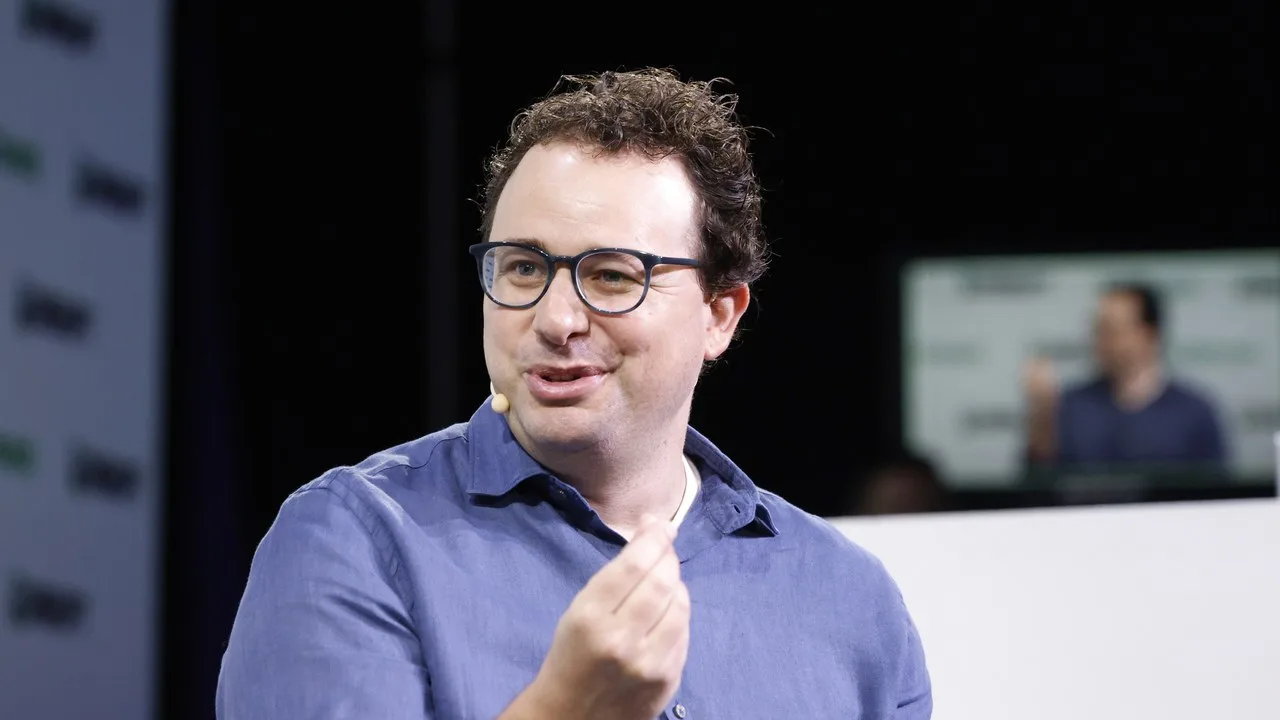
Featured image: Anthropic co-founder and CEO Dario Amodei speaking at TechCrunch Disrupt 2023, San Francisco, 20 September 2023 (file photo), TechCrunch, CC BY 2.0, via Wikimedia Commons (cropped).