As of about 8:30 AM IST, Wednesday 18 November 2026. Based on Nvidia's results release and earnings call as reported by CNBC, the BBC and Investopedia, and CNBC's reporting on Anthropic's IPO.
Nvidia delivered the numbers the market had been nervous about. In its first quarterly report since co-founder Jensen Huang resigned as chief executive, the world's most important AI chip supplier said revenue doubled from a year earlier to $115.8 billion, beat Wall Street's forecasts and guided higher for both the current quarter and next year. Its shares rose between about 3% and 5% in after-hours trading on Tuesday, according to CNBC and the BBC.
The results answer one question, whether AI infrastructure demand is cooling, with a clear no for now. They leave a bigger one open: who will run Nvidia, and how much of its China business will survive Washington's latest restrictions.
The quarter in numbers
For the three months to 25 October, the third quarter of its fiscal 2027, Nvidia reported:
- Revenue of $115.8 billion, up 103% from a year ago and 20% from the previous quarter. Analysts polled by LSEG expected about $109.1 billion, CNBC reported.
- Data centre revenue of $107.6 billion, up 110% year on year, making up roughly 93% of sales.
- Net income of $65.3 billion, up 105%, and adjusted earnings per share of $2.68 against the $2.48 analysts expected.
- Gross margin of 74.8% on a GAAP basis, slightly below the previous quarter's 75.0%.
Nvidia said it returned $28.1 billion to shareholders through buybacks and dividends during the quarter and still had about $227.3 billion left under its repurchase authorisation. It will pay a quarterly dividend of $0.25 per share on 23 December.
Guidance: $130 billion and 75% growth
The forward numbers mattered more than the quarter just gone. Nvidia forecast fourth-quarter revenue of $130 billion, plus or minus 3%, above the $125.1 billion LSEG consensus. The quarter includes an extra week, which flatters the comparison slightly. Gross margins are expected to dip to between 71% and 72%.
The bigger surprise was the longer view. Investors had worried the company might withdraw its earlier forecast of 70% growth for the fiscal year ending January 2028. Instead, interim CEO Colette Kress raised it to 75%, CNBC reported. Before the results, LSEG's consensus already had fiscal 2028 sales topping $690 billion. Kress told CNBC's Jim Cramer that "the most important thing we have seen is growth in the demand that's out there," and that chips, advanced packaging and memory supply were "coming together."
Nvidia said its new Vera Rubin NVL72 rack systems had begun shipping, calling it the fastest product ramp in its history, with systems running at CoreWeave, Google Cloud, Microsoft Azure, Oracle and Nebius.
Leadership: the board shuts the door on Huang
The results came just five days after Nvidia announced Huang's resignation. As we reported on Monday, a public tug of war over a possible Huang return had built up over the weekend. On Tuesday Huang said in a statement that he would be "honoured" to return, the BBC reported.
The board gave its answer at the start of the earnings call. "The board does not intend to reinstate him," chair Harvey Jones said. Jones said Nvidia is working with an executive search firm, which CNBC identified as Heidrick & Struggles, and is considering internal and external candidates. "The search will be thorough and we want to do it as quickly as possible, but we won't do it before we find the exact right person," he said, according to the BBC.
Kress, Nvidia's finance chief for 13 years, repeatedly stressed continuity. "It is business as usual," she said. "Our momentum is real. Our demand is accelerating. Our supply is growing." The outside debate continued: Amazon founder Jeff Bezos said at a Semafor conference on Tuesday that if the board does not bring Huang back, he "would not hire an outsider," CNBC reported.
China is now close to zero
The main risk in the report sits in one line of the outlook: Nvidia is "not assuming any Data Center compute revenue from China." Kress also said Nvidia is no longer shipping Hopper-generation data centre chips, including the H200, to China, the BBC reported, without saying why.
The pressure is coming from several directions. The U.S. Commerce Department on Monday moved to stop Chinese companies from renting Nvidia computing power located in other countries, CNBC reported. Huang's resignation followed reports of a relationship with a former executive at Singapore-based Megaspeed whom U.S. officials suspect of spying for China, an allegation China has called a smear. Nvidia has hired law firm Wachtell Lipton to investigate his conduct and has said it complies with U.S. export laws.
A quieter signal on capital commitments
One remark could matter for the wider AI market. Kress said on the call that Nvidia would be "rigorously evaluating future investments, commitments, and guarantees" and would remain "disciplined in how we commit capital," CNBC reported. Nvidia has supported several smaller cloud providers, known as neoclouds, through investments and backstop agreements, so any pullback would affect how they finance data centres. For now the market took the results as good news: shares of CoreWeave, Nebius and Iren rose 8% to 10% after hours, according to CNBC.
That matters because the AI build-out is increasingly funded with debt. The Federal Reserve recently warned that AI data centre debt has topped $680 billion, with trillions more in off-balance-sheet commitments.
The stock: a bounce after a long slide
The after-hours gain comes from a low base. CNBC said Nvidia's stock had fallen 24% in November and on Friday completed its sixth straight weekly decline, its longest losing streak since 2012. It fell again on Monday and Tuesday, to its lowest level since July 2025. Investopedia said the shares were down 16% for 2026 as of Tuesday's close. More than 20 analysts tracked by FactSet cut their price targets in the nine days before the report, CNBC said, with Mizuho citing a "6-7-month management overhang."
Daniela Hathorn, a senior analyst at Capital.com, told the BBC the results "offer a strong answer to concerns that demand for AI infrastructure is cooling," but said the harder question is "whether Nvidia can preserve the strategic advantage Huang helped build." Most analysts quoted by CNBC say contracted revenue through next fiscal year is largely in place, so any leadership effect would show up later.
Next test: Anthropic's IPO
Nvidia's report also sets the mood for the biggest AI event of the week. Anthropic planned to close its IPO order book at 4 p.m. ET on Tuesday and is likely to price its shares above the $70–$78 range, multiple sources told CNBC. Pricing is expected on Wednesday evening U.S. time, Thursday morning in India, with trading on the Nasdaq under the ticker "ANT" from Thursday, 19 November. Our pricing-week preview explains the deal terms. A strong Nvidia outlook removes one obstacle; whether investors pay up for a loss-making AI company is a separate question.
What to watch
The near-term questions are the CEO search timetable, any further U.S. export rules affecting Nvidia's Asian customers, and whether the 75% growth forecast survives without China. For the broader debate about whether AI spending has run ahead of itself, see our explainer on the warning signs of an AI bubble.
Disclaimer: This article is for information only and is not financial advice. It does not recommend buying or selling any security. Share prices can fall as well as rise; do your own research or consult a licensed financial adviser before investing.
Sources
- Nvidia: NVIDIA Announces Financial Results for Third Quarter Fiscal 2027
- CNBC: Nvidia Q3 2027 earnings report, live updates
- BBC News: Nvidia says it won't reinstate Huang as firm reports bumper results
- Investopedia: Nvidia's Third-Quarter Earnings, Outlook Top Wall Street Expectations
- CNBC: Anthropic likely to price IPO above the current range of $70 to $78, sources tell CNBC
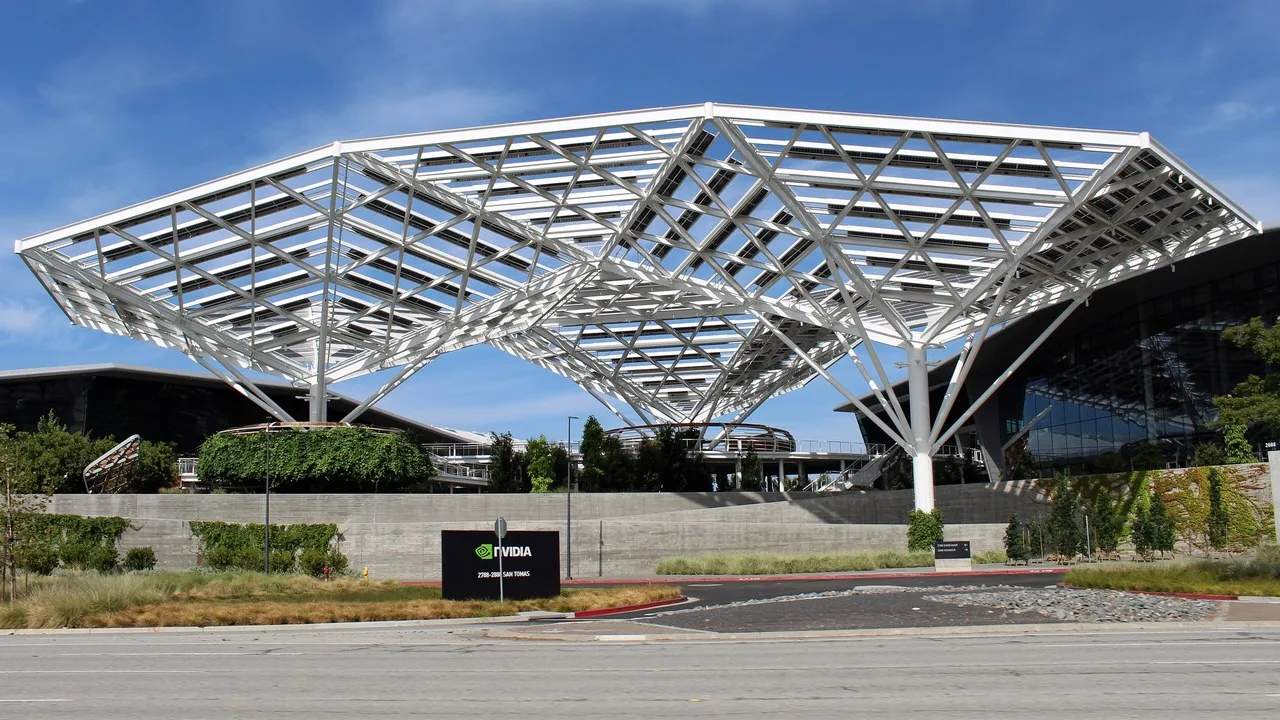
Featured image: Nvidia's headquarters at 2788–2888 San Tomas Expressway, Santa Clara, California, 23 July 2023 (file photo), Coolcaesar, CC BY-SA 4.0, via Wikimedia Commons (cropped).