In 1850, there was no country called Italy and no country called Germany. There were dozens of kingdoms, duchies and city-states, some ruled by foreign powers, where people spoke related languages and shared a sense of common culture but lived under different flags. Within about 20 years, both had become unified nation-states. Italy's unification, the Risorgimento ("resurgence"), and Germany's unification under Prussia redrew the map of Europe, changed the balance of power and inspired nationalists far beyond Europe, including in India.
A divided Europe after Napoleon
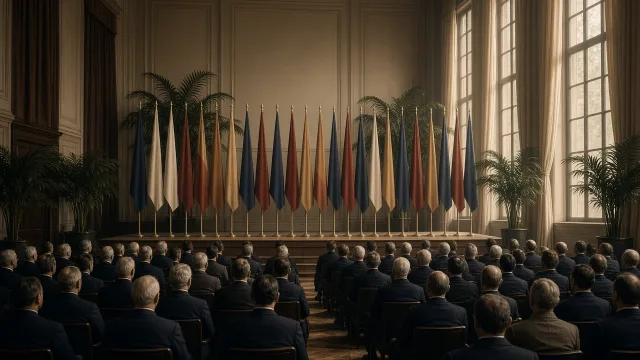
After Napoleon's defeat in 1815, the Congress of Vienna tried to restore the old order. German-speaking lands were organised into a loose German Confederation of 39 states, dominated by Austria and Prussia. The Italian peninsula was split between the Kingdom of Piedmont-Sardinia, the Austrian-ruled provinces of Lombardy and Venetia, several duchies, the Papal States ruled by the Pope, and the Kingdom of the Two Sicilies in the south.
Nationalist ideas, spread by the French Revolution and Romantic writers, grew stronger. In 1848, revolutions swept across Europe. In Italy and Germany, liberals demanded constitutions and national unity, and a parliament met in Frankfurt to draft a German constitution. These revolutions were crushed or collapsed, but they showed that the national question would not go away.
Italy: the Risorgimento
Three very different men are remembered as the makers of Italy. Giuseppe Mazzini, a republican idealist, founded the Young Italy movement in 1831 and spread the dream of a united, democratic Italy. Count Camillo di Cavour, prime minister of Piedmont-Sardinia from 1852, was a pragmatic diplomat who modernised his kingdom and sought foreign allies. Giuseppe Garibaldi was a charismatic guerrilla leader.
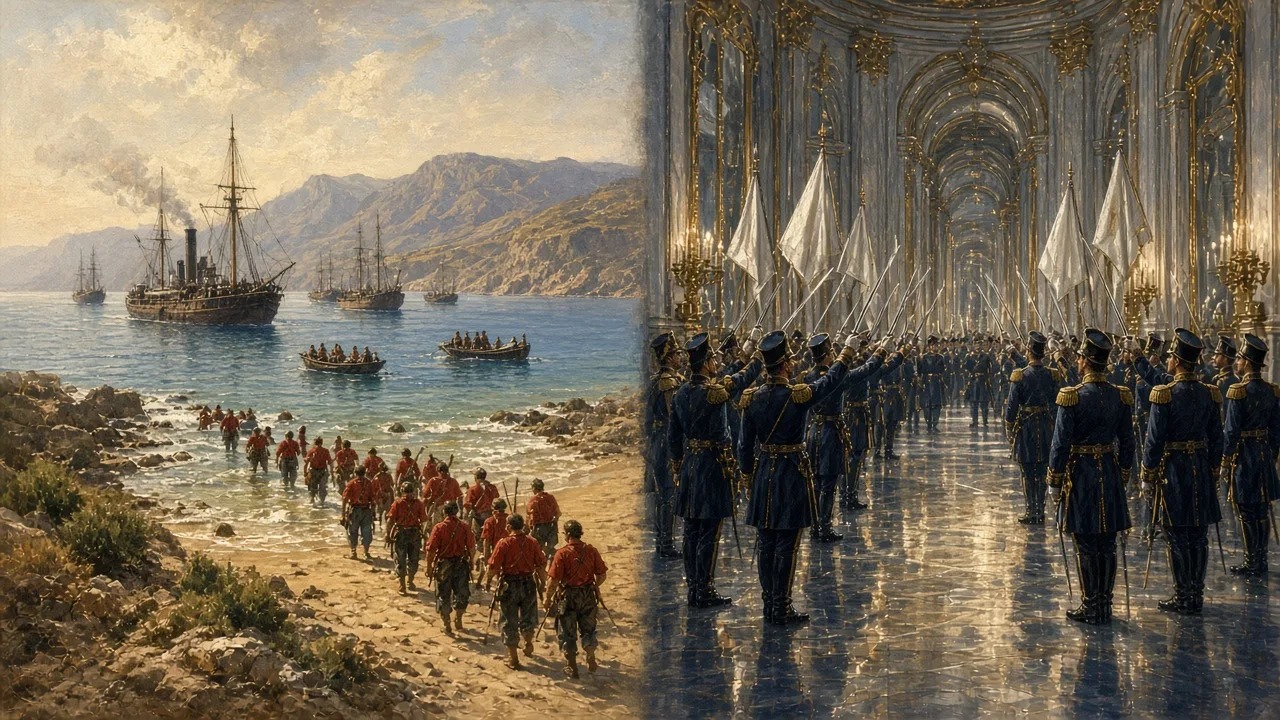
In 1859, Cavour's alliance with Napoleon III of France paid off. Together they defeated Austria, and Piedmont gained Lombardy. In 1860, states in central Italy voted to join Piedmont, while France received Savoy and Nice in return for its support. That May, Garibaldi landed in Sicily with about a thousand volunteers, the famous "Redshirts", and swept through Sicily and Naples. Rather than create a rival state, he handed his conquests to King Victor Emmanuel II of Piedmont.
On 17 March 1861, the Kingdom of Italy was proclaimed, with Victor Emmanuel II as king. Venetia was added in 1866, after Italy sided with Prussia against Austria. Rome, protected by French troops, held out until 20 September 1870, when Italian forces entered the city after the French withdrew. Rome became the capital in 1871.
Germany: blood and iron
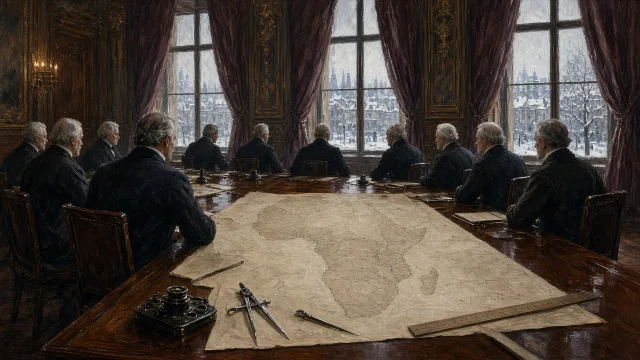
German unification was led from above by Prussia and its chief minister, Otto von Bismarck, appointed in 1862. Prussia already led a customs union, the Zollverein, established in 1834, which tied much of Germany's economy together. In a famous 1862 speech to a parliamentary committee, Bismarck argued that the great questions of the day would be decided not by speeches and majority decisions but by "iron and blood", a phrase remembered as "blood and iron".
He fought three short wars. In 1864, Prussia and Austria defeated Denmark over the duchies of Schleswig and Holstein. In 1866, Prussia turned on Austria and defeated it within weeks, excluding Austria from German affairs and creating a Prussian-led North German Confederation. In 1870, Bismarck used a diplomatic dispute with France to provoke war. The southern German states joined Prussia, and the Franco-Prussian War ended in a crushing French defeat.
On 18 January 1871, in the Hall of Mirrors at the Palace of Versailles, King Wilhelm I of Prussia was proclaimed German Emperor. The new German Empire also took Alsace and part of Lorraine from France, a bitter loss that fed French resentment for decades.
Timeline: key moments
- 1815: The Congress of Vienna creates the German Confederation and restores divided Italy.
- 1831: Mazzini founds Young Italy.
- 1834: The Zollverein customs union is established.
- 1848: Revolutions break out across Italy and Germany.
- 1859-1860: War against Austria and Garibaldi's expedition unite most of Italy.
- 1861: The Kingdom of Italy is proclaimed on 17 March.
- 1862: Bismarck becomes Prussia's chief minister.
- 1864-1866: Prussia defeats Denmark and then Austria.
- 1870: Italian troops enter Rome; the Franco-Prussian War begins.
- 1871: The German Empire is proclaimed at Versailles on 18 January.
The India connection
Italy's struggle for unity and freedom from foreign rule struck a chord with Indian nationalists under British rule. In the 1870s, Surendranath Banerjea lectured to students on Mazzini and presented Young Italy as a model for Indian unity. Lala Lajpat Rai later wrote a biography of Mazzini, and V. D. Savarkar translated Mazzini's writings into Marathi while in London in the early 1900s; the book was banned by the British authorities. Savarkar's revolutionary society, Abhinav Bharat, was itself partly inspired by Young Italy.
Not everyone drew the same lesson. In Hind Swaraj (1909), Mahatma Gandhi discussed Italy's example and argued that true self-rule meant more than replacing foreign rulers with local elites. Germany's rapid rise also caught Indian attention, especially its state-led industrialisation and investment in education and science.
Why it matters today
- Nations are built, not born. Shared language and culture helped, but diplomacy, war and political choices made Italy and Germany.
- Economic integration can come first. Germany's customs union showed how a common market can prepare the way for political union, an idea later echoed in the European Union.
- Different paths, different outcomes. Italy blended idealism and diplomacy; Germany was unified largely by Prussian military power.
- Victories can sow future conflicts. The annexation of Alsace-Lorraine fed rivalries that contributed to World War I.
- Ideas travel. Mazzini's writings inspired anti-colonial movements in India and elsewhere.
Frequently asked questions
When were Italy and Germany unified?
The Kingdom of Italy was proclaimed on 17 March 1861 and completed with the capture of Rome in 1870. The German Empire was proclaimed on 18 January 1871.
Who unified Germany and Italy?
Germany was unified mainly under Prussian leadership by Otto von Bismarck and King Wilhelm I. Italy's key figures were Cavour, Garibaldi, Mazzini and King Victor Emmanuel II.
How did Italian unification influence India?
Indian nationalists such as Surendranath Banerjea, Lala Lajpat Rai and V. D. Savarkar drew inspiration from Mazzini and the Risorgimento, while Gandhi engaged critically with Italy's example in Hind Swaraj.