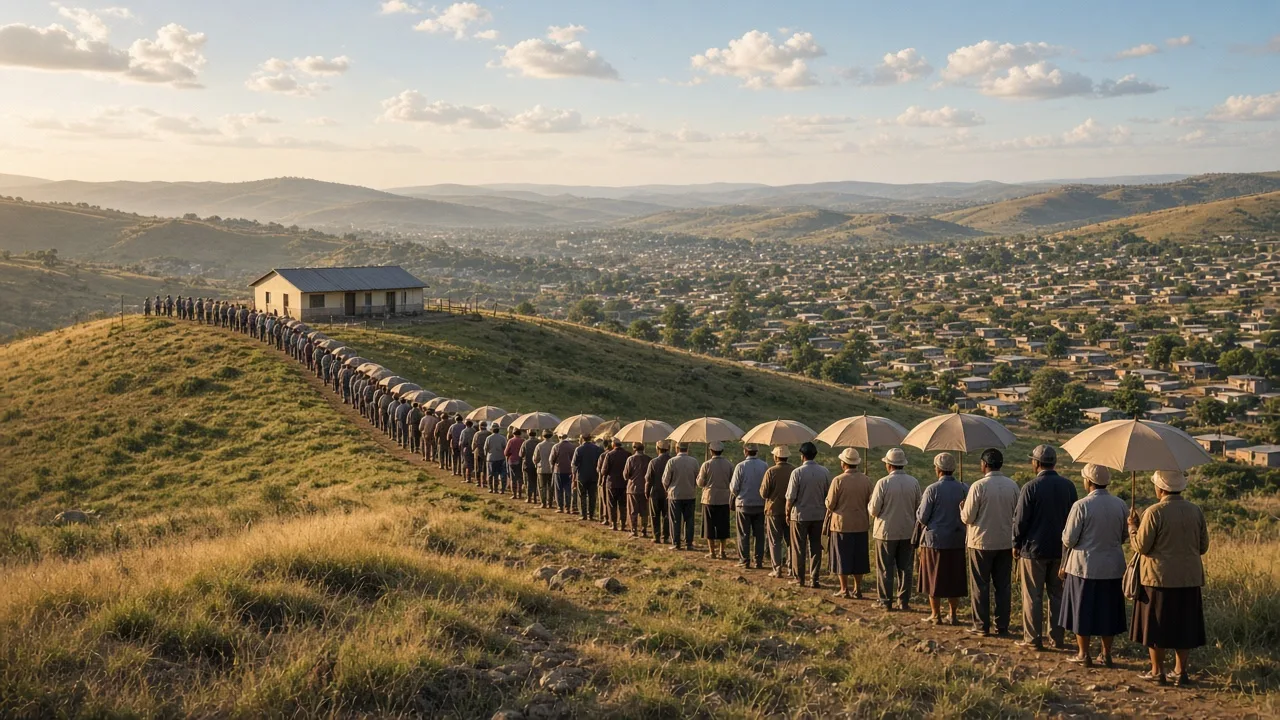
On 27 April 1994, millions of South Africans queued for hours, many of them voting for the first time in their lives. The election ended more than four decades of apartheid, a system that classified people by race and denied the Black majority basic rights, and brought Nelson Mandela to the presidency. The road to that day was long. It ran through the resistance of ordinary South Africans, global pressure and decades of solidarity from countries such as India, whose own freedom movement had roots in South Africa through the young Mohandas Gandhi.
Roots of segregation
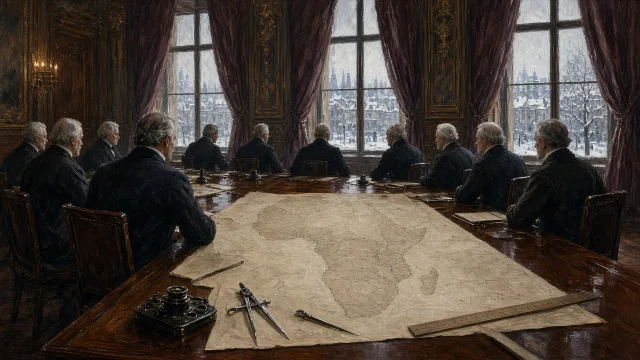
Racial discrimination in South Africa long predated apartheid. After the Union of South Africa was formed in 1910, laws such as the Natives Land Act of 1913 restricted where Black Africans could own land, confining them to a small share of the country. Pass laws controlled movement, and political rights were largely reserved for white citizens.
Gandhi's South African years
Indians had arrived in Natal from 1860 as indentured labourers on sugar plantations, followed by traders. In 1893, a young lawyer named Mohandas Karamchand Gandhi came to Durban to work on a legal case. According to South African History Online, during a train journey that year he was ordered out of a first-class compartment because of his race and put off the train at Pietermaritzburg, an experience he later described as a turning point.
Gandhi stayed for over two decades. He helped found the Natal Indian Congress in 1894, started the newspaper Indian Opinion and, from 1906, led Indians in the Transvaal in mass, non-violent resistance against a discriminatory registration law. He called this method satyagraha. Gandhi's campaigns focused mainly on the rights of Indians, and historians note that his views on Black Africans in those early years were limited and sometimes prejudiced. But the methods he developed there, before returning to India in 1914, later shaped India's freedom struggle and inspired movements around the world.
Apartheid becomes law
In 1948, the National Party won the whites-only election on a platform of "apartheid", meaning "apartness" in Afrikaans. It built a sweeping legal system of segregation. The Population Registration Act of 1950 classified every person by race, the Group Areas Act assigned different areas to different races, and other laws banned mixed marriages and imposed separate, inferior education, housing and services on non-white South Africans. Millions of people were forcibly removed from their homes.
Resistance and repression
The African National Congress (ANC), together with Indian, Coloured and white allies, launched mass campaigns of defiance. In 1955, a Congress of the People adopted the Freedom Charter, which declared that South Africa belongs to all who live in it. On 21 March 1960, police opened fire on protesters against the pass laws at Sharpeville, killing 69 people. The government then banned the ANC and the Pan Africanist Congress.
Some leaders, including Nelson Mandela, turned to armed struggle. In 1964, Mandela and other leaders were sentenced to life imprisonment, and he spent 27 years in prison, many of them on Robben Island. On 16 June 1976, students in Soweto protested against being taught in Afrikaans; police opened fire, and the unrest that followed spread across the country, with hundreds killed, according to most estimates.
The road to 1994
By the 1980s, South Africa faced mass protests at home, international sanctions, sports and cultural boycotts and a struggling economy. In February 1990, President F. W. de Klerk lifted the ban on the ANC and other organisations, and on 11 February Mandela walked out of prison. Difficult negotiations followed, amid serious political violence. Mandela and de Klerk shared the Nobel Peace Prize in 1993. After the election of 27 April 1994, now celebrated as Freedom Day, Mandela was inaugurated as South Africa's first Black president on 10 May 1994. A Truth and Reconciliation Commission was later set up to examine the crimes of the apartheid era.
Timeline: key moments
- 1893: Gandhi arrives in South Africa.
- 1906: Gandhi launches satyagraha against discriminatory laws in the Transvaal.
- 1913: The Natives Land Act restricts Black land ownership.
- 1914: Gandhi leaves South Africa for India.
- 1948: The National Party wins power and begins to build apartheid.
- 1960: Police kill 69 protesters at Sharpeville; the ANC is banned.
- 1964: Mandela is sentenced to life imprisonment.
- 1976: The Soweto uprising begins on 16 June.
- 1990: Mandela is released on 11 February.
- 1994: South Africa holds its first democratic elections on 27 April.
The India connection
India's ties with this struggle are unusually deep. Beyond Gandhi's formative years in South Africa, India was among the first countries to take action against racial discrimination there. In 1946, even before apartheid became formal policy, India cut trade with South Africa in protest at laws targeting people of Indian origin, and it brought the issue to the very first session of the UN General Assembly. India's Ministry of External Affairs describes it as the first country to sever trade relations with the South African government and notes that it later imposed a complete diplomatic, commercial, cultural and sports embargo.
India also campaigned at the UN and in the Non-Aligned Movement for sanctions, and the ANC kept an office in New Delhi from the 1960s. In 1990, India awarded Nelson Mandela the Bharat Ratna, its highest civilian honour. Full diplomatic relations between the two countries were restored in November 1993, as apartheid was ending.
Why it matters today
- Non-violence and mass action can be powerful. Ideas developed by Gandhi in South Africa travelled to India and back again.
- International solidarity counts. Sanctions and boycotts, which India championed early, increased pressure on the apartheid state.
- Reconciliation is hard work. South Africa's peaceful transition was a remarkable achievement, but it required difficult compromises.
- Legal equality is only a start. Deep economic inequalities created under apartheid still shape South Africa today.
- Heroes are human. Honest history includes the limits as well as the achievements of figures like Gandhi.
Frequently asked questions
When did apartheid end in South Africa?
Apartheid laws were dismantled between 1990 and 1994. It is generally said to have ended with the first democratic elections on 27 April 1994, after which Nelson Mandela became president.
What did Gandhi do in South Africa?
Gandhi lived in South Africa from 1893 to 1914. He organised Indians against discriminatory laws and developed satyagraha, his method of non-violent resistance, which he later used in India's freedom struggle.
How did India oppose apartheid?
India cut trade with South Africa in 1946, raised racial discrimination at the UN that year, later imposed a full embargo, supported the ANC and campaigned for international sanctions.
Sources
- History.com: Apartheid
- History.com: Nelson Mandela
- South African History Online: Mohandas Karamchand Gandhi
- South African History Online: Sharpeville massacre, 21 March 1960
- Ministry of External Affairs, India: Brief on India-South Africa relations (PDF)
- United Nations in South Africa: The UN and the struggle against apartheid