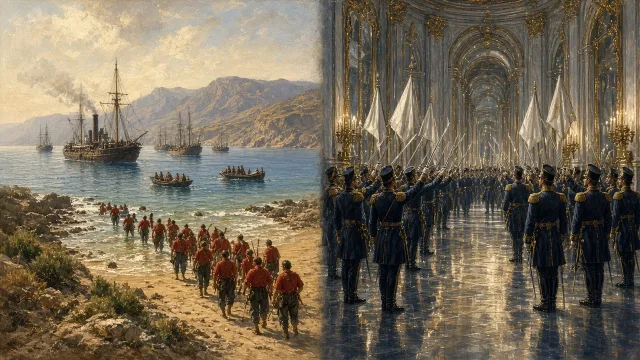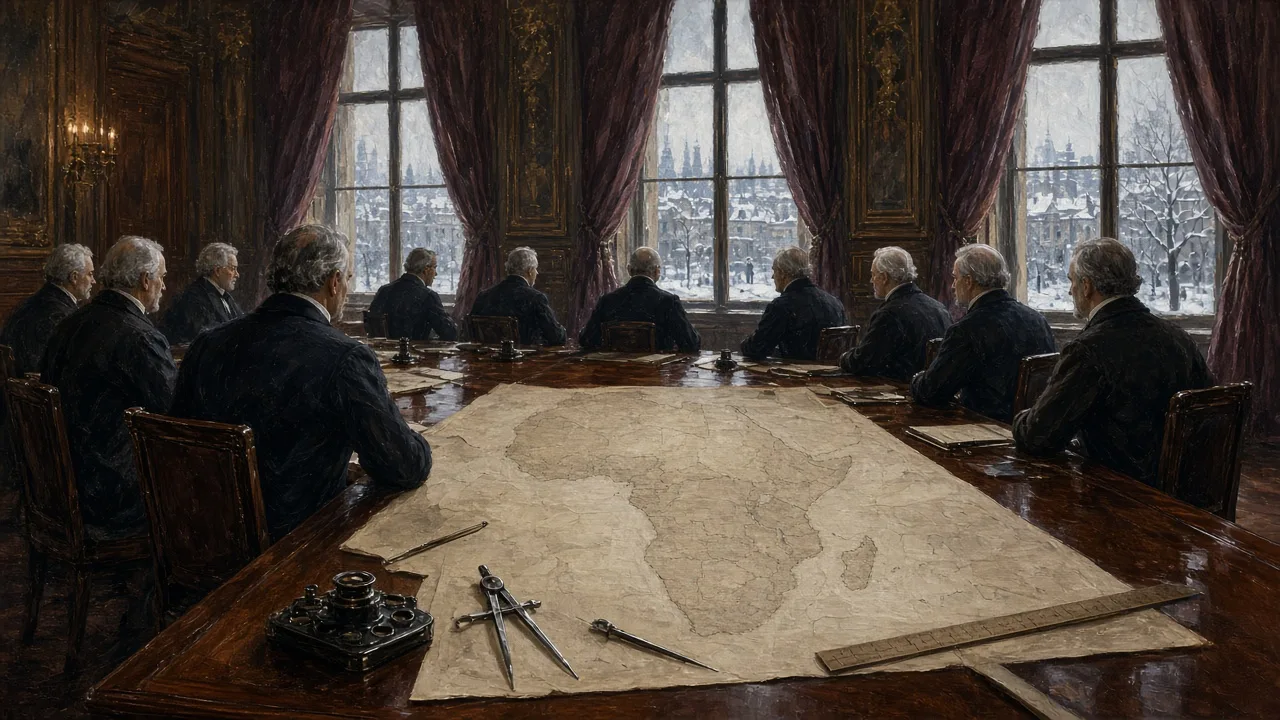
In 1884, diplomats from 14 countries gathered around a table in Berlin to settle rules for claiming African territory. Not a single African ruler or representative was invited. Within a generation, almost the entire continent had been divided among a handful of European powers. The "Scramble for Africa" redrew borders that still shape African politics, economies and conflicts today, and it drew in tens of thousands of Indians who helped build, and later shape, colonial East Africa.
Africa before the Scramble
For centuries, Europeans had traded along Africa's coasts, including in enslaved people, but their territorial presence remained limited. By the 1870s, European powers controlled only around 10 percent of the continent, mostly coastal enclaves such as French Algeria, the British Cape Colony and Portuguese outposts in Angola and Mozambique. The interior was home to powerful states and societies, from the Sokoto Caliphate and the Asante kingdom in West Africa to Ethiopia in the east and the Zulu kingdom in the south.
Why Europe rushed in
Several changes in the late 19th century made a rapid takeover possible and attractive. Industrial economies wanted raw materials such as rubber, palm oil, cotton and minerals, and new markets for their goods. Nationalism and rivalry between European powers made colonies a matter of prestige. Medical advances, notably the use of quinine against malaria, helped Europeans survive in the tropics, while steamships, railways and new weapons, including the Maxim machine gun, gave them a decisive military edge.
Explorers and adventurers added momentum. King Leopold II of Belgium set up the International African Association in 1876 and sponsored expeditions in the Congo basin. France, Portugal and Britain pushed competing claims, and Britain's occupation of Egypt in 1882 raised the stakes further.
The Berlin Conference, 1884-85
To manage these rivalries, the German chancellor Otto von Bismarck invited the powers to Berlin. The conference ran from 15 November 1884 to 26 February 1885. Britannica notes that it was triggered especially by competing claims over the Congo River basin, and that representatives of 14 countries from Europe and beyond attended.
The resulting General Act declared freedom of trade in the Congo basin, free navigation on the Congo and Niger rivers and, on paper, a ban on the slave trade. Crucially, it set out a principle often called "effective occupation": a power claiming new territory on the African coast had to notify the others and show real control. Contrary to a popular myth, the conference did not itself draw most of Africa's borders, but it set rules that accelerated the race for territory. Leopold II's claims were recognised, and the Congo Free State became his personal possession, ruled under a brutal forced-labour regime for rubber that killed very large numbers of Congolese; estimates of the death toll vary widely. International outrage forced Belgium to take over the territory in 1908.
Conquest and resistance
Over the next three decades, European armies and companies conquered most of the continent, often through treaties signed under pressure, followed by military campaigns. Africans resisted fiercely, from the Asante and the Zulu to the Maji Maji rising in German East Africa in 1905 to 1907. In German South-West Africa (now Namibia), the brutal suppression of the Herero and Nama peoples from 1904 is now widely recognised as genocide.
The most famous African victory came on 1 March 1896 at Adwa, where the Ethiopian army of Emperor Menelik II defeated an Italian invasion force. By around 1914, Ethiopia and Liberia were the only African states that remained independent; by common estimates, roughly 90 percent of the continent was under European rule.
Timeline: key moments
- 1870s: European powers control only around a tenth of Africa, mainly on the coast.
- 1876: Leopold II founds the International African Association.
- 1882: Britain occupies Egypt.
- 1884-85: The Berlin Conference sets rules for European claims.
- 1885: The Congo Free State is recognised as Leopold II's personal possession.
- 1896: Ethiopia defeats Italy at the Battle of Adwa.
- 1904-08: German forces brutally suppress the Herero and Nama in Namibia.
- 1908: Belgium takes over the Congo from Leopold II.
- c. 1914: Only Ethiopia and Liberia remain independent.
The India connection
British India was closely bound up with the colonisation of East Africa. When Britain decided to build the Uganda Railway from the port of Mombasa to Lake Victoria in the 1890s, it recruited workers from India, mostly from Punjab. According to the UK's National Railway Museum, around 32,000 workers came from India over the course of construction, about 2,500 of them died and thousands more were badly injured. Most returned home, but several thousand stayed. They were followed by Gujarati and other traders, and Indian communities became central to commerce across Kenya, Uganda and Tanzania.
That history had a long tail. In 1972, Uganda's ruler Idi Amin expelled the country's Asian population, many of Indian origin. Elsewhere in British Africa, Indian communities faced discrimination, and it was in South Africa that a young lawyer named Mohandas Gandhi began developing his methods of non-violent resistance.
Why it matters today
- Borders drawn from outside can last. Many African borders still follow colonial lines that cut across ethnic and political communities.
- Who is at the table matters. Africans were excluded from Berlin, and decisions made without them shaped their lives for generations.
- Resource extraction leaves scars. The Congo's rubber regime is a stark warning about profit without accountability.
- Resistance shapes identity. Adwa remains a symbol of African independence and pride.
- Africa and India share a story. The Indian diaspora in East Africa grew directly out of this era of empire.
Frequently asked questions
What was the Berlin Conference?
It was a meeting held in Berlin from November 1884 to February 1885, called by Bismarck, where 14 countries agreed on rules for trade in the Congo basin and for claiming African territory. No Africans were present.
Did the Berlin Conference divide Africa?
Not directly. It recognised some claims and set rules such as "effective occupation", but most borders were drawn later through treaties among European powers. It did, however, accelerate the Scramble for Africa.
How were Indians involved in the colonisation of Africa?
Around 32,000 workers from British India helped build the Uganda Railway in the 1890s and early 1900s. Some stayed, and Indian traders followed, creating large communities in East Africa.