
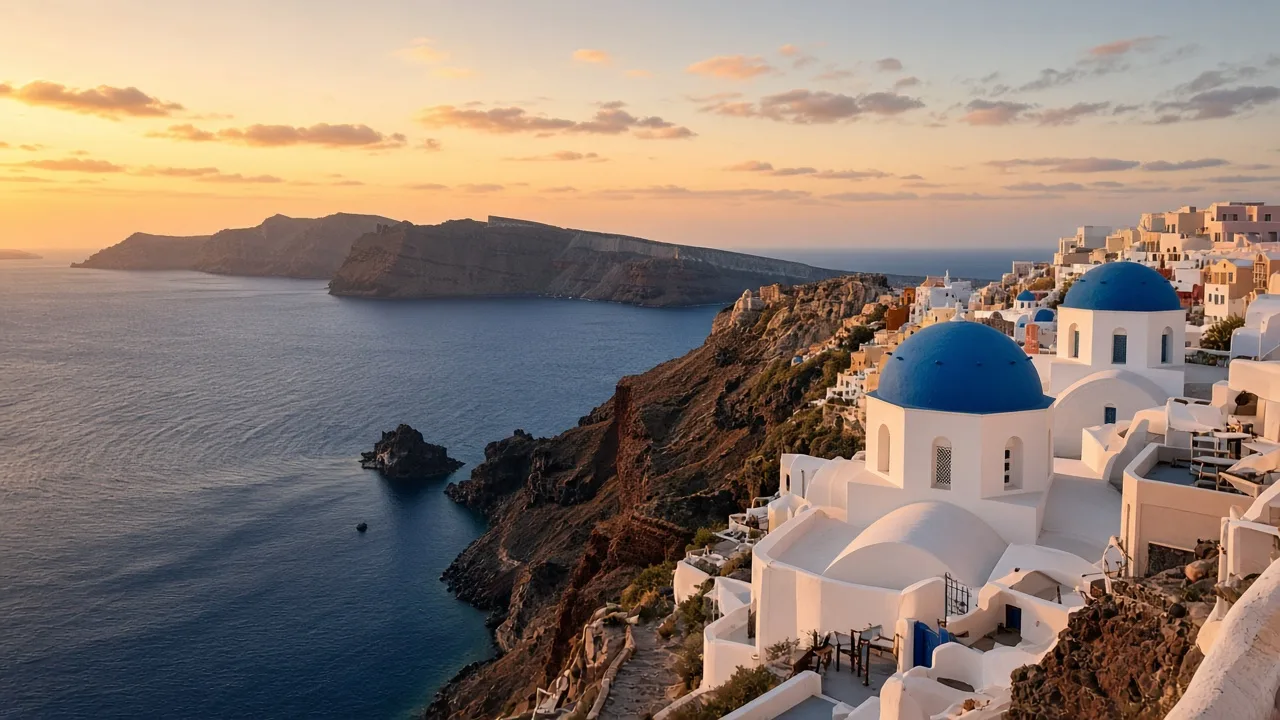
Santorini is the Cyclades island everyone pictures: whitewashed villages draped over the rim of a flooded volcanic caldera, blue-domed churches and famous sunsets. It is also one of the Mediterranean's most crowded islands in summer, and Greece has introduced new charges for cruise passengers and hotel stays. Timing and choice of base matter more here than almost anywhere.
Why go
The caldera views are unlike any others in Europe. Beyond the clifftop villages, Santorini offers the Bronze Age town of Akrotiri (often called the "Minoan Pompeii"), black and red volcanic beaches, distinctive wines made from the Assyrtiko grape, and boat trips to the still-active volcanic islets in the middle of the caldera.
Best time to visit
- Late April to June and September to October: warm weather, swimmable seas from about June, and fewer visitors than midsummer. These are the best all-round months.
- July and August: hot, windy at times, expensive and very busy, especially when several cruise ships are in port.
- Winter (November to March): cool and quiet, and many hotels, restaurants and ferry routes close or scale back. Winter 2026-27 suits travellers who want empty lanes, walks, and photography in soft light, but book somewhere that stays open year-round, usually in Fira.
Top things to do
- Oia: sunset from the castle ruins is the classic, and very crowded, experience. Consider watching from Imerovigli, Firostefani or a boat instead.
- Fira to Oia hike: about 10 km along the caldera rim, best done in the morning.
- Akrotiri archaeological site: a remarkably preserved Bronze Age settlement buried by an eruption more than 3,500 years ago.
- Caldera boat trip: the volcanic islets of Nea Kameni, hot springs and swimming stops.
- Wineries: tastings at estates around Pyrgos, Megalochori and Kamari.
- Beaches: Perissa and Kamari for black sand, and Vlychada for its sculpted cliffs. Access to Red Beach has been restricted at times because of rockfall risk.
- Pyrgos and Ancient Thira: a quieter hilltop village and the ruins of an ancient city above Kamari.
Where to stay by area
- Fira: the island's capital, with the most restaurants and transport links and many year-round hotels.
- Firostefani and Imerovigli: caldera views with a calmer atmosphere than Fira or Oia.
- Oia: the most romantic and expensive base, and the busiest at sunset.
- Kamari and Perissa: beach towns with better-value hotels.
- Pyrgos and Megalochori: traditional villages in the interior, close to wineries.
Getting there and around
Santorini's airport has direct flights from Athens and, in season, many European cities. Ferries and fast boats link the port of Athinios with Piraeus and other Cyclades islands. Public KTEL buses connect Fira with the main villages and beaches. Taxis are limited, so pre-book transfers in peak season. Quad bikes and scooters are popular, but roads are narrow and busy. Hire a small car or rely on buses if you are not an experienced rider.
Indicative budget
Approximate per person per day in high season:
- Budget: about €80 to €130 with a room in Perissa or Kamari, gyros and buses.
- Mid-range: about €200 to €350 for a caldera-view or boutique hotel, restaurant meals and a boat trip.
- Luxury: €600 and up. Cave suites in Oia and Imerovigli can cost more than €1,000 a night in summer.
Prices can halve outside June to September.
Practical tips: entry rules, taxes and overtourism
- Entry: Greece is in the Schengen Area, and the 90-days-in-180 rule applies to visa-exempt visitors. The EU Entry/Exit System is in use at external borders, while ETIAS is not yet operating.
- Climate resilience fee: Greece charges a per-room, per-night fee that replaced the old overnight stay tax. From April to October, hotel rates are about €2 to €15 per room per night depending on star rating, with lower rates in winter. Short-term rentals also pay it. It is usually collected at the property.
- Cruise passenger fee: Greece charges cruise passengers a fee at each port. In Santorini (and Mykonos) it is €20 per passenger from June to September, with lower amounts in other months.
- Overtourism: Greek authorities have taken steps to manage daily cruise-ship visitor numbers in Santorini. Visit Oia early in the morning, avoid peak cruise hours in Fira, and do not ride donkeys up the Fira steps, as animal-welfare groups have long criticised the practice. Use the cable car or walk instead.
- Seismic activity: Santorini sits on an active volcanic system and experienced a prolonged earthquake swarm in early 2025. Follow local guidance and alerts during your stay.
FAQ
How many days do I need in Santorini? Three to four days covers the highlights. Combine it with Naxos, Milos or Paros for a slower island-hopping trip.
Is Santorini worth visiting in winter? Yes, for peace and views, but expect many closures and a limited ferry schedule.
Where is the best sunset spot without crowds? Imerovigli, Firostefani, the Akrotiri lighthouse or a sunset sailing trip.


