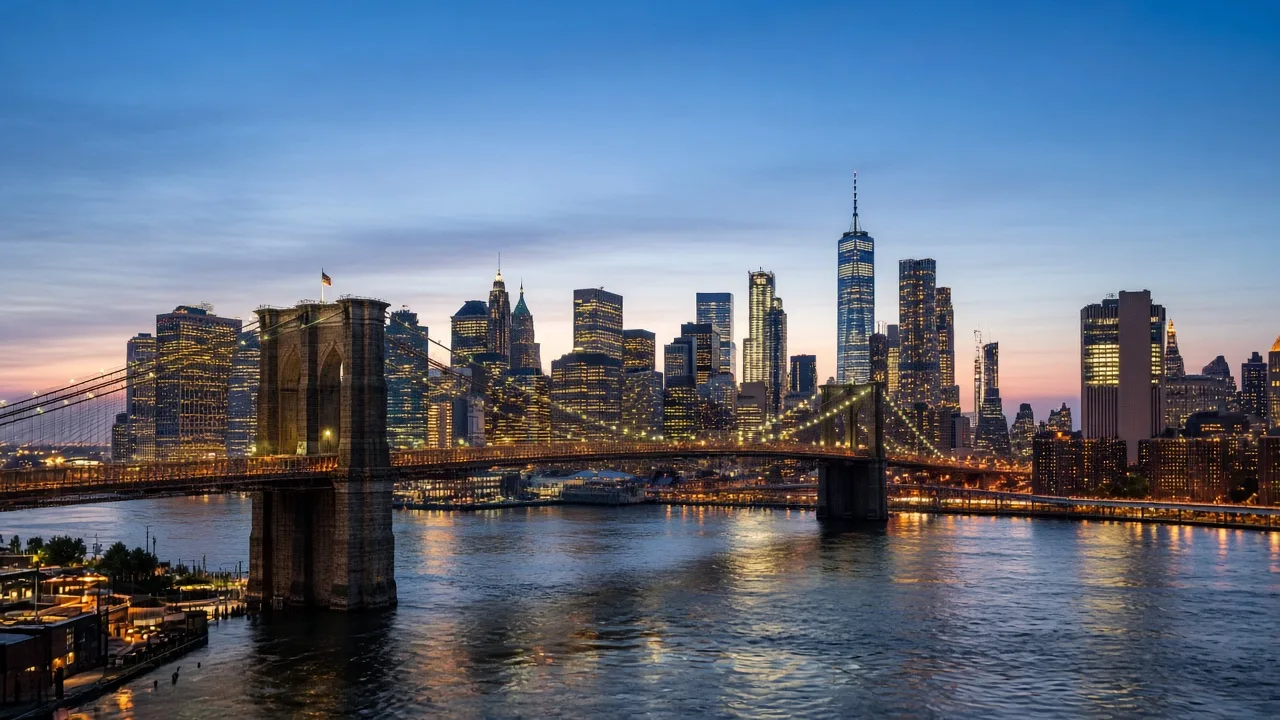
New York City needs no introduction. It is a city of skyscrapers and brownstones, world-class museums and Broadway, bagels and fine dining, with five boroughs each offering something different. The challenge is not finding things to do, but choosing between them and managing costs in one of the world's most expensive cities.
Why go
Few cities pack so many icons into such a walkable grid. You can see the Statue of Liberty from the harbour, walk the Brooklyn Bridge at sunrise, spend a day at the Metropolitan Museum of Art, picnic in Central Park, catch a Broadway show and finish with pizza in Brooklyn. Beyond the classics, neighbourhoods such as Harlem, the Lower East Side, Astoria and Williamsburg reveal the city's immigrant history and food culture.
Best time to visit
- Spring (April to early June) and autumn (September to early November): comfortable temperatures, blossoms or autumn foliage, and outdoor dining. These are the best seasons for walking.
- Summer (late June to August): hot and humid, with free outdoor concerts and events.
- Holiday season (late November to December): festive window displays, the Rockefeller Center tree, ice skating and holiday markets. It is magical and crowded, with high hotel prices.
- Winter (January to March): cold, sometimes snowy, and the cheapest time for hotels, with fewer queues at museums. For winter 2026-27, January and February offer the best value. NYC Broadway Week and NYC Restaurant Week usually run in winter, with discounted tickets and set menus.
Top things to do
- Statue of Liberty and Ellis Island: take the official ferry from Battery Park. Book pedestal or crown access well ahead.
- Central Park: Bethesda Terrace, Bow Bridge and Strawberry Fields, or rent a bike.
- Museums: the Met, MoMA, the American Museum of Natural History, the Guggenheim and the Whitney.
- Observation decks: Top of the Rock, the Empire State Building, Edge or Summit One Vanderbilt.
- 9/11 Memorial & Museum: reflecting pools in Lower Manhattan and a moving museum.
- The High Line: an elevated park on an old freight railway, ending at Hudson Yards.
- Brooklyn Bridge and DUMBO: walk across from Manhattan for classic skyline views.
- Broadway: discounted same-day tickets are available at the TKTS booth and through digital lotteries.
- Food: bagels, pizza by the slice, Chinatown dumplings, Jewish delis and food halls.
Where to stay by area
- Midtown: close to Times Square, theatres and transport. It is busy, with a wide range of hotels.
- Lower Manhattan and the Financial District: quieter at night and often better value on weekends.
- Upper West Side and Upper East Side: residential, close to Central Park and the museums.
- Greenwich Village, SoHo and the Lower East Side: charming streets, boutiques and nightlife.
- Brooklyn (Williamsburg, DUMBO) and Long Island City in Queens: good value and a short subway ride to Manhattan.
Getting there and around
New York is served by three major airports: JFK, Newark (EWR) in New Jersey and LaGuardia (LGA). The AirTrain connects JFK and Newark to rail links, and LaGuardia is served by buses and taxis. The subway runs 24 hours a day, and you can pay by tapping a contactless card or phone with OMNY. Walking is often fastest in Manhattan. Yellow cabs and ride-hailing are plentiful. Drivers should note that vehicles entering Manhattan below 60th Street pay a congestion toll, so a car is rarely worthwhile.
Indicative budget
Approximate per person per day:
- Budget: about US$120 to US$200 with a hostel or shared room, street food, the subway and free attractions.
- Mid-range: about US$300 to US$500 for a three- or four-star hotel, restaurants, a museum and a show.
- Luxury: US$800 and up for five-star hotels and fine dining.
Hotel rooms are subject to city and state taxes, which add roughly 15% plus small nightly fees. Some hotels also charge "destination" or "facility" fees. Tipping of about 18% to 20% is expected in restaurants.
Practical tips: entry rules, taxes and local rules
- Entry: citizens of Visa Waiver Program countries must have an approved ESTA before travelling to the US. It currently costs about US$40 on the official CBP website. Everyone else needs a visitor visa, and US law passed in 2025 introduced an additional "visa integrity fee" for many visa applicants. Apply only through official US government sites, apply early, and check the latest rules, as US entry requirements have changed frequently.
- Short-term rentals: New York City strictly limits short-term rentals of whole apartments. Many listings are not legal, so a licensed hotel is usually the safer choice.
- Passes: city passes can save money if you plan to visit many paid attractions. Many museums also offer "pay what you wish" times or free evenings for some visitors.
- Safety: New York is generally safe for visitors. Keep an eye on belongings in crowds, and use official taxis or apps.
FAQ
How many days do I need in New York City? Four to five days covers the essentials. A week lets you explore Brooklyn, Queens and beyond.
Is New York worth visiting in winter? Yes. December is festive but busy and expensive, while January and February offer lower prices and indoor highlights.
What is the best way to get from JFK to Manhattan? The AirTrain plus the subway or Long Island Rail Road is the cheapest option. Taxis charge a flat fare to Manhattan, plus tolls and tip.