
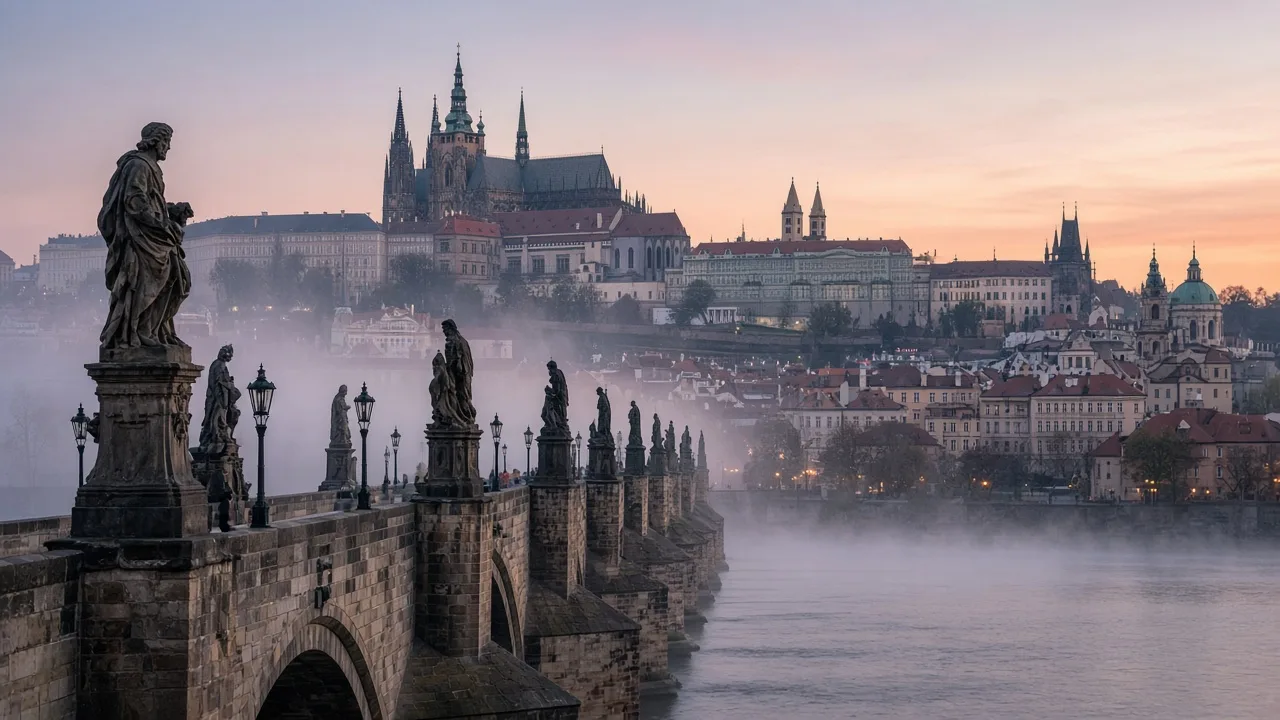
Prague's skyline of spires, its Gothic bridge and its hilltop castle survived the 20th century largely intact. That makes the Czech capital one of Europe's best-preserved historic cities, and its historic centre is a UNESCO World Heritage site. Add excellent beer, lively cafés and some of Europe's most atmospheric Christmas markets, and it is easy to see why Prague is a year-round favourite.
Why go
Few cities pack Romanesque, Gothic, Baroque, Art Nouveau and Cubist architecture into such a walkable centre. You can cross the Charles Bridge at dawn, watch the Astronomical Clock strike the hour, explore Prague Castle's vast complex and finish the day in a traditional pub with a freshly poured pilsner. Prices are generally lower than in many Western European capitals, though that gap has narrowed in the centre.
Best time to visit
- Spring (April to May) and early autumn (September to October): mild weather, blossom or autumn colours, and manageable crowds.
- Summer (June to August): warm and lively, with beer gardens and river terraces, but the Old Town is very crowded.
- Winter (November to February): cold, often below freezing at night, with short days. Christmas markets usually run from late November to early January, with Old Town Square and Wenceslas Square the best known. January and February are the quietest and cheapest months, so winter 2026-27 is a good time for museums, concerts and cosy pubs.
Top things to do
- Prague Castle and St Vitus Cathedral: one of the largest castle complexes in the world, including Golden Lane and the Old Royal Palace.
- Charles Bridge: walk it at sunrise or late evening to avoid the crowds.
- Old Town Square and the Astronomical Clock: the medieval clock, the Týn Church and the Old Town Hall tower views.
- Josefov (the Jewish Quarter): historic synagogues and the Old Jewish Cemetery, managed by the Jewish Museum in Prague.
- Malá Strana (Lesser Town): Baroque streets, St Nicholas Church and hidden gardens.
- Vyšehrad: a quieter fortress with river views and the cemetery where Dvořák is buried.
- Petřín Hill and Letná Park: viewpoints, and Letná's beer garden overlooking the river.
- Classical music and opera: the Rudolfinum, the National Theatre and the Estates Theatre, where Mozart premiered Don Giovanni.
- Day trips: Kutná Hora's bone chapel and cathedral, Český Krumlov or Karlštejn Castle.
Where to stay by area
- Old Town (Staré Město): central and atmospheric, but busy and pricier.
- Malá Strana: romantic and quieter at night, below the castle.
- New Town (Nové Město): good value and well connected, around Wenceslas Square.
- Vinohrady and Žižkov: residential neighbourhoods with cafés, wine bars and good-value apartments, a short tram ride from the centre.
- Karlín and Holešovice: trendy, revitalised districts with design hotels and galleries.
Getting there and around
Václav Havel Airport Prague has links across Europe and beyond. Public buses connect it to the metro, and the Airport Express bus runs to the main railway station. Taxis and ride-hailing apps are also available. In the city, trams, the metro and buses are efficient and affordable. Buy tickets in the PID Lítačka app or from machines, and remember that tickets must be validated. Much of the centre is best explored on foot, though the cobbles can be hard going.
Indicative budget
Approximate per person per day:
- Budget: about €50 to €80 with a hostel, pub meals and public transport.
- Mid-range: about €120 to €220 for a three- or four-star hotel, restaurant meals and paid sights.
- Luxury: €350 and up for five-star hotels and fine dining.
Prague uses the Czech koruna (CZK), not the euro. Pay in korunas and decline "dynamic currency conversion" on card machines.
Practical tips: entry rules, taxes and overtourism
- Entry: Czechia is in the Schengen Area, and the 90-in-180-day rule applies to visa-exempt visitors. The EU Entry/Exit System is in use at external Schengen borders, so allow time at passport control. ETIAS is not yet operating.
- City tax: Prague charges a local accommodation fee per person per night, currently CZK 50, payable by guests aged over 18 for stays of up to 60 days. It is collected by your accommodation.
- Nightlife rules: the city has banned organised pub crawls between 10pm and 6am. Noise and drunken behaviour in the centre are policed.
- Money scams: avoid street money-changers, and check exchange rates and commissions at bureaus. Use ATMs from major banks.
- Overtourism: visit major sights early or late, explore beyond the Old Town, and respect residents in historic lanes.
FAQ
How many days do I need in Prague? Three days covers the centre. Add a day for Kutná Hora or Český Krumlov.
When are the Prague Christmas markets open? They usually run from late November until early January. Check the city's tourism site for exact dates each year.
Is Prague walkable? Yes, very. Trams cover longer distances, and the climb to the castle can be done on foot or by tram 22.


