
Visiting the Nordic countries could soon cost a little more, though how much depends on where you go. Over the past few weeks, Norway, Iceland and Finland have moved ahead with plans that would make tourists pay towards roads, trails, toilets and other services. Denmark, meanwhile, has quietly shelved a planned hotel tax for Copenhagen and Aarhus.
The four countries face the same problem, fast-growing tourism in small communities, but are taking very different approaches. Here is what is planned, what is confirmed and what it means for a 2027 trip.
Norway: a 3% accommodation charge from 2027
Norway's visitor contribution, known as besøksbidrag, became law on 1 July 2026, according to Life in Norway. From 2027, municipalities that can show particularly high pressure from tourism can add a charge to overnight stays.
- The rate is fixed nationally at 3% of the accommodation price before VAT.
- It can apply to hotels, hostels, holiday homes, apartments and other paid short-term stays.
- Municipalities can apply it for only part of the year.
- Each municipality must submit a plan for how the money will be spent, for example on toilets, trails and parking, and have it approved by the government.
Tromsø, the Arctic city popular for northern lights trips, has voted to introduce the 3% charge from 2027, subject to government approval. In Lofoten, Vestvågøy municipality has approved its spending plan, with the process coordinated across the islands' municipalities. Norway has also proposed a separate charge of NOK 100 per cruise passenger for each started 24-hour period a ship spends in an eligible municipality, though those rules are being handled separately.
On a hotel bill of NOK 2,000 before VAT, a 3% charge would add NOK 60 a night.
Iceland: a proposed Golden Circle pass
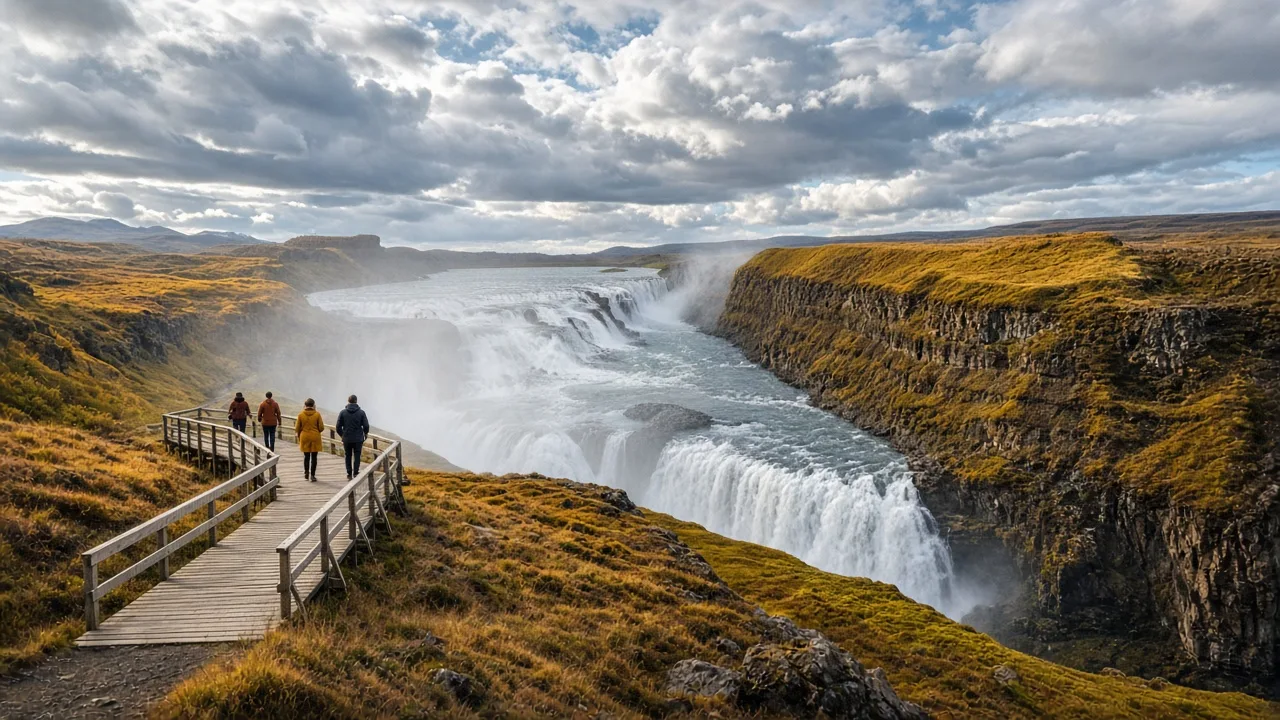
Iceland has gone for a different model. Instead of taxing hotel stays, the government has proposed an electronic pass for three of the country's most visited sights, all on the Golden Circle route: Þingvellir National Park, Gullfoss waterfall and the Geysir geothermal area.
Under the draft bill, which was open for public consultation on Iceland's government portal from 23 September to 7 October:
- Everyone aged 18 and over would need an electronic QR pass, but only people who are not Icelandic tax residents would pay for it.
- It would cost ISK 4,500 in peak season and ISK 3,000 from November to May.
- One pass would cover all three sites and be valid for a year.
- The planned start date is 1 May 2027, if the proposal is approved.
Icelandic broadcaster RÚV reported that the fee is expected to raise ISK 6 to 7 billion a year. Life in Norway notes that parking charges at Þingvellir would be dropped under the plan, but also that local authorities have raised objections. This is still a proposal, not law.
Finland: a municipal tax of 2% to 5%
Finland's Ministry of Finance is preparing legislation that would let municipalities levy their own tourist tax on paid short-term accommodation, set anywhere between 2% and 5% of the price before VAT. The law is intended to take effect in 2027, but councils would not be able to start collecting until the beginning of 2028. Destinations in Finnish Lapland such as Rovaniemi, which have seen strong growth in winter tourism, are expected to watch the debate closely.
Denmark: hotel tax shelved, cruise levy proposed
Plans for a DKK 20 per-night tourist tax in Copenhagen and Aarhus were missing from the Danish government's proposed 2027 budget, presented on Friday 9 October, and from its legislative programme, Travel News Nordic reported on 12 October. The hospitality association HORESTA, which had campaigned against the tax, welcomed the move.
Instead, the government has proposed a levy of DKK 200 per passenger on cruise ships calling at Danish ports from 2028. HORESTA is pushing for an exemption for cruises that start or end in Denmark. Budget negotiations are continuing, so the details could still change.
What this means for travellers
- Trips this winter are not affected. None of these charges apply in 2026.
- Northern Norway in 2027 may cost slightly more. If Tromsø's plan is approved, expect around 3% on top of the pre-VAT room rate.
- Golden Circle day trips may need a pass from May 2027. If you are booking a tour for 2027, check whether the pass would be included.
- Copenhagen city breaks are unaffected for now, but cruise passengers could face a levy from 2028.
- Look at the fine print. Charges like these usually appear on your final hotel bill or booking, so compare total prices, not headline rates.
FAQ
Is there a tourist tax in Norway now? Not under the new national scheme. Municipalities can introduce the 3% accommodation charge from 2027, and only after government approval.
How much will the Iceland Golden Circle pass cost? Under the proposal, ISK 4,500 in peak season and ISK 3,000 from November to May for adults who are not Icelandic tax residents. It is not yet approved.
Does Copenhagen have a tourist tax? No. The proposed DKK 20 nightly tax has been left out of the government's 2027 budget.
When could Finland's tourist tax start? The law is planned for 2027, but municipalities could only begin collecting from the start of 2028.
Sources
- Life in Norway: How the Nordic countries are rethinking tourist taxes
- Travel News Nordic: Tourist tax removed from budget proposal (12 October 2026)
- Iceland government consultation portal (Samráðsgátt): case S-180/2026
- RÚV: Infrastructure fee expected to raise ISK 6-7 billion (in Icelandic)
- Forbes: Iceland plans new tourist fee for its famous Golden Circle


