
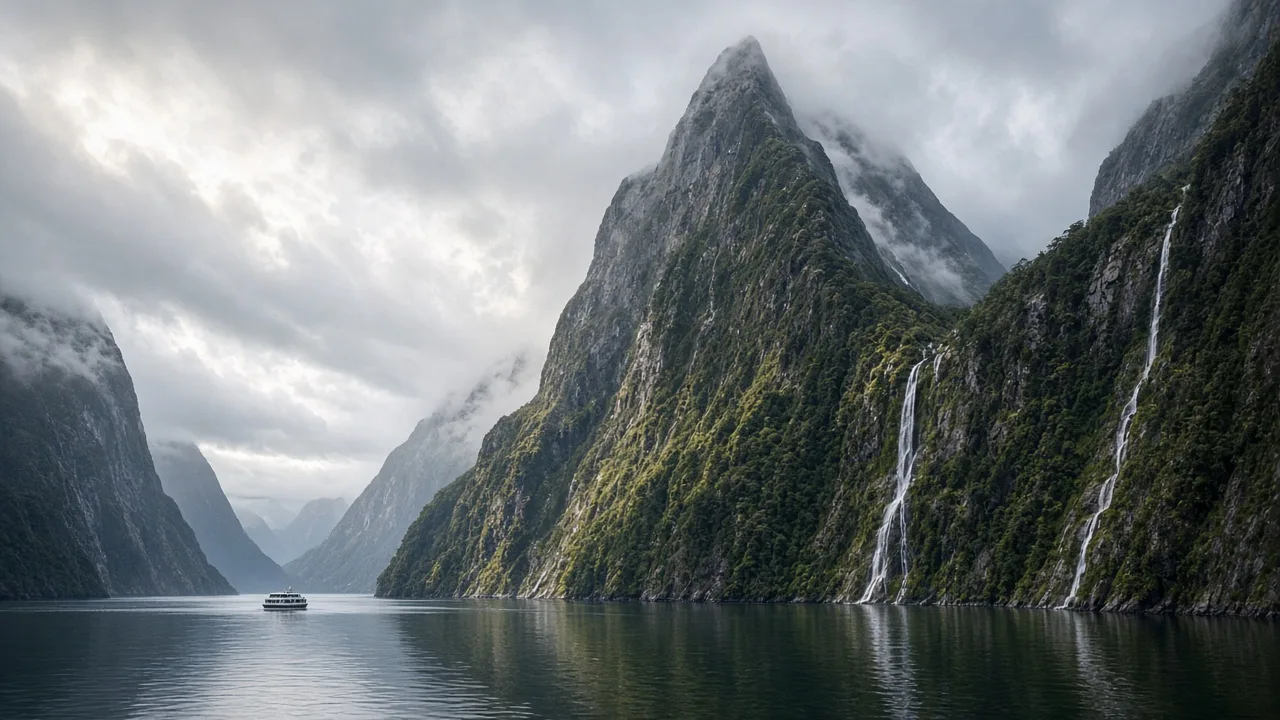
New Zealand's South Island is made for road trips. Glaciers spill towards rainforest, fiords cut deep into the southwest coast, turquoise lakes sit beneath the Southern Alps, and the night skies are among the darkest on Earth. Te Wāhipounamu, the southwest corner of the island, is a UNESCO World Heritage site, and the southern summer lines up perfectly with the northern winter.
Why go
The South Island packs extraordinary variety into distances you can drive in a day or two. A typical loop takes in Christchurch, Lake Tekapo and Aoraki/Mount Cook, Queenstown's adventure scene, the fiords of Milford Sound, the glaciers and wild beaches of the West Coast, and the golden bays of Abel Tasman. Add whale watching at Kaikōura and wine in Marlborough, and you have one of the world's most rewarding self-drive routes.
Best time to visit
- Summer (December to February): long, warm days, open alpine roads and peak hiking season. It is the core of a 2026-27 northern-winter escape. Book campervans, Great Walk huts and accommodation months ahead, especially around Christmas and January school holidays.
- Autumn (March to May): settled weather, golden colours around Arrowtown and Wānaka, and fewer crowds.
- Winter (June to August): ski season in Queenstown and Wānaka. Some alpine passes may need snow chains.
- Spring (September to November): waterfalls in full flow, lambs in the fields and changeable weather.
Top things to do
- Milford Sound/Piopiotahi: a cruise or kayak in Fiordland, reached on one of the world's great alpine drives. Doubtful Sound offers a quieter alternative.
- Aoraki/Mount Cook National Park: the Hooker Valley Track offers an easy walk with big mountain views.
- Lake Tekapo: stargazing in the Aoraki Mackenzie International Dark Sky Reserve, plus lupins in late spring.
- Queenstown and Wānaka: bungy, jet boats, wine tasting, the Queenstown Gondola and lakeside walks.
- The West Coast: Franz Josef and Fox Glaciers (often viewed by helicopter), Lake Matheson and the Punakaiki Pancake Rocks.
- Abel Tasman National Park: kayak or hike the coastal track between golden beaches.
- Kaikōura: whale watching, dolphins and seals with mountains as a backdrop.
- Great Walks: the Milford, Routeburn and Kepler Tracks require advance hut bookings through the Department of Conservation (DOC).
Where to stay by area
- Christchurch: the main gateway, with a rebuilt city centre and good-value hotels.
- Lake Tekapo and Twizel: bases for stargazing and Mount Cook.
- Queenstown: the widest choice of hotels and nightlife. Arrowtown and Wānaka are quieter alternatives.
- Te Anau: the closest town with a range of accommodation for Milford Sound.
- Franz Josef and Hokitika: West Coast bases.
- Nelson and Mārahau: gateways to Abel Tasman.
Getting there and around
Christchurch and Queenstown have international flights, mostly from Australia, and frequent domestic links to Auckland and Wellington. Most visitors hire a car or campervan. Drive on the left, allow more time than maps suggest on winding roads, and watch for one-lane bridges. Freedom camping is restricted to certified self-contained vehicles at permitted sites. Intercity coaches and organised tours suit travellers who prefer not to drive. The scenic TranzAlpine train links Christchurch and Greymouth.
Indicative budget
Approximate per person per day (in New Zealand dollars):
- Budget: about NZ$120 to NZ$180 with hostels or campsites, self-catering and shared car hire.
- Mid-range: about NZ$250 to NZ$450 for motels or hotels, some tours and restaurant meals.
- Luxury: NZ$800 and up for lodges, scenic flights and fine dining.
Activities add up quickly. A Milford Sound cruise, a glacier heli-hike or a bungy jump each typically costs from about NZ$100 to several hundred dollars.
Practical tips: entry rules, levies and conservation
- Entry: visitors from visa-waiver countries must obtain a New Zealand Electronic Travel Authority (NZeTA) before travel. Most also pay the International Visitor Conservation and Tourism Levy (IVL) of NZ$100 per person, in addition to the NZeTA application fee. Other nationalities need a visitor visa, which generally includes the IVL. Apply only through Immigration New Zealand's official app or website.
- Planned site charges: the government has announced plans to charge international visitors to access some of the most popular conservation sites, namely Milford Sound, Aoraki/Mount Cook, Cathedral Cove and the Tongariro Alpine Crossing, with a fee initially suggested at around NZ$20 to NZ$40. DOC says the scheme is still being designed and depends on legislation. No final fee or start date has been set, so check before you travel.
- Biosecurity: New Zealand is strict about food, plant material and used outdoor gear. Declare items on arrival and clean your boots, or you risk instant fines.
- Weather and safety: alpine weather changes quickly. Check DOC alerts and the MetService forecast, and leave your intentions with someone before tramping.
- Sandflies: bring insect repellent for Fiordland and the West Coast.
FAQ
How long do I need for a South Island road trip? Ten to fourteen days covers the main loop. Three weeks lets you add Abel Tasman, Kaikōura and the Catlins.
Is a campervan a good idea? It is popular and flexible, but book early for summer. Only certified self-contained vehicles can use most freedom-camping sites.
Is Milford Sound worth the drive from Queenstown? Yes, though it is a long return day trip. Staying in Te Anau or taking a scenic flight shortens it.
Sources
- UNESCO World Heritage Centre: Te Wahipounamu, South West New Zealand
- Department of Conservation: International visitor access charges
- Department of Conservation: International Visitor Levy conservation investment plan
- Department of Conservation: Fiordland National Park
- RNZ: New Zealand's hottest destinations will start charging foreign tourists fees
- Lonely Planet: South Island


