
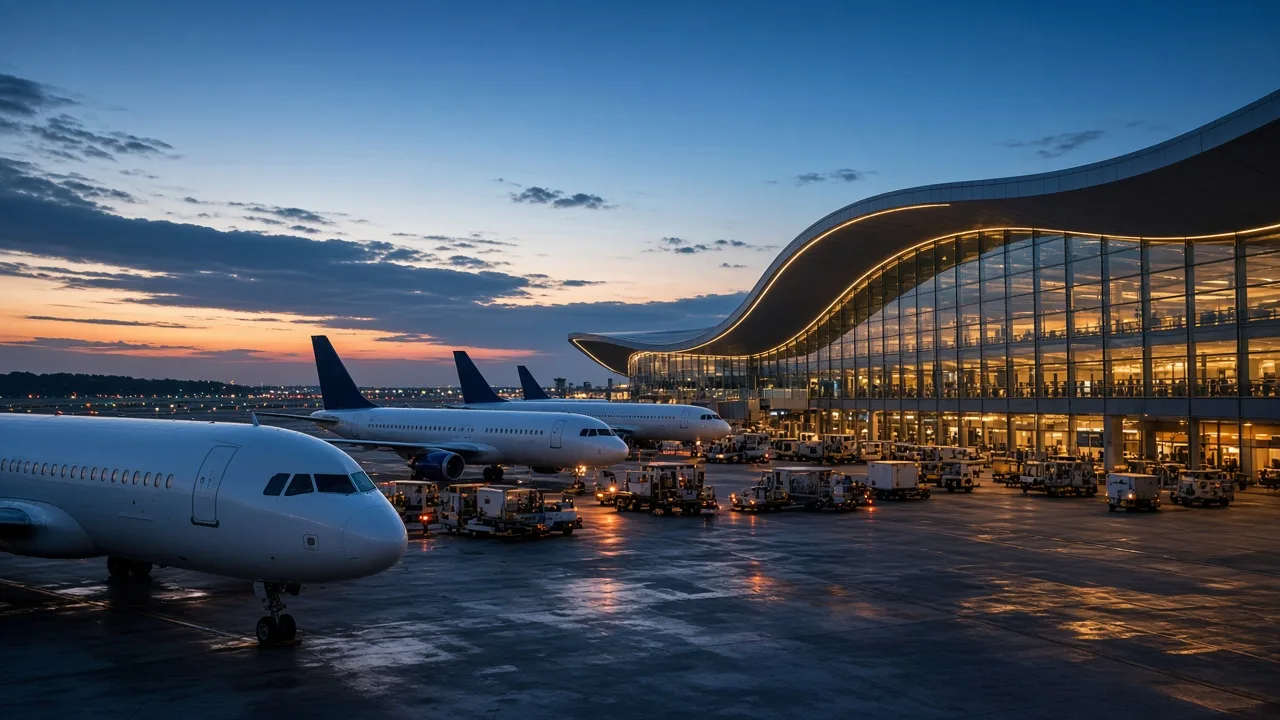
Travellers flying in and out of Mumbai this winter can breathe a little easier. Mumbai International Airport Ltd (MIAL), the operator of Chhatrapati Shivaji Maharaj International Airport, has agreed to leave airlines' Winter Schedule undisturbed and has set aside a plan to cancel 265 weekly international departure slots at Terminal 2, according to CNBC-TV18.
The agreement, reached at a meeting with airlines on 13 October 2026, ends a standoff that began in August. But the bigger question, how and when ageing Terminal 1 will be rebuilt, is still unresolved, and the next round of talks is due on 28 October.
Here is what changed, why it matters for passengers, and what to watch next.
What was agreed
At the 13 October meeting, MIAL, a joint venture between Adani Airport Holdings (AAHL) and the Airports Authority of India, made three key commitments, CNBC-TV18 reported:
- No disruption to the Winter Schedule: Airlines will not have to change flights for the winter season, which runs from 25 October 2026 to the end of March 2027.
- Slot cuts set aside: The proposed cancellation of 265 weekly international departure slots at T2 will not go ahead.
- A joint plan for T1: A joint working group will spend the next two weeks drawing up a plan for redeveloping Terminal 1.
In a media statement, an MIAL spokesperson said that Jeet Adani, non-executive director of AAHL, and AAHL chief executive Arun Bansal met the Airline Operators' Committee in Mumbai. The statement said they "assured the airline community of minimisation of disruption," promised to fully respect historical slot allocations, and gave "a commitment not to disturb any slots for the winter schedule."
According to sources at the meeting cited by CNBC-TV18, Jeet Adani committed to honouring historic slots and acknowledged that the earlier approach of unilaterally reducing capacity at T2 was not right.
MIAL also said it would fully support any airline that chooses, voluntarily, to move flights to the new Navi Mumbai International Airport or start new services there.
How the standoff started
The dispute dates back to 20 August, when Adani Airports proposed shifting one-third of all international flights from T2 to Navi Mumbai from 1 October. Airlines saw it as a decision taken without consultation.
On 9 September, the International Air Transport Association (IATA) wrote to the Aviation Ministry opposing any "forced relocation." Then, on 1 October, MIAL told airlines it would temporarily drop 265 weekly international departure slots at T2 from 25 October, saying it needed to rebalance traffic while T1 is redeveloped.
Airlines objected that the changes came too close to an already approved schedule. On 6 October, the Aviation Ministry put the capacity reduction plan on hold and asked both sides to work out a solution, which led to the 13 October meeting.
Why it matters for travellers
The Winter Schedule is the peak season for many Indian travellers, covering Diwali, the year-end holidays and the winter wedding season. Large slot cuts at one of India's busiest airports could have meant cancelled or retimed international flights, fewer options and higher fares.
For now, passengers who have already booked winter trips through Mumbai should see their flights operate as planned, barring the usual operational changes. That is good news at a time when festive fares are already high, as we covered in our guide to Diwali and Chhath airfares, and when airlines are adding new international routes for winter 2026.
The unresolved issue: Terminal 1
The underlying problem has not gone away. MIAL wants to redevelop T1, which would reduce its capacity in phases. The operator has said around 5 million passengers a year would need to move from T1 to T2, with a matching reduction in traffic at T2.
Airlines have questioned those numbers. According to sources cited by CNBC-TV18:
- Airlines dispute MIAL's figure of 15 million passengers a year for T1's capacity, saying actual throughput at T1 is below 9 million.
- They have asked about a planned expansion at T2 that was supposed to add 5 million passengers a year of capacity by March 2027, which they argue would remove the need to cut T2 traffic.
Before agreeing to any transition, airlines want MIAL to show a real capacity shortfall and share a detailed T1 redevelopment plan, including construction phases, timelines and how much capacity will be lost at each stage.
The MIAL statement said airlines had committed to support the redevelopment and to begin "traffic balancing" from the Summer Schedule, which runs from the end of March to the end of October 2027.
What to watch next
28 October meeting: MIAL and airlines will meet again. The Airline Operators' Committee has asked for the meeting to be held outside the airport so that airline head-office, commercial and network planning teams can attend.
5 November deadline: CNBC-TV18 notes this is the deadline for slot coordinators to issue initial slot allocations for the Summer 2027 schedule. Decisions taken in the coming weeks will shape how many flights operate from T1, T2 and Navi Mumbai next summer.
Tips for flyers using Mumbai
- Check your terminal. Always confirm whether your flight uses T1, T2 or Navi Mumbai before leaving home.
- Book summer 2027 trips with care. Until the T1 plan is final, some flights next summer could be retimed or moved. Flexible fares or good travel insurance can help.
- Allow extra time at peak periods. Festive and holiday weekends bring heavy crowds at security and immigration.
For a wider view of how Indians are travelling this season, see our report on festive travel booking trends for 2026.
FAQ
Will my winter flight from Mumbai be cancelled because of the slot dispute? No slot cuts are planned for the Winter Schedule, which runs from 25 October 2026 to the end of March 2027. Normal schedule changes by individual airlines can still happen.
Are international flights being moved to Navi Mumbai? Not by force for now. MIAL says it will support airlines that choose to move voluntarily.
When will Terminal 1 be redeveloped? No final timeline has been agreed. A joint working group is preparing a plan, and talks continue on 28 October.


