
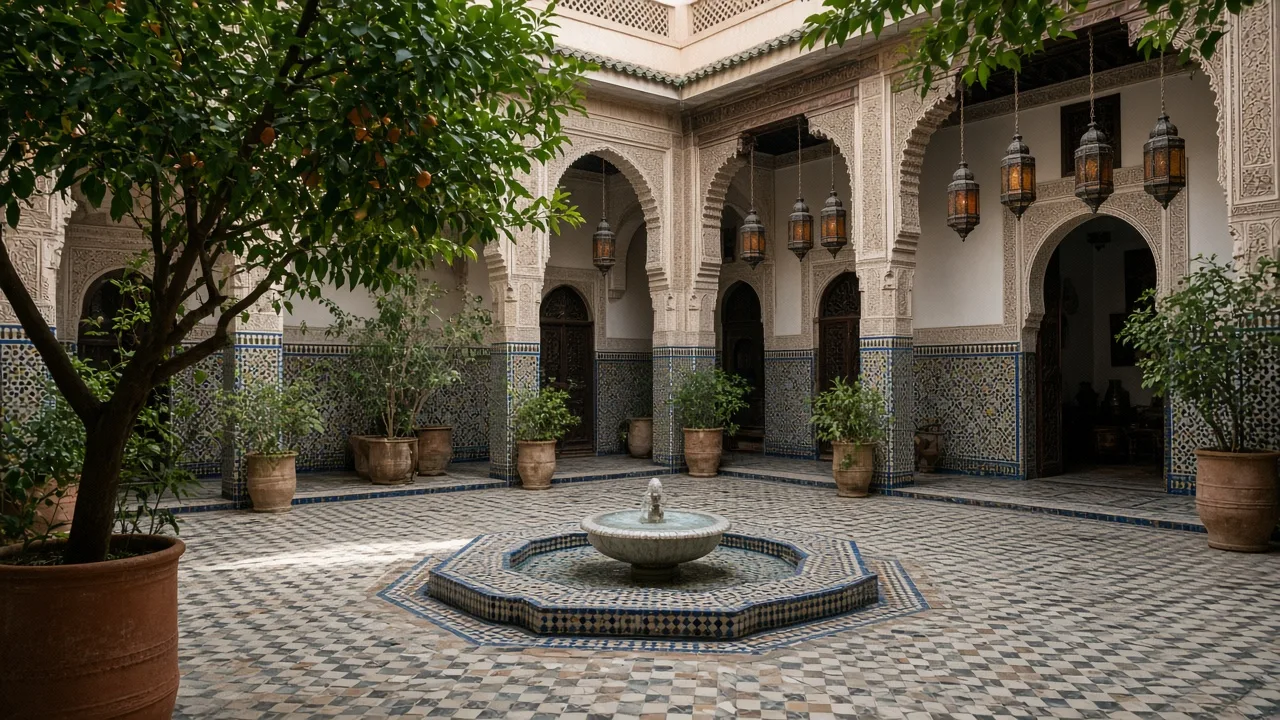
Marrakech is Morocco's most famous city. Its UNESCO-listed medina is a maze of souks, palaces and courtyard riads, wrapped in rose-pink walls with the snow-capped High Atlas on the horizon. It is sensory, chaotic and endlessly photogenic, and it is easy to reach from much of Europe on a short flight.
Why go
Few cities feel as transporting so close to Europe. In a single day you can bargain for lanterns and leather in the souks, admire the tilework of the Bahia Palace and Ben Youssef Madrasa, relax in a hammam and eat at the open-air food stalls of Jemaa el-Fna square as the call to prayer drifts across the rooftops. Beyond the city lie Atlas mountain villages, the Agafay stone desert and the Atlantic port of Essaouira.
Best time to visit
- Spring (March to May) and autumn (late September to November): warm, sunny days and pleasant evenings. These are the best seasons for the city and for Atlas trekking.
- Summer (June to August): very hot, often above 38°C. Mornings and late evenings are the only comfortable times for sightseeing.
- Winter (December to February): sunny days, typically around 18 to 20°C, and cold nights, with snow on the Atlas. Winter 2026-27 suits sightseeing well, but pack warm layers for evenings, as many riads have limited heating.
- Ramadan: in early 2027 it is expected to run from around early February to early March. Many restaurants stay open for visitors, but daytime rhythms change and evenings become festive.
Top things to do
- Jemaa el-Fna: the main square, at its most theatrical at dusk, when food stalls, musicians and storytellers take over.
- The souks: spice, metalwork, textile and leather sections. Haggle politely and with good humour.
- Bahia Palace and El Badi Palace: 19th-century courtyards and the ruins of a 16th-century Saadian palace.
- Ben Youssef Madrasa: a former Quranic school with intricate stucco, zellige tilework and carved cedar.
- Jardin Majorelle and the Musée Yves Saint Laurent: cobalt-blue gardens and a museum devoted to the designer. Book timed tickets online.
- A hammam: try a traditional public bath or a spa version in a riad.
- Day trips: the Ourika Valley or Imlil in the High Atlas, the Agafay Desert, Aït Benhaddou (a long day) and the coastal town of Essaouira.
Where to stay by area
- The medina: stay in a riad, a traditional house built around a courtyard, for the classic experience. Choose one near a main gate or taxi drop-off point, as the lanes can be hard to navigate at night.
- Kasbah: slightly calmer, near the Saadian Tombs and the palaces.
- Gueliz and Hivernage: the modern city, with international hotels, cafés and wide streets. It is a good choice for families or anyone who prefers a quieter base.
- The Palmeraie and Agafay: resort-style hotels and desert camps outside the city.
Getting there and around
Marrakech Menara Airport is about 15 to 20 minutes from the medina, and there are direct flights from many European cities. Agree taxi fares before getting in or ask your riad to arrange a transfer. Within the medina, walk. Taxis, the city bus network and ride arrangements through your hotel cover longer distances. ONCF trains connect Marrakech with Casablanca, Rabat and Tangier, with the high-speed Al Boraq line serving part of the route.
Indicative budget
Approximate per person per day:
- Budget: about US$35 to US$60 with a hostel or simple riad, street food and walking.
- Mid-range: about US$90 to US$180 for a boutique riad, restaurant meals, a hammam and entry fees.
- Luxury: US$350 and up for palace hotels and private guided trips.
Entry fees at most monuments are modest, usually under about US$10. The Majorelle Garden and YSL museum cost more.
Practical tips: entry rules, taxes and etiquette
- Entry: citizens of many countries, including the EU, the UK, the US, Canada, Australia and New Zealand, can visit Morocco visa-free for up to 90 days. Other nationalities may need a visa or an electronic visa. Check the Moroccan National Tourist Office's formalities page and official consular sites.
- Tourist tax: Marrakech applies a modest municipal tourist tax per person per night. It varies by type and category of accommodation and is usually added at checkout.
- Dress and etiquette: dress modestly in the medina, with shoulders and knees covered. Ask before photographing people, and non-Muslims cannot enter most active mosques.
- Touts and guides: decline unsolicited "guides" firmly but politely. Book licensed guides through your accommodation.
- Animal welfare: avoid photo opportunities with chained monkeys or snake charmers, and choose responsible operators for camel rides.
- Atlas villages: some communities are still rebuilding after the September 2023 earthquake. Ethical, locally run tours can support recovery.
FAQ
How many days do I need in Marrakech? Two to three days for the city, plus one or two for Atlas or Essaouira day trips.
Is Marrakech good in winter? Yes. Days are sunny and mild, though nights are chilly. Snow on the Atlas makes for dramatic views.
Is it easy to get lost in the medina? Yes, which is part of the fun. Offline maps help, and landmark squares make good reference points.


