
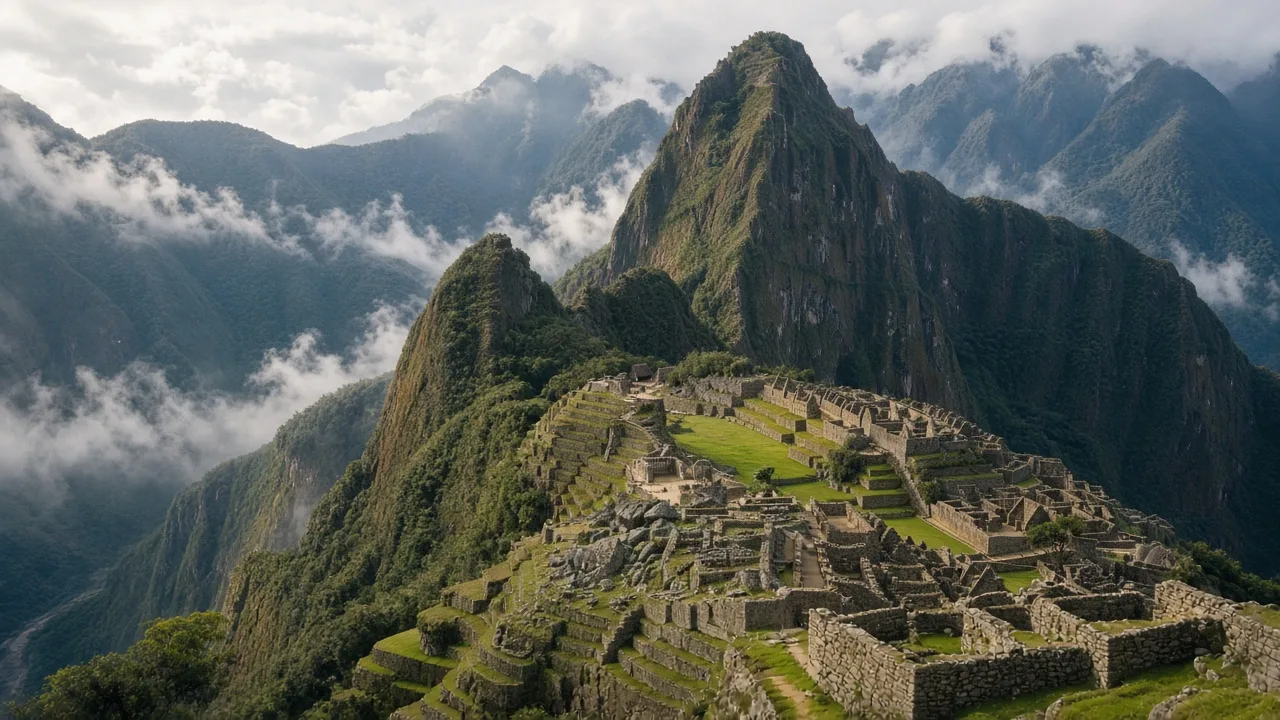
Machu Picchu, the 15th-century Inca citadel high in Peru's Andes, is one of the most recognisable places on Earth. UNESCO lists it as a mixed cultural and natural World Heritage site. Visits now follow a strict system of timed tickets, fixed circuits and daily caps, so planning ahead is essential, especially if you want to climb Huayna Picchu or hike the Inca Trail.
Why go
Nothing quite prepares you for the first view of the terraces and granite temples perched on a ridge above the Urubamba River, surrounded by cloud forest. Add Cusco's colonial streets on Inca foundations, the markets and ruins of the Sacred Valley and Andean food, and Machu Picchu becomes the centrepiece of one of South America's great journeys.
Best time to visit
- Dry season (May to September): clear skies and the best hiking conditions. June to August is the busiest period, so book tickets and trains early.
- Shoulder months (April and October to November): a good balance of weather and crowds.
- Rainy season (December to March): frequent rain and cloud, though often with dramatic misty views and greener landscapes. A winter 2026-27 visit falls in this season. Expect showers, slippery steps and occasional disruption to trains. The Inca Trail closes every February for maintenance, and in 2026 it reopened on March 1.
Top things to do
- The citadel: the Temple of the Sun, the Intihuatana stone, the Temple of the Condor and the classic postcard viewpoint from the upper terraces, depending on your circuit.
- Huayna Picchu or Machu Picchu Mountain: steep, add-on climbs with limited daily slots and a higher ticket price.
- The Inca Trail: the classic four-day trek, or the one-day short Inca Trail. Permits are limited, sell out months ahead for the dry season and require a licensed operator.
- Sacred Valley: Pisac's market and ruins, the salt pans of Maras, the circular terraces of Moray and the fortress town of Ollantaytambo.
- Cusco: the Qorikancha temple, Sacsayhuamán, the San Pedro market and the San Blas neighbourhood.
- Alternative treks: Salkantay and Lares are popular routes that do not require Inca Trail permits.
Where to stay by area
- Cusco: the main base, with the widest choice of accommodation. Spend two or three nights here to acclimatise to the altitude of about 3,400 m.
- Sacred Valley (Urubamba, Ollantaytambo): lower altitude, relaxing, and close to the train station.
- Aguas Calientes (Machu Picchu Pueblo): the town at the foot of the site. Staying overnight lets you catch the earliest entry slots.
Getting there and around
Fly into Cusco via Lima. From Cusco (Poroy station) or Ollantaytambo, trains run by PeruRail and Inca Rail travel to Aguas Calientes in about 1.5 to 3.5 hours. In the rainy season, some services start from points outside Cusco. From Aguas Calientes, buses climb to the site in about 25 minutes, or you can hike up steeply in around 1.5 hours. Book train and bus tickets in advance in high season.
Indicative budget
Approximate per person per day in the Cusco region:
- Budget: about US$40 to US$70 with hostels, set-menu lunches and colectivos.
- Mid-range: about US$120 to US$220 for boutique hotels, tours and restaurants.
- Luxury: US$400 and up for luxury trains and high-end lodges.
Machu Picchu costs: foreign adult tickets for the standard circuits have cost about S/152 (around US$40), and options that include Huayna Picchu or Machu Picchu Mountain about S/200. Peru's protected-areas agency announced an additional conservation charge of S/11 for foreign visitors from May 1, 2026. Return train tickets typically run from about US$120 to well over US$300, and the bus costs extra. Check the official prices before booking.
Practical tips: entry rules, tickets and overtourism
- Entry: citizens of many countries, including the EU, the UK, the US, Canada and Australia, can visit Peru visa-free as tourists. The length of stay is decided at the border. Other nationalities need a visa. Check official Peruvian sources for your passport.
- Official tickets: buy entry tickets on the Ministry of Culture's official platform (tuboleto.cultura.pe) or through licensed agencies. Tickets are tied to your passport, a specific circuit and an hourly entry slot. Bring the same passport you booked with.
- Visitor caps and circuits: the Ministry of Culture limits daily visitors and assigns fixed one-way circuits. You cannot wander freely or go back once you leave a section, and time inside is limited.
- Site rules: no drones, large bags, hard-tipped walking poles (rubber-tipped poles are generally allowed for visitors who need them), food inside the citadel or single-use plastics. Licensed guides are generally required or strongly encouraged.
- Altitude: acclimatise in Cusco or the Sacred Valley, drink water and go easy on the first day.
FAQ
How far ahead should I book Machu Picchu tickets? For June to August and for Huayna Picchu, book two to three months ahead or more. Inca Trail permits should be booked six months ahead.
Which circuit is best for first-timers? Circuit 2 (the "classic" circuit) covers the most of the citadel and the postcard viewpoint.
Is it worth visiting in the rainy season? Yes, if you are flexible. Crowds are often thinner, and the clouds can lift to reveal spectacular views.
Sources
- UNESCO World Heritage Centre: Historic Sanctuary of Machu Picchu
- Government of Peru: Buy Machu Picchu tickets on tuboleto.cultura.pe (Spanish)
- Andina: Additional conservation fee for Machu Picchu from May 2026 (Spanish)
- SERNANP: Annual temporary closure of the Inca Trail network (Spanish)
- PromPerú (official tourism site): Cusco
- Lonely Planet: Machu Picchu


