
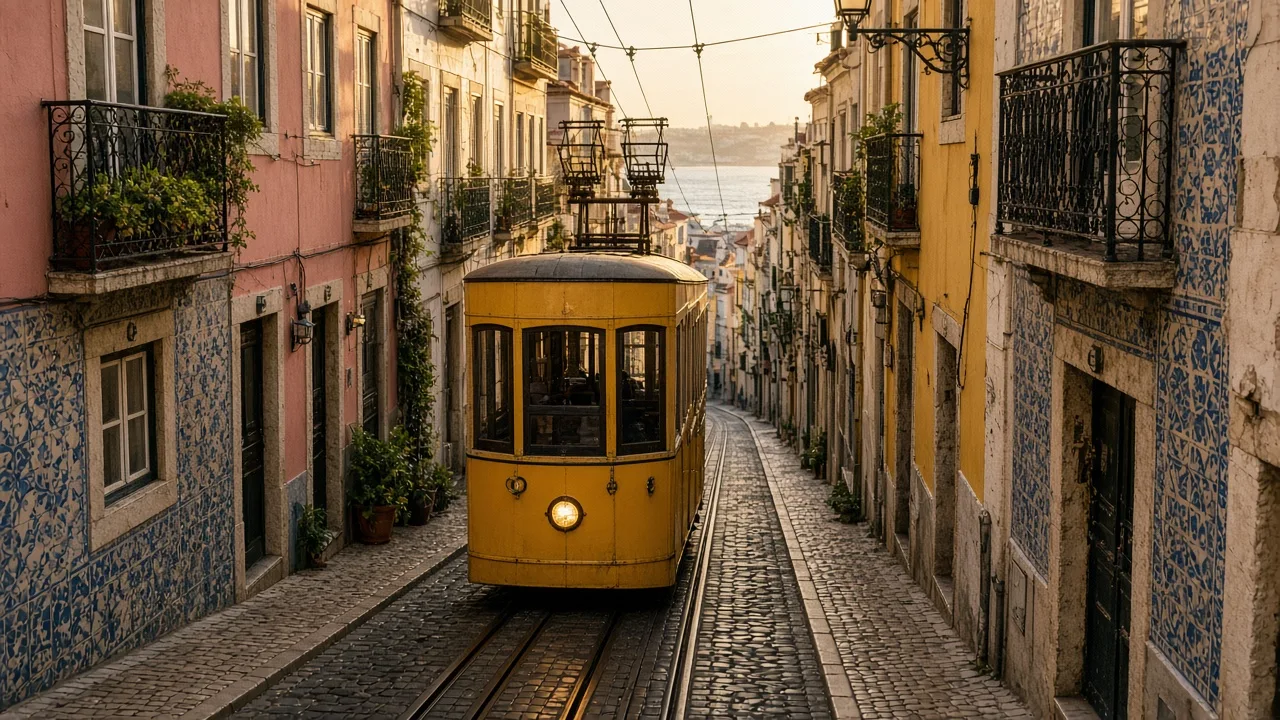
Lisbon spreads across seven hills above the Tagus estuary. It is a city of tiled facades, yellow trams, fado bars and some of Europe's best-value food and wine. It is compact enough for a long weekend, yet varied enough that many visitors come back for a second trip to cover Sintra, Cascais and the Atlantic beaches.
Why go
Lisbon has more sunshine than almost any other European capital, and its mild winters make it a year-round city break. The UNESCO-listed Jerónimos Monastery and Belém Tower recall Portugal's Age of Discovery. The Alfama and Mouraria districts preserve a pre-earthquake street plan of alleys and stairways, and the food scene runs from custard tarts to modern Portuguese tasting menus.
Best time to visit
- Spring (March to May) and autumn (September to October): warm, bright days and fewer crowds than midsummer. Mid-June brings the Santo António street festivals.
- Summer (July to August): hot, busy and more expensive, though Atlantic beaches are close.
- Winter (November to February): mild by European standards, typically in the low to mid-teens Celsius by day, with rain on some days. Winter 2026-27 is a good time for lower hotel rates, museum days and Christmas lights in Baixa and Chiado.
Top things to do
- Belém: Jerónimos Monastery, Belém Tower, the Padrão dos Descobrimentos and a pastel de nata at the original bakery.
- Alfama and São Jorge Castle: lose yourself in the lanes, then climb to the castle and the Miradouro de Santa Luzia viewpoint.
- A fado evening: small tascas in Alfama and Mouraria host intimate performances. Book ahead for the better-known houses.
- Tram 28: the classic route through the old quarters. Ride early in the morning to avoid long queues.
- LX Factory and the waterfront: a converted industrial complex of shops and cafés, plus the riverside walk to the MAAT museum.
- Calouste Gulbenkian Museum: a superb art collection set in a modernist garden.
- Day trip to Sintra: the Pena Palace, Quinta da Regaleira and the Moorish Castle. Buy timed tickets in advance.
Where to stay by area
- Baixa and Chiado: central, flat in parts and close to the metro. The best all-round base for first-timers.
- Alfama: atmospheric and full of fado, but steep and noisy at night.
- Príncipe Real and Bairro Alto: boutique hotels and nightlife. Bairro Alto is lively until late.
- Avenida da Liberdade: larger, upscale hotels on a tree-lined boulevard.
- Cais do Sodré: good for nightlife and easy trains to Cascais.
Getting there and around
Humberto Delgado Airport is close to the city and connected by metro (Red Line) as well as taxis and ride-hailing. Inside the city, the metro, trams, buses and ferries across the Tagus are run by Carris and Metro de Lisboa. A rechargeable navegante card keeps fares simple. Trains run to Sintra from Rossio station and to Cascais from Cais do Sodré.
Some of the city's historic street elevators have been affected by closures since the deadly Glória funicular accident in September 2025. Reports in 2026 indicate that the Glória line will be rebuilt rather than reopened as it was. Check Carris for current service before planning around any funicular or elevator.
Indicative budget
Approximate per person per day:
- Budget: about €60 to €100 with a hostel bed, set-menu lunches (prato do dia) and public transport.
- Mid-range: about €150 to €250 for a three- or four-star hotel, restaurant meals and a few paid sights.
- Luxury: €350 and up for five-star hotels and fine dining.
Practical tips: entry rules, taxes and overtourism
- Entry: Portugal is in the Schengen Area. Visitors from visa-exempt countries can generally stay up to 90 days in any 180-day period, while others need a Schengen visa. The EU's Entry/Exit System (EES) now records non-EU travellers' biometrics at the border, so allow extra time at passport control. The separate ETIAS travel authorisation is not yet operating, and the EU has said it will announce a start date several months in advance. Ignore websites selling ETIAS "pre-registration".
- Tourist tax: Lisbon charges a municipal tourist tax of €4 per person per night for guests aged 13 and over, capped at seven nights. Cruise passengers pay a smaller arrival fee.
- Overtourism: Lisbon has moved to restrict new short-term rental licences in its busiest central parishes. Consider staying in a hotel or a licensed guesthouse, and be considerate in residential Alfama, where noise late at night is a common complaint.
- Footwear: the traditional limestone pavements (calçada) are beautiful but slippery, especially when wet.
FAQ
How many days do I need in Lisbon? Three days covers the city. Add one day for Sintra and another for Cascais or the Setúbal Peninsula.
Is the Lisboa Card worth it? It can be if you plan to visit several museums and use public transport heavily on the same days. Compare it against your actual plans.
Is Lisbon walkable? Yes, but it is hilly. Mix walking with trams, the metro and taxis.


