
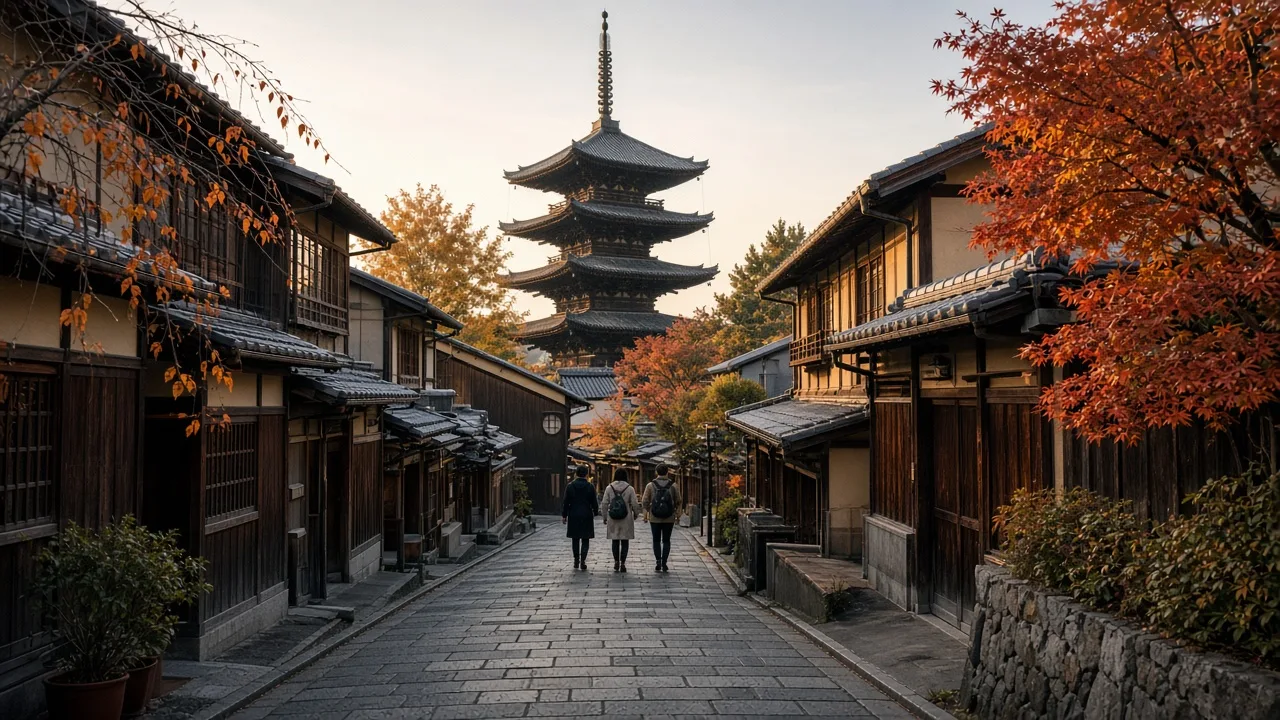
Kyoto was Japan's imperial capital for more than a thousand years, and it still feels like the country's cultural heart. Seventeen of its temples, shrines and castles are grouped together as the UNESCO World Heritage site "Historic Monuments of Ancient Kyoto", and around them sit wooden machiya townhouses, moss gardens, tea houses and some of the best food in Asia. It is also one of the world's most visited cities, so a little planning makes a big difference.
Why go
Few cities pack so much living history into such a walkable space. In a single day you can climb through the vermilion torii gates of Fushimi Inari, watch the morning light hit Kinkaku-ji (the Golden Pavilion), eat your way through Nishiki Market and stroll the lantern-lit lanes of Gion. Kyoto also makes an easy base for Nara, Osaka and the Lake Biwa area.
Best time to visit
- Spring (late March to early April): cherry blossom season is spectacular and very busy. Book rooms months ahead.
- Autumn (mid-November to early December): maple leaves turn the temple gardens red and gold. This is the other peak, and the timing for a late-2026 trip.
- Winter (December to February): cold, crisp and generally dry, with the lowest crowds of the year outside the New Year holiday. A dusting of snow on Kinkaku-ji is a bonus, not a guarantee. For winter 2026-27, expect quieter temples in January and February and lower hotel rates.
- Summer (June to August): hot and humid, with the rainy season in June and the Gion Matsuri festival in July.
Top things to do
- Fushimi Inari Taisha: go at dawn or late afternoon and hike beyond the first viewpoint, where the crowds thin out.
- Kiyomizu-dera and Higashiyama: the wooden temple stage and the sloping lanes of Sannenzaka and Ninenzaka below it.
- Arashiyama: the bamboo grove (best before 8am), Tenryu-ji's garden and the Okochi Sanso villa.
- Kinkaku-ji and Ryoan-ji: the Golden Pavilion and the famous rock garden are close together in the northwest.
- Philosopher's Path: a canal-side walk between Ginkaku-ji and Nanzen-ji, lovely in both spring and autumn.
- Nishiki Market and a kaiseki meal: sample pickles, tofu and wagashi sweets, then book a multi-course dinner if your budget allows.
- Day trip to Nara: about 45 minutes by train for Todai-ji's giant Buddha and the deer park.
Where to stay by area
- Kyoto Station area: the most practical base, with direct trains to the airport, Nara and Osaka and plenty of mid-range hotels.
- Downtown (Kawaramachi and Karasuma): the best choice for restaurants, shopping and evening atmosphere.
- Gion and Higashiyama: traditional ryokan and boutique stays close to the old lanes. It costs more, and the area is crowded by day.
- Arashiyama: peaceful at night once the day-trippers leave, but a long way from everything else.
Getting there and around
Most international visitors fly into Kansai International Airport (KIX) and take the Haruka limited express to Kyoto Station in about 75 to 80 minutes. From Tokyo, the Tokaido Shinkansen takes roughly two hours and 15 minutes. Within the city, buses reach most sights but get very crowded. The subway, the JR Nara Line and the private Keihan and Hankyu railways are often faster. An IC card such as ICOCA, or a phone wallet, works across most transport. Walking and cycling are excellent in the flat central districts.
Indicative budget
Prices are approximate and vary by season:
- Budget: around ¥8,000 to ¥15,000 (about US$55 to US$100) per person per day with a hostel or capsule bed, convenience-store and noodle-shop meals, and buses.
- Mid-range: around ¥20,000 to ¥40,000 per day for a business hotel, sit-down meals and a few paid temples. Most temple entry fees are a few hundred to about ¥1,000.
- Luxury: ¥60,000 and up per day for a high-end ryokan with kaiseki dinner.
Practical tips: entry rules, taxes and overtourism
- Entry: citizens of many countries, including most of Europe, the US, Canada, Australia and New Zealand, can visit Japan visa-free for short tourist stays. Others need a visa. Check the Ministry of Foreign Affairs of Japan or your nearest embassy for your passport. Japan has said it plans to introduce an electronic pre-travel screening system, known as JESTA, in the coming years. Follow official announcements rather than third-party sites.
- Kyoto accommodation tax: from March 1, 2026, the city charges a per-person, per-night tax linked to the room rate. It ranges from ¥200 for rooms under ¥6,000 up to ¥10,000 for rooms costing ¥100,000 or more. Most mid-range stays fall into the ¥400 or ¥1,000 bands.
- Departure tax: Japan's International Tourist Tax rose from ¥1,000 to ¥3,000 per departure from July 1, 2026. It is normally included in your airfare.
- Overtourism rules: parts of Gion have banned tourists from entering certain private lanes, and fines have been reported for trespassing. Never photograph geiko or maiko without permission. Eat at the stall rather than while walking, and carry your rubbish with you, as public bins are scarce.
- Cash and cards: cards are widely accepted, but small temples and shrines may still be cash-only.
FAQ
How many days do I need in Kyoto? Three full days covers the highlights. Four or five lets you add Nara, Uji or the Kurama-Kibune hike at an easier pace.
Is a Japan Rail Pass worth it for Kyoto? Usually only if you are also making several long shinkansen journeys. Prices rose significantly in 2023, so compare against point-to-point tickets.
Is Kyoto busy in winter? January and February are the quietest months, apart from the New Year period, when shrines such as Fushimi Inari draw huge crowds.
Sources
- UNESCO World Heritage Centre: Historic Monuments of Ancient Kyoto
- Kyoto City Official Travel Guide: Kyoto's accommodation tax to change starting March
- City of Kyoto: Accommodation tax FAQ (Japanese)
- JNTO: International Tourist Tax
- National Tax Agency Japan: International Tourist Tax basics
- Lonely Planet: Kyoto


