
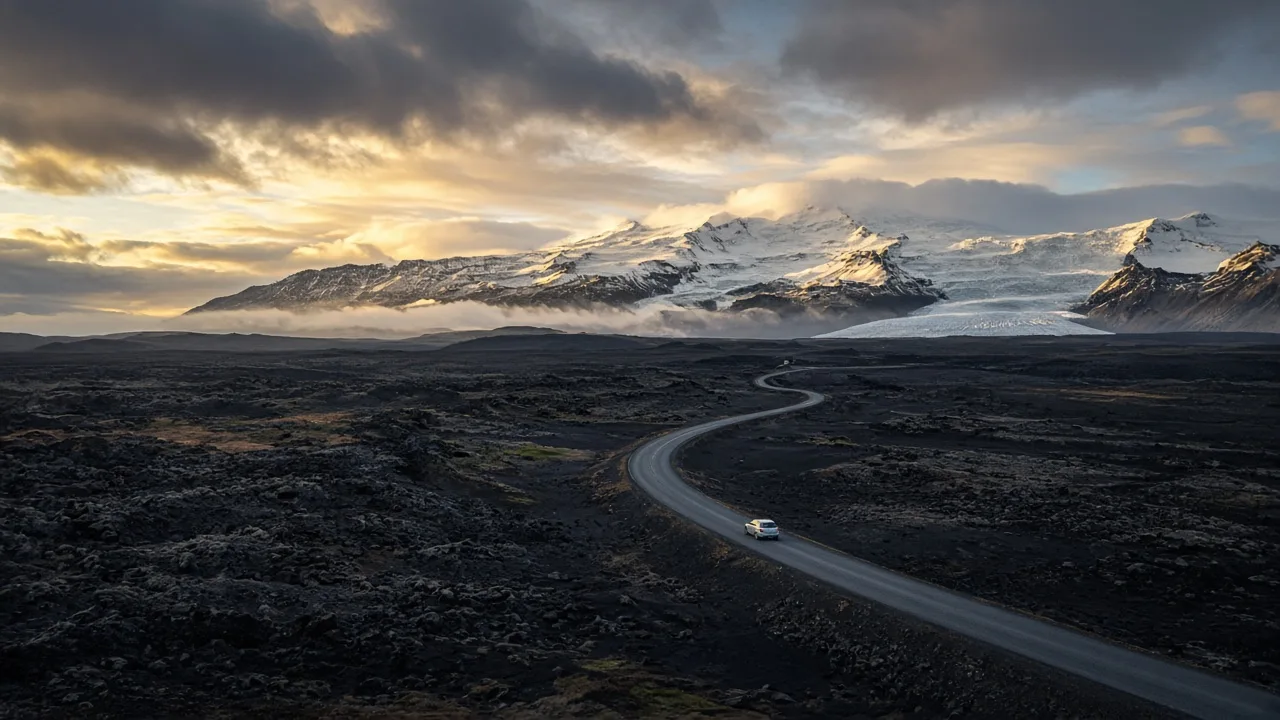
Route 1, better known as the Ring Road, loops for roughly 1,330 km around Iceland. Along the way it passes waterfalls, black-sand beaches, glacier lagoons, volcanic craters and fjord villages. Driving the full circle is one of the world's great road trips, but Iceland's weather and short winter days mean timing and preparation matter more than on most journeys.
Why go
Few places offer so much dramatic scenery from the roadside. Within a week you can stand behind Seljalandsfoss, watch icebergs drift through Jökulsárlón, soak in geothermal pools near Mývatn and spot whales off Húsavík. Iceland's UNESCO sites include Þingvellir National Park, where the North American and Eurasian tectonic plates pull apart, and Vatnajökull National Park.
Best time to visit
- Summer (June to August): near-24-hour daylight, open highland roads and the easiest driving. It is also the busiest and most expensive season.
- Shoulder seasons (May and September): fewer visitors, lower prices and usually manageable roads. September brings the first chance of northern lights.
- Winter (November to March): the best months for aurora viewing and ice caves, but daylight shrinks to about four to five hours around the December solstice. Storms can close sections of Route 1. For winter 2026-27, many travellers stick to the south coast and Golden Circle, or join guided tours, rather than attempt the full ring. Anyone who does drive the loop should allow buffer days.
Top things to do
- Golden Circle: Þingvellir, the Geysir geothermal area and Gullfoss waterfall, all within easy reach of Reykjavík.
- South coast: Seljalandsfoss, Skógafoss, Reynisfjara black-sand beach and the village of Vík. Stay well back from the waves at Reynisfjara, where sneaker waves have killed visitors.
- Jökulsárlón and Diamond Beach: an iceberg lagoon at the foot of Vatnajökull, with boat trips in the warmer months.
- East Fjords: quiet villages, reindeer and coastal mountain roads.
- Lake Mývatn and Húsavík: lava fields, pseudocraters, the Mývatn Nature Baths and whale watching.
- Akureyri and Goðafoss: the north's main town and a classic horseshoe waterfall.
- Snæfellsnes Peninsula: a worthwhile detour west for Kirkjufell mountain and coastal lava landscapes.
Where to stay by area
- Reykjavík: the start and end point for most trips, with the widest range of hotels and restaurants.
- South coast (Hella, Hvolsvöllur, Vík): guesthouses and farm stays convenient for the waterfalls.
- Southeast (Höfn and around Skaftafell): limited rooms, so book early in summer.
- North (Mývatn and Akureyri): good bases for two nights.
- East Fjords (Egilsstaðir, Seyðisfjörður): small hotels and guesthouses.
Accommodation outside Reykjavík is limited, so reserve every night of a Ring Road trip in advance.
Getting there and around
International flights land at Keflavík Airport, about 45 to 50 minutes from Reykjavík. A rental car is the usual way to drive the ring. A 2WD is fine on Route 1 in summer, while 4x4 vehicles are required on mountain "F-roads" and are strongly advisable in winter. Before setting off each day, check road conditions on umferdin.is and weather alerts from the Icelandic Met Office. Register your travel plan with Safetravel.is, and never stop on the road for photos. Petrol stations can be far apart in the east and north, so fill up whenever you can.
Indicative budget
Iceland is expensive. Approximate per person per day:
- Budget: around US$120 to US$180 with campsites or hostels, supermarket meals and a shared rental car.
- Mid-range: around US$250 to US$400 for guesthouses or three-star hotels, some restaurant meals, fuel and a few paid activities.
- Luxury: US$600 and up for boutique hotels, guided glacier tours and fine dining.
A seven- to ten-day self-drive loop is the minimum most people find comfortable.
Practical tips: entry rules, taxes and overtourism
- Entry: Iceland is in the Schengen Area. Visa-exempt visitors can usually stay up to 90 days in any 180-day period, and other travellers need a Schengen visa. Iceland uses the EU's Entry/Exit System for biometric border checks. The ETIAS authorisation is not yet operating and has no confirmed start date.
- Lodging tax: Iceland charges a lodging tax per room or unit per night, not per person. It is ISK 800 for hotels and guesthouses and ISK 400 for campsites and motorhome pitches.
- Planned site fee: in September 2026 the government published a draft bill for a nature and infrastructure fee. Non-resident visitors would pay it for access to Geysir, Gullfoss and Þingvellir, and it is proposed to start in May 2027. The fee is not yet law, so treat the details as provisional.
- Protecting nature: off-road driving is illegal and heavily fined. Stay on marked paths at geothermal areas, use designated campsites rather than wild camping in a campervan, and respect closures at eruption sites on the Reykjanes Peninsula.
FAQ
How many days do I need for the Ring Road? At least seven days in summer, and ten to fourteen if you want to add Snæfellsnes or slow down. In winter, allow extra time or choose a shorter route.
Can I see the northern lights from the Ring Road? Yes, from roughly September to early April, on clear, dark nights. Check the Met Office aurora forecast.
Do I need a 4x4? Not for Route 1 in summer. In winter, a 4x4 with proper winter tyres is strongly recommended.


