As of about 9:00 AM IST, Wednesday 25 November 2026. Based on the US Justice Department's announcement, Huawei's statement and reporting by Reuters (via The Guardian), DW, The Verge and China Daily.
A federal jury in Brooklyn has convicted Huawei Technologies of stealing trade secrets from American companies, defrauding banks and breaking US sanctions on Iran, the end of a criminal case that has hung over the Chinese telecoms giant since 2018. Jurors found Huawei guilty on 10 of the 12 counts it faced on Tuesday 24 November, but acquitted it of the most serious charge, racketeering conspiracy, and of conspiring to obstruct justice.
The verdict is a major legal win for US prosecutors. It may change less for Huawei's business than the headlines suggest, because the company has already spent seven years locked out of most American technology. Here is what the jury decided, what the evidence showed, how Huawei responded and what comes next.
What the jury decided
According to the Justice Department, the jury convicted Huawei and three subsidiaries: Huawei Device Co. in China and two US units, Futurewei Technologies and Huawei Device USA. The guilty verdicts cover conspiracy to steal trade secrets, conspiracy to commit wire and bank fraud, wire fraud, bank fraud, conspiracy to defraud the United States, conspiracy to violate the International Emergency Economic Powers Act (IEEPA, the law behind most US sanctions), substantive IEEPA violations and money laundering conspiracy.
The trial ran for more than two months, Reuters reported, with prosecutors calling more than 60 witnesses and the defence 15. Attorney General Todd Blanche said Huawei and its subsidiaries had "conducted their business in the United States on the basis of lies and theft" for decades. Sentencing is set for 14 September 2027. As a company, Huawei cannot be jailed; it faces criminal fines, forfeiture and restitution, which DW reported could run to billions of dollars.
The trade secret evidence
Some of the most striking evidence concerned how Huawei obtained other companies' technology. Prosecutors said Huawei copied source code from Cisco's routers, which the Justice Department called the "crown jewel" of Cisco's technology. According to the department, Huawei engineers left Cisco's own notes in the copied code and referred to Cisco by its name spelled backwards, "ocsic".
Jurors also watched a video that, according to prosecutors, showed a Huawei employee slipping part of a T-Mobile testing robot called "Tappy" into his backpack and carrying it out of a controlled laboratory. Other examples included an employee photographing Fujitsu equipment at a trade show while wearing a badge that named his employer as "Weihua", a university researcher hired to gain access to a circuit board from the start-up CNEX without disclosing that he was working for Huawei, and a Huawei patent application that attached a confidential slide supplied by the US antenna maker Quintel. DW said court records also named Motorola Solutions among the affected companies.
Iran, Skycom and the banks
The financial charges go back to the start of the case. Prosecutors said Huawei did business in Iran through a company called Skycom and repeatedly told banks, journalists and the US government that Skycom was a separate partner, when it was in fact a wholly owned subsidiary. The Justice Department said Huawei lied to banks to gain access to billions of US dollars and dollar-clearing services, and that it helped Iran's government build out internet and mobile networks, including tools used to monitor and censor users.
This is the part of the case that triggered a diplomatic crisis. In December 2018, Huawei's chief financial officer, Meng Wanzhou, the daughter of founder Ren Zhengfei, was detained in Canada on a US warrant over claims she misled HSBC about the Iran business. She spent nearly three years fighting extradition before reaching a deferred prosecution agreement and returning to China, and the charges against her were later dropped. Reuters reported that prosecutors showed jurors the statement attached to that agreement, in which she acknowledged that the company had illegally conducted business in Iran.
Huawei's response
Huawei welcomed the racketeering acquittal, saying it "confirms that these allegations lack factual basis and vindicates our consistent position over the past eight years". It said the remaining charges were "equally without legal or factual merit" and argued that the five trade secret disputes cited by the government were civil matters settled over the past two decades, adding that no court had ever found it liable for wilful misappropriation. The company said it would "take all necessary legal actions" to defend itself, and its lawyer, Brian Heberlig, said: "We fully expect to appeal."
At trial, the defence argued that HSBC and other banks knew about Huawei's Iran business and were competing for its custom, and that prosecutors had "cherrypicked" a handful of separate incidents to build a 20-year conspiracy. Huawei's statement stressed its research record: more than 165,000 active patents and over $270 billion invested in research and development since 2007.
Why the racketeering acquittal matters
Racketeering charges are usually aimed at organised crime. Here, prosecutors used the law to argue that Huawei operated as a criminal enterprise from top to bottom. The jury rejected that framing while still convicting on the specific acts. That split gives both sides a talking point: Washington can say a US jury found Huawei stole technology and deceived banks, while Huawei can argue that the broader story of a company built on theft did not hold up. It is also likely to shape the appeal, which will focus on the individual counts rather than one sweeping charge.
What it means for Huawei's business
In practical terms, the conviction lands on a company that has already adapted to life outside the US market. Washington added Huawei to its trade blacklist in 2019, cutting it off from many American chips and software, and US regulators have barred approvals of its new telecoms equipment since 2022. As Reuters noted, experts say the case has not undermined Huawei's business: it has diversified, and it has become a central player in China's push to build its own artificial intelligence chips and systems. The company has more than 200,000 employees and operates in about 170 countries.
The bigger risk may be outside the US. A criminal conviction on fraud and sanctions charges could give governments and telecoms operators in Europe and elsewhere more reason to limit Huawei equipment in sensitive networks, and could make some banks more cautious about working with the company.
The wider US-China tech fight
The verdict arrives during an unusually tense moment in the technology rivalry between Washington and Beijing. This week Nvidia's board reinstated Jensen Huang as chief executive after US government input, and created a new national security and export control committee, as we reported in our coverage of Huang's return. Intellectual property fights with Chinese companies are also playing out in Europe, where a Dutch court recently barred EU sales of a BYD SUV in a design dispute with Jaguar Land Rover, as detailed in our report on the BYD Ti7 design case. By the morning of 25 November, China's foreign ministry had not issued a new statement on the verdict; Beijing has previously said it opposes what it calls US suppression of Chinese companies.
What happens next
Expect post-trial motions and an appeal, which could take years. The sentencing hearing in September 2027 will determine the size of any fines and forfeiture. In the meantime, watch for a formal response from Beijing, any knock-on effects on Huawei's banking relationships, and whether US companies named in the case pursue further civil claims. For the wider tech industry, the case is a reminder that partnerships, non-disclosure agreements and trade show visits all carry real intellectual property risk.
Sources
- US Department of Justice: Chinese Tech Giant Huawei and Subsidiaries Convicted of Sanctions Violations, Fraud, Conspiracy to Steal Trade Secrets, and Money Laundering
- Huawei: Statement on the Jury Verdict in the U.S. District Court for the Eastern District of New York
- The Guardian (Reuters): China's Huawei convicted of deceiving banks about business in Iran and stealing US trade secrets
- DW: US jury convicts Huawei of violating sanctions, stealing trade secrets
- The Verge: Huawei found guilty of stealing trade secrets
- China Daily: Huawei convicted on 10 counts, acquitted of racketeering
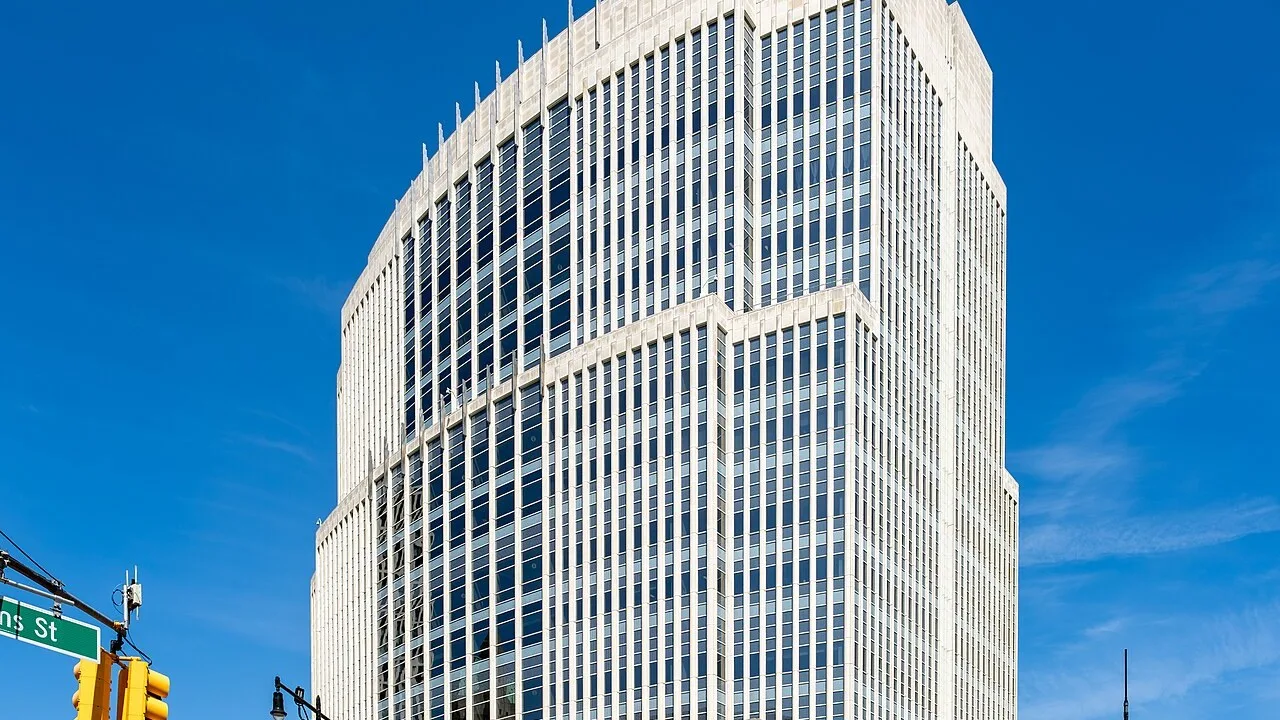
Featured image: The Theodore Roosevelt United States Courthouse in Brooklyn, home of the federal court for the Eastern District of New York (23 April 2026, file photo), ajay_suresh, CC BY 4.0, via Wikimedia Commons (cropped).