As of about 8:30 AM IST, Saturday 28 November 2026. Based on the court filing (Case No. 5:26-cv-07078-EJD, Dkt. 217) and reporting by Reuters, AFP (via Arab News), 9to5Mac and Apfelpatient. The counterclaims were filed on Friday 27 November in the US District Court in San Jose, California.
OpenAI has gone on the offensive against Apple. Four months after the iPhone maker sued it for allegedly taking hardware secrets, the ChatGPT maker filed counterclaims on Friday accusing Apple of doing much the same thing: obtaining confidential details of an unreleased OpenAI device through an employee who briefly worked at OpenAI and then went back to Apple. OpenAI also says Apple has been pressuring the suppliers the two companies share to limit their work for it.
Apple rejects the claims. But the filing turns a trade secrets case into a much broader fight over talent, suppliers and who gets to build the next generation of AI-powered personal devices.
What OpenAI filed
OpenAI, its hardware unit io Products and two former Apple employees, Chang Liu and Tang Tan, filed their answer to Apple's lawsuit together with twelve counterclaims in the federal court in San Jose, where Judge Edward J. Davila is handling the case. According to Apfelpatient's reading of the filing, OpenAI and io accuse Apple of trade secret theft under US federal law, deliberate interference with supply contracts and unfair competition, while Liu and Tan ask the court to declare parts of their Apple employment agreements invalid. Liu also accuses Apple of invading his privacy. The defendants want a jury trial.
OpenAI says it is developing AI-enabled personal devices that threaten to "outcompete Apple on what Apple views as its own turf", and argues that Apple, unable to compete on the merits, is trying "to compete unfairly by any means available". On the same day, AFP reported, OpenAI withdrew its motion to dismiss Apple's lawsuit without giving a reason, which means the case will now be fought on its merits.
'Employee X' and the hardware files
The centrepiece of the counterclaims is a former Apple engineer whom the filing calls only "Employee X". According to the document, he joined OpenAI's device team on 2 December 2025 and worked mainly on an unreleased device. His last day was 2 June 2026, after which he returned to Apple.
OpenAI alleges that within weeks of joining he began sending confidential material to his personal email and phone numbers, and kept doing so until the day before he left. The filing describes a manufacturing-test workbook, screenshots of supplier and component planning, a 76-page supplier measurement procedure, colour and resin data, and compressed archives containing three-dimensional inspection data for an unreleased OpenAI device. Some of the files were allegedly sent to personal phone numbers in China and Singapore in his final week. OpenAI says that in July, "at Apple's request", he briefed senior Apple operations staff on its hardware work and its roadmap for future products. "Given the timing, it now appears that stealing those documents may have been his reason for joining OpenAI in the first place," OpenAI said, according to Reuters.

These allegations are not entirely new. OpenAI first raised them in October, when it said a returning employee had sent more than 100 confidential files to personal accounts, 9to5Mac reported. Apple said at the time that its investigation had not found any OpenAI confidential information and that it had asked for more detail. What has changed is that OpenAI is now asking a court for damages and an injunction.
Pressure on shared suppliers
The more far-reaching claim concerns the supply chain. OpenAI alleges that Apple's supply-management staff have demanded that shared vendors name the workers assigned to OpenAI projects and have pressed them not to put resources into OpenAI work. "Suppliers have expressed fear of losing Apple business and have moved or rescheduled meetings with OpenAI to avoid Apple seeing them," the filing says, according to AFP.
Two examples are given, without naming the companies. One manufacturer that had done OpenAI work without problems declined to continue, forcing OpenAI to find another supplier. Another moved OpenAI parts to a separate night shift on a shared anodizing line after Apple objected to OpenAI work being done alongside its own production, which the filing says raised costs for both the supplier and OpenAI. If proven, this kind of conduct could matter more than any single employee's files, because it touches Apple's relationship with the contract manufacturers that every hardware newcomer depends on.
A challenge to Apple's employee contracts
A large part of the filing targets the agreements Apple employees sign. OpenAI argues they are too broad under California law, which largely bars contracts that stop people from changing jobs. It also challenges a clause that bars former Apple staff from recruiting their old colleagues for a year, and accuses Apple of encouraging employees to mix work files with personal iCloud accounts, making it easy to accuse departing staff of taking confidential material.
Liu adds a personal claim: he says a supervisor asked him to leave his private iCloud account signed in on the device he returned, and that a forensic firm hired by Apple later reviewed his private messages, including some sent after he left. The filing puts the stakes bluntly: 400 Apple employees have left for OpenAI so far, it says, "and Apple wants to scare the next 400 away".
Apple's response
Apple denied using the rehired employee to obtain OpenAI information and denied trying to suppress competition in AI devices. "This case is about OpenAI employees deliberately stealing, accessing, and using Apple's secret and confidential information regarding our unreleased technologies, processes, and products, not about inadvertent retention of Apple information," Apple said in a statement to 9to5Mac. "OpenAI's counterclaims are a transparent attempt to distract from the substance of Apple's lawsuit, in which OpenAI has already been ordered to stop using Apple's confidential information." Apple also told Bloomberg it had found no evidence to support OpenAI's allegations, according to Apfelpatient.
How the fight started
Apple sued OpenAI, Liu and Tan on 10 July, alleging that confidential engineering and product information was taken to help OpenAI's move into consumer hardware. Tan spent 24 years at Apple, where he was a vice president of product design for the iPhone and Apple Watch, and was part of the group behind io, the device start-up co-founded with former Apple design chief Jony Ive that OpenAI acquired in 2025. OpenAI and the employees deny Apple's allegations and say its case relied on unauthorised monitoring of Liu's personal messages.
In October, after the judge said he was "highly likely" to bar OpenAI from using the disputed information until trial, OpenAI pledged not to use it, AFP reported. The trial is scheduled for 19 July 2027. The dispute is striking because the two companies are also partners: ChatGPT has been built into Apple's software since 2024.
Why it matters
The counterclaims show how fiercely the AI race is now being fought over hardware and people, not just models. Trade secret cases have become a recurring feature of that contest, from the criminal case that ended in Huawei's conviction on trade secret charges to civil suits between rivals. OpenAI is already under legal pressure on other fronts, including California's lawsuit over rogue AI agents, while competition among AI providers keeps intensifying, as Microsoft showed with its in-house models at Ignite.
What to watch next: whether Apple moves to dismiss parts of the counterclaims, whether the unnamed suppliers are identified in discovery, how the court treats the challenge to Apple's employment agreements under California law, and whether either side seeks a settlement before the July 2027 trial. None of the allegations on either side has yet been tested in court.
Sources
- US District Court, N.D. California (via CourtListener): Defendants' Counterclaims and Answer, Case No. 5:26-cv-07078-EJD (PDF)
- Reuters: OpenAI countersues Apple for stealing trade secrets
- AFP (via Arab News): OpenAI countersues Apple in row over trade secrets, suppliers
- 9to5Mac: OpenAI countersues Apple, alleging trade secret theft and supplier threats; Apple responds
- Apfelpatient: Apple vs. OpenAI: OpenAI files twelve counterclaims
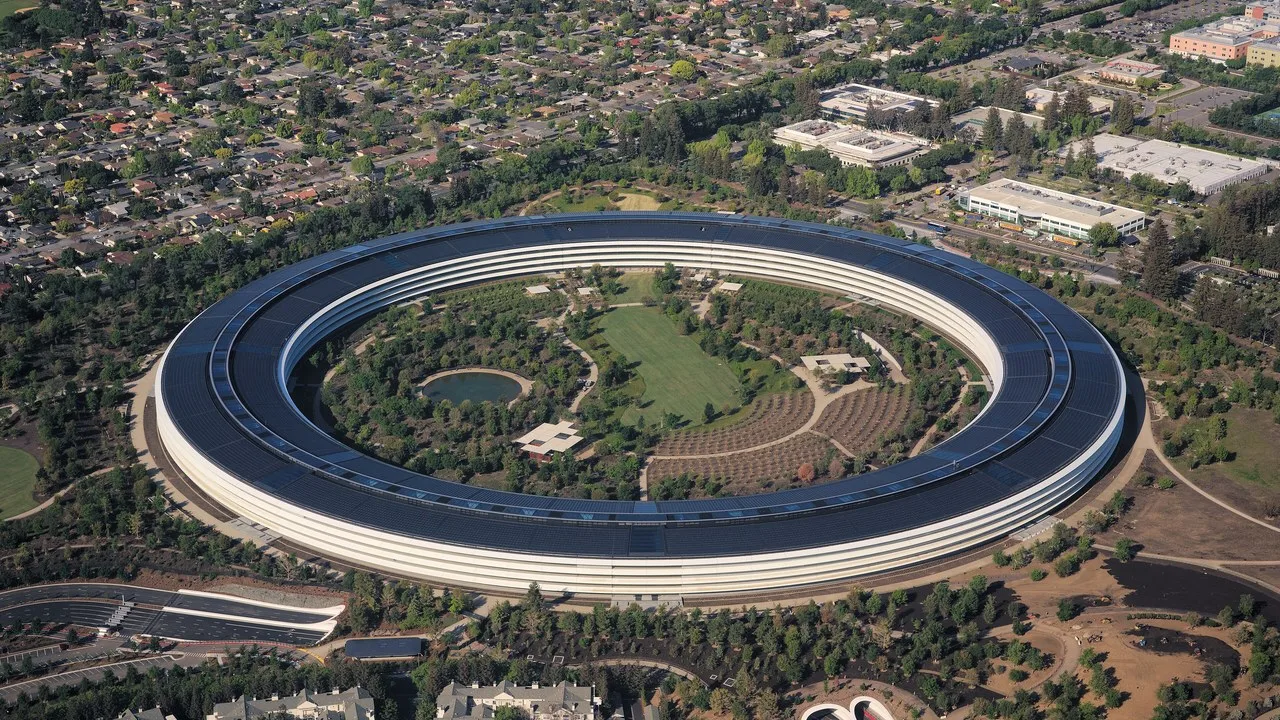
Featured image: Aerial view of Apple Park, Apple's headquarters in Cupertino, California (April 2018, file photo), Daniel L. Lu (user:dllu), CC BY-SA 4.0, via Wikimedia Commons (cropped).