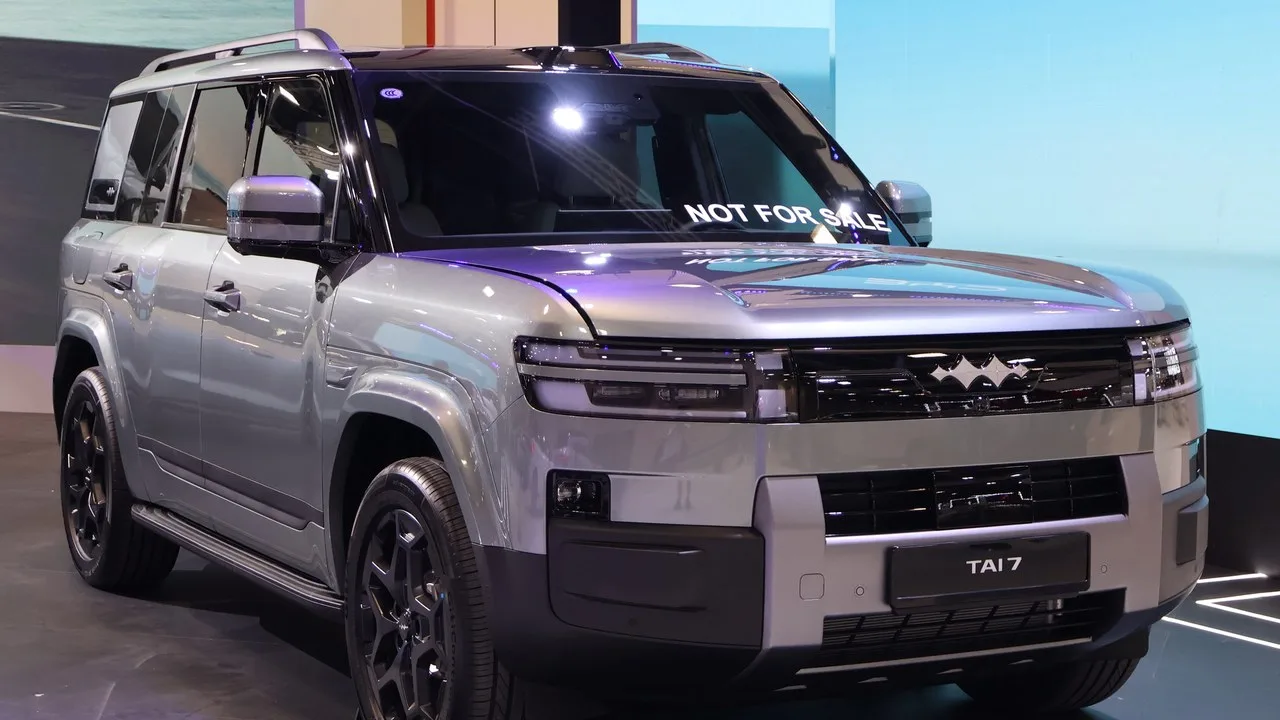
A Dutch court has handed Jaguar Land Rover (JLR) an early win in one of the most closely watched design disputes between a European carmaker and a Chinese rival. In a provisional ruling published on Friday, 20 November, the District Court of The Hague found that BYD's Ti7 plug-in hybrid SUV infringes JLR's registered EU design for the Land Rover Defender, and barred BYD from selling or building the car anywhere in the European Union.
BYD says it "strongly disagrees" and will appeal. The ruling does not cover the UK, where the Ti7 is already on sale at a far lower price than the Defender. But it is one of the first times a European court has tested claims that a Chinese car copies a Western design, and the outcome could shape how Chinese brands design cars for Europe.
What the court decided
The case was heard in summary proceedings, a fast-track procedure for urgent interim relief. According to the published judgment, preliminary relief judge J.B.J. Hoefnagel found that "the characteristic and distinctive elements of the design are reflected in the BYD Ti7", and that the differences BYD pointed to were not striking enough to change the overall impression. The Ti7, the court said, creates no different overall impression for an informed user than JLR's EU design, which was filed in 2018 ahead of the current Defender 110's launch in 2019.
CnEVPost and CarSauce, both summarising the judgment, said the court focused on a combination of features: the rounded, bulging shoulders and corners, near-identical body proportions, the side window profile, the "signature panel" on the C-pillar behind the rear doors and the rounded corners of the wheel arches. BYD did not dispute those similarities but argued that its headlights, grille, bumpers, bonnet, dark A-pillars, rear lights and enclosed spare wheel made the car distinct. The judge rejected that argument.
What the injunction covers
From one week after the judgment is formally served, the BYD companies named in the case must stop importing, producing, offering, selling, storing or delivering the Ti7 in the EU. According to CarSauce, breaches carry a penalty of €100,000 per day or, at JLR's choice, €25,000 per vehicle, capped at €10 million, and an appeal does not suspend enforcement.
The Guardian reported that the order also stops BYD from producing the vehicle at its new factory in Szeged, Hungary, which is expected to begin building cars around the end of this year, until the case is resolved. The judge did not grant everything JLR asked for. The court said it had no jurisdiction over BYD's UK business and rejected JLR's UK claims, and it refused requests for access to commercial documents, information on distribution channels and profits, and notices on BYD's European websites.
Why the EU ban matters even without EU sales
The Ti7 is not yet sold in the EU, and BYD told the court it had "no concrete plans" to launch it there. The judge nevertheless found a credible threat of infringement. The ruling noted that BYD had described the car as developed for the UK and Europe, promoted it in videos and on European social media channels, and declined to promise that it would keep the model out of the EU.
That reasoning matters for the wider industry. Chinese carmakers are expanding quickly in Europe, often building plants inside the EU to get closer to customers and to soften the impact of trade barriers. The EU's countervailing duties on Chinese-made cars, introduced in 2024, were aimed at fully electric models, which has made plug-in hybrids such as the Ti7 an attractive route into the market. A ruling that blocks production at an EU factory as well as imports shows that design rights can be a separate obstacle to tariffs.
The cars at the centre of the case
The Ti7 is sold in China as the Tai 7 under BYD's Fang Cheng Bao off-road brand. It launched there in September 2025 as a plug-in hybrid, and a battery-electric version followed in April 2026. According to data compiled by CnEVPost, cumulative sales reached 309,456 units by the end of October, making it one of the sub-brand's best sellers.
In the UK it is a seven-seat plug-in hybrid that combines a 1.5-litre turbocharged petrol engine with electric motors for 300kW, a 35.6kWh battery and up to 119km of electric range on the WLTP cycle, according to CarSauce. The Guardian reported that it is priced from £47,995, more than £20,000 below the Defender, with customer deliveries due from January 2027.
For JLR, the Defender is critical. The Guardian said the Tata Motors-owned company sold 29,500 Defenders to retail customers in July to September, more than 4,000 above the same period a year earlier, and Reuters, cited by CnEVPost, reported that the line sold more than 100,000 units globally in 2025. It is JLR's best-selling model line.
What both companies say
"The BYD Ti7 is the result of BYD's own independent design work and infringes none of JLR's rights," BYD said in a statement reported by The Guardian. "We will pursue every legal avenue to demonstrate that this decision is incorrect."
JLR said: "We protect our intellectual property and take legal action when necessary. Legal proceedings are ongoing and we won't be commenting further at this time." The Guardian noted that JLR has fought this kind of battle before: it won a case in China in 2019 against Jiangling Motors over a vehicle that copied the Range Rover Evoque, after a three-year legal fight.
What happens next
The ruling is provisional. CnEVPost reported that JLR must bring a full case on the merits within six months or the injunction could lapse. BYD's appeal will run in parallel. CarSauce reported that a separate JLR claim over copyright and "slavish imitation" is scheduled for a hearing in Rotterdam on 25 November, and that an earlier Hague ruling on 11 November had lifted JLR's seizure of evidence at BYD's Dutch offices and ordered the seized files destroyed. Five other registered JLR designs were not assessed in this decision.
Outside the EU, the Ti7's plans continue. The UK launch is unaffected, and CarSauce reported that the car received Australian type approval in November, although BYD Australia has not confirmed a launch.
What it means for buyers and the industry
For European buyers, very little changes immediately: the Ti7 was not on sale in the EU anyway. UK customers can still order it. The bigger impact is strategic. Traditional carmakers have long complained that some Chinese designs borrow heavily from Western icons, but, as The Guardian noted, those claims have rarely been tested in European courts. A clear, enforceable injunction gives other brands a template, and gives Chinese manufacturers a strong reason to make sure the cars they bring to Europe look distinctive.
It also comes as Europe's car industry is under heavy pressure, from Volkswagen's push for a two-year pay freeze to Tesla's Grünheide expansion plans. If you are weighing a plug-in hybrid like the Ti7 against other options, our EV vs hybrid cost breakdown sets out what each type really costs to run.
Sources
- Rechtbank Den Haag: Judgment ECLI:NL:RBDHA:2026:34365 (Dutch)
- The Guardian: Court bans China's BYD from selling 'Defender clone' SUV in EU
- CnEVPost: Dutch court bars EU sales of BYD Ti7, citing infringement of Land Rover Defender design rights
- CarSauce: BYD Ti7 blocked from the EU after Dutch court sides with Land Rover
Featured image: Fangchengbao Ti7 show car at the Singapore Motorshow 2026 (9 January 2026, file photo), S5A-0043, CC BY 4.0, via Wikimedia Commons (cropped).