On September 1, 1939, German troops crossed the border into Poland. Two days later, Britain and France declared war on Germany, and on that same day the Viceroy of India declared India at war too, without consulting a single Indian leader. The conflict that followed became the deadliest war in human history. But World War II did not begin out of nowhere. It grew out of the unfinished business of World War I, the economic devastation of the Great Depression, the rise of aggressive dictatorships and a series of failed attempts to keep the peace.
The shadow of 1919
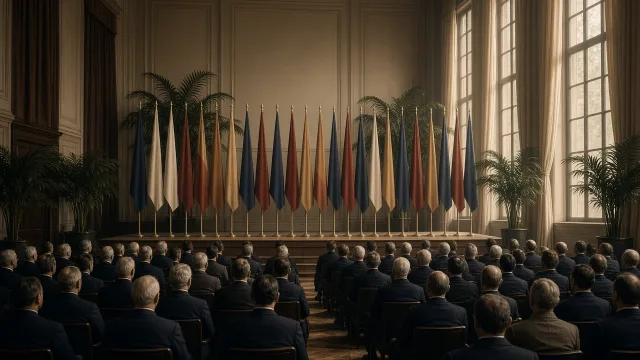
World War I ended in 1918, and the Treaty of Versailles, signed in 1919, imposed heavy terms on Germany. It lost territory, faced limits on its armed forces, accepted responsibility for the war and was required to pay reparations. Many Germans regarded the treaty as a humiliation, and nationalist politicians exploited that resentment.
The new League of Nations was meant to prevent future wars, but it lacked a strong enforcement mechanism, and the United States never joined.
Depression and dictators
The Great Depression that began in 1929 devastated economies worldwide and fed political extremism. In Germany, mass unemployment helped Adolf Hitler's Nazi party grow. Hitler became chancellor on January 30, 1933, and quickly turned Germany into a dictatorship. Italy had been ruled by the fascist leader Benito Mussolini since 1922. In Japan, militarists gained growing influence over government policy.
Aggression in Asia and Africa
In Asia, the road to war started early. Japan seized Manchuria in northeast China in 1931 and left the League of Nations when it was criticised. In July 1937, a clash near the Marco Polo Bridge outside Beijing escalated into full-scale war between Japan and China. For China, World War II effectively began in 1937.
In Africa, Italy invaded Ethiopia in 1935. The League imposed limited sanctions, which failed to stop Mussolini and exposed the League's weakness.
Hitler tests Europe
Hitler set out to overturn the Versailles settlement step by step. Germany began open rearmament, and in March 1936 its troops reoccupied the demilitarised Rhineland. Britain and France protested but did not act. In March 1938, Germany annexed Austria in the Anschluss.
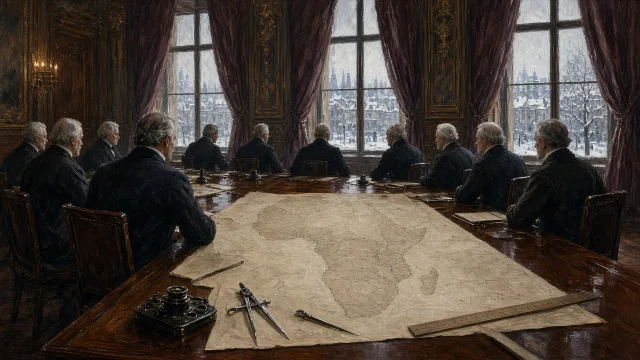
Hitler then demanded the Sudetenland, a border region of Czechoslovakia with a large German-speaking population. At the Munich conference in September 1938, Britain, France and Italy agreed to let Germany take it, without Czechoslovakia at the table. British Prime Minister Neville Chamberlain hoped this policy of appeasement would satisfy Hitler. Instead, in March 1939, Germany occupied the rest of the Czech lands. Britain and France then promised to defend Poland.
The pact that made war possible
On August 23, 1939, Nazi Germany and the Soviet Union, ideological enemies, stunned the world by signing a non-aggression pact, often called the Molotov-Ribbentrop Pact. A secret protocol divided eastern Europe into German and Soviet spheres, including a plan to split Poland. With the threat of a two-front war removed, Hitler was free to attack.
September 1939: the war begins
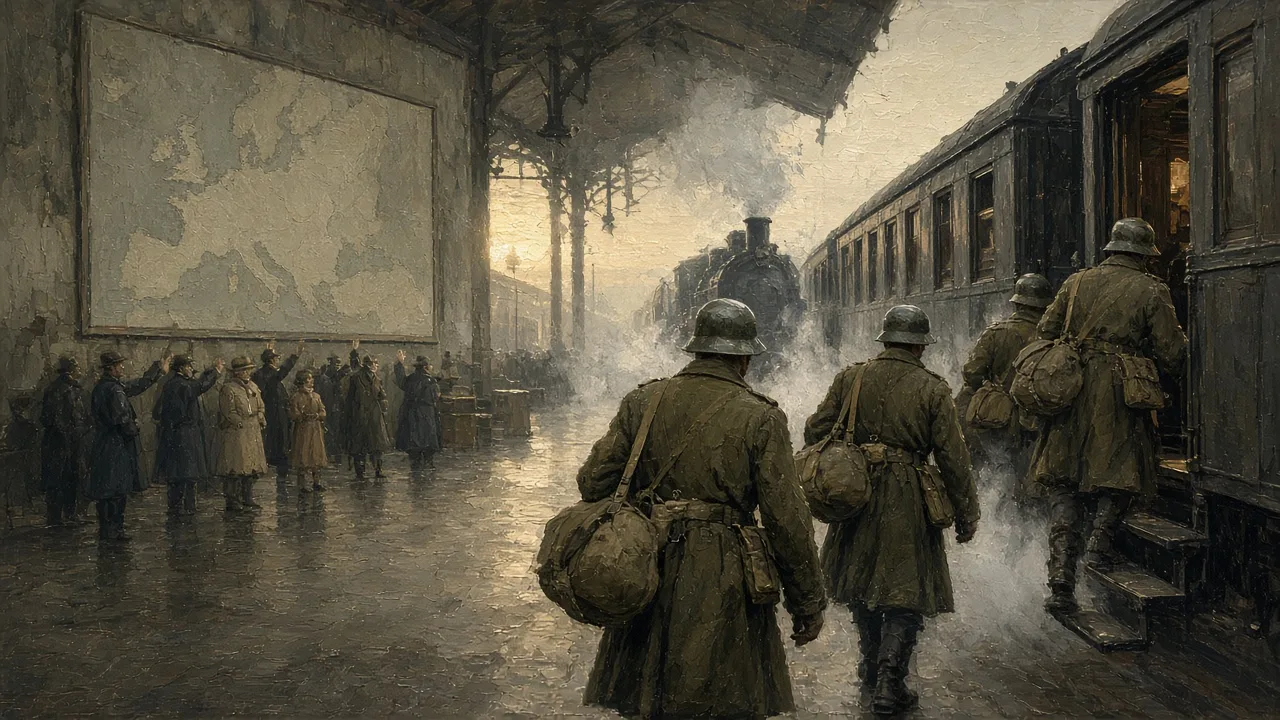
Germany invaded Poland on September 1, 1939. Britain and France declared war on Germany on September 3. On September 17, the Soviet Union invaded Poland from the east. Poland was overrun within weeks.
Even then, the war was not yet truly global. Major fighting in Western Europe did not begin until spring 1940. The Soviet Union entered the war against Germany only after Hitler invaded it in June 1941, and the United States joined after Japan's attack on Pearl Harbor in December 1941. The total death toll of the war is uncertain, and estimates commonly range from about 60 million to more than 70 million people, a majority of them civilians.
Timeline: key moments
- 1919: The Treaty of Versailles is signed.
- 1931: Japan seizes Manchuria.
- January 30, 1933: Hitler becomes chancellor of Germany.
- 1935: Italy invades Ethiopia.
- March 1936: German troops reoccupy the Rhineland.
- July 1937: Full-scale war between Japan and China begins.
- March 1938: Germany annexes Austria.
- September 1938: The Munich Agreement hands the Sudetenland to Germany.
- August 23, 1939: The Nazi-Soviet Pact is signed.
- September 1, 1939: Germany invades Poland.
- September 3, 1939: Britain, France and British India are declared at war with Germany.
The India connection
India was drawn into the war by a decision taken without its consent. On September 3, 1939, Viceroy Lord Linlithgow declared India at war with Germany without consulting Indian leaders. The Indian National Congress was strongly anti-fascist, but it demanded a clear commitment to Indian self-government in return for its support. When none came, Congress ministries in the provinces resigned in late 1939. The rift deepened into the Quit India Movement of 1942.
At the same time, India's contribution to the war was enormous. According to the Imperial War Museums, the Indian Army grew from about 200,000 men in 1939 to more than 2.5 million by 1945, often described as the largest volunteer army in history, although many recruits joined out of economic hardship. Indian soldiers fought in East and North Africa, Italy and Burma. The war also brought severe suffering at home, including the Bengal Famine of 1943, in which estimates of the death toll range from about 2 million to 3 million people.
Why it matters today
- Peace settlements must be sustainable. A treaty seen as deeply unjust can feed resentment that lasts for decades.
- Economic crises can fuel extremism. The Depression helped dictators gain power.
- Appeasement has limits. Giving in to repeated demands did not prevent war in 1939, a lesson still debated in modern diplomacy.
- Consent matters. Britain's decision to declare war on India's behalf accelerated the end of colonial rule.
Frequently asked questions
What was the immediate cause of World War II?
The immediate trigger was Germany's invasion of Poland on September 1, 1939, which led Britain and France to declare war on Germany two days later.
Why didn't Britain and France stop Hitler earlier?
They hoped to avoid another devastating war and pursued appeasement, accepting German moves such as the reoccupation of the Rhineland and the annexation of the Sudetenland.
How did India enter World War II?
The British Viceroy declared India at war on September 3, 1939, without consulting Indian leaders. More than 2.5 million Indians eventually served in the Indian Army.