LEGO is one of the world's best-known toy brands, loved by children and adults alike. But it began in a small village in Denmark, with a carpenter who was trying to survive the Great Depression. In Part 3 of How Global Giants Began, we look at how a family business turned a simple idea into a global icon, and how it nearly lost everything.
A carpenter in hard times
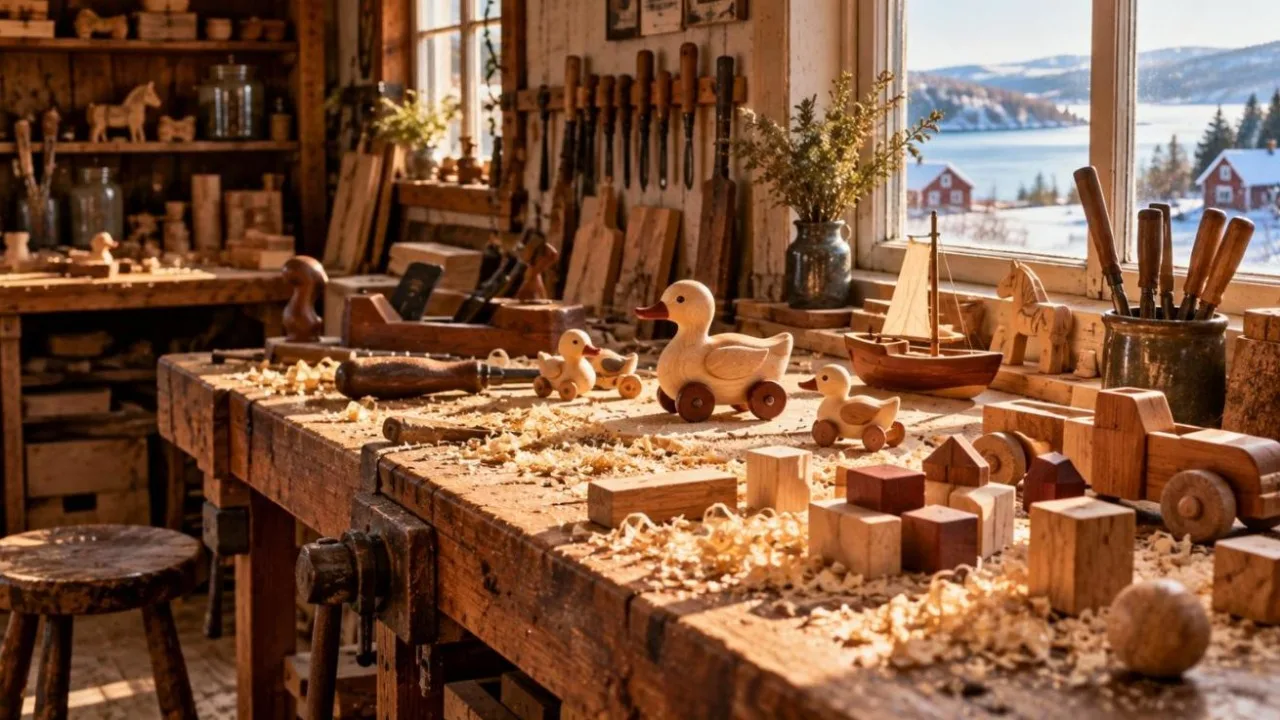
Ole Kirk Christiansen was a carpenter in Billund, a small town in Denmark. In the early 1930s the Depression hit, building work dried up, and his wife died, leaving him to raise four sons. To keep going, he began making smaller wooden items, including stepladders, ironing boards and toys.
Toys turned out to sell better than he expected. In 1932 he focused on wooden toys such as ducks, cars and yo-yos. In 1934 he named the business LEGO, from the Danish words leg godt, meaning "play well."
"Only the best is good enough"
Christiansen insisted on quality. A famous family story tells of his son Godtfred proudly saving money by using only two coats of varnish on wooden ducks instead of three. Ole sent him back to the station to collect the ducks and varnish them properly. The family motto became "Only the best is good enough."
The plastic gamble
After World War II, plastics were new and often seen as cheap. In 1947 LEGO bought an expensive plastic injection-moulding machine, a big risk for a small company. In 1949 it began selling "Automatic Binding Bricks", plastic bricks inspired by an existing British design.
Early bricks did not hold together well, and many retailers were sceptical of plastic toys. But the family kept refining the idea.
The brick that changed everything
Godtfred Kirk Christiansen realised that a single toy could be the start of a whole "system of play," where every piece worked with every other piece. In 1958 LEGO patented the modern brick with tubes inside, which gave it much better "clutch power." Bricks made today still fit bricks made decades ago.
That same year, Ole Kirk Christiansen died and Godtfred took over. In 1960 a fire destroyed the warehouse holding wooden toys, and the company decided to focus entirely on plastic bricks.
Growth and a near-collapse
Over the following decades LEGO added wheels, minifigures, themed sets and theme parks, and expanded around the world. But by the late 1990s and early 2000s, the company had lost focus. It moved into clothing, video games, theme parks, TV and many new product lines. Costs soared, and new toys competed for children's attention.
In 2003 and 2004, LEGO reported heavy losses and was close to collapse. A young executive, Jørgen Vig Knudstorp, became CEO in 2004. He cut costs, sold the theme parks, reduced the huge number of different parts and refocused on the core brick. LEGO also began listening closely to fans, including adult builders, and partnered on licensed themes.
The turnaround was dramatic, and within a decade LEGO became one of the world's largest toy companies.
Business lessons from LEGO
- Adversity can force reinvention. The Depression pushed a carpenter into toys.
- Quality builds trust. "Only the best is good enough" became part of the brand.
- Bet on the future, carefully. Buying a plastic machine was risky but transformative.
- Systems beat single products. Compatible bricks made every set more valuable.
- Know your core. Over-expansion nearly killed LEGO; refocusing saved it.
- Listen to your community. Fans became partners in innovation.
In Part 4, we travel to Korea, where a small trading company selling dried fish grew into the electronics giant Samsung.
How Global Giants Began: the full series
- Part 1: Coca-Cola
- Part 2: Toyota
- Part 3: LEGO (you are here)
- Part 4: Samsung
- Part 5: IKEA
- Part 6: McDonald's
- Part 7: Nike
- Part 8: Apple
- Part 9: Amazon
- Part 10: Google
Dates, prices and figures are commonly cited historical values and may vary slightly between sources. Company names and trademarks belong to their respective owners; HorizonDesk is not affiliated with any company mentioned.