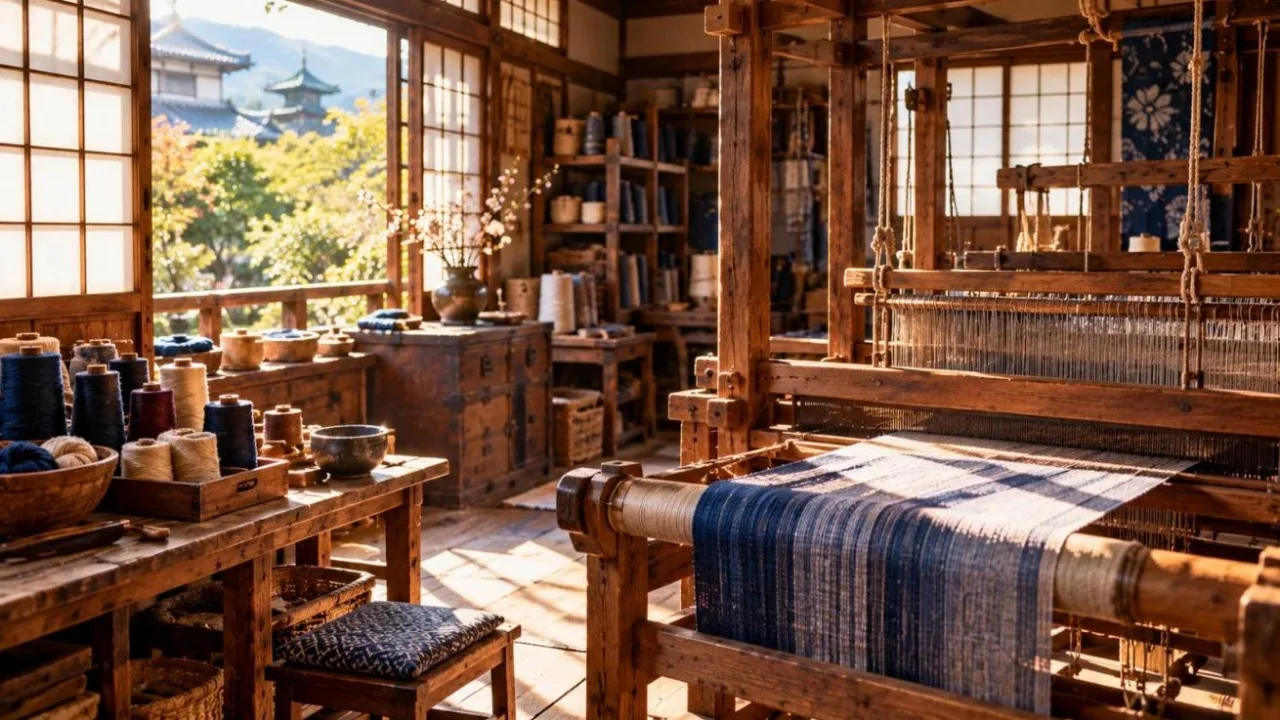
Toyota is one of the largest carmakers in the world, and its production methods are studied in business schools everywhere. Yet the company did not start with cars. It started with looms for weaving cloth. In Part 2 of How Global Giants Began, we follow a family of inventors from rural Japan to the world's roads.
Sakichi Toyoda, the inventor
Sakichi Toyoda was born in 1867, the son of a carpenter, in a farming village in what is now Shizuoka Prefecture. He watched his mother and local women weave cloth by hand for long hours and set out to build a better loom.
Over decades he invented a series of looms, culminating in the Type G automatic loom in 1924. One of its most important features was that it stopped automatically when a thread broke. That prevented faulty cloth and meant one worker could watch many machines. In 1926 he founded Toyoda Automatic Loom Works.
The idea of a machine that stops itself when something goes wrong, later called jidoka, became one of the pillars of Toyota's future production system.
The patent sale that funded cars
In 1929 the Toyoda company sold the patent rights for its automatic loom to Platt Brothers of England, a leading textile machinery maker, for a sum commonly cited at £100,000. Sakichi reportedly encouraged his son, Kiichiro, to use this money to explore building automobiles.
Kiichiro's gamble
Kiichiro Toyoda had studied engineering and visited factories in Europe and the United States. He believed Japan needed its own car industry. In 1933 he set up an automobile department inside the loom company. Cars were far more complex than looms, and many in the company thought it was too risky.
The team studied foreign cars, took them apart and learned to make engines, castings and bodies. The first passenger car, the Model AA, appeared in 1936. In 1937, Toyota Motor Co., Ltd. was founded as a separate company. The family name Toyoda was changed to "Toyota" for the brand, partly because it sounded clearer and was written with a stroke count considered lucky in Japanese.
Crisis in 1950
After World War II, Japan's economy was devastated. By 1950 Toyota was close to bankruptcy, with unsold cars and unpaid bills. A bank rescue required job cuts, which led to a long strike. Kiichiro took responsibility and resigned as president.
Shortly after, orders for military trucks during the Korean War helped the company recover. The painful experience made Toyota deeply cautious about debt and waste, a culture that remains today.
The Toyota Production System
With little money and a small domestic market, Toyota could not copy the huge, mass-production factories of American carmakers. Instead, engineer Taiichi Ohno and others developed what became the Toyota Production System (TPS), built on two main ideas:
- Just-in-time: make only what is needed, when it is needed, in the amount needed. This cut costly inventory. Ohno was partly inspired by how American supermarkets restocked shelves only as items were sold.
- Jidoka: stop the line when a problem appears, fix the root cause and prevent it from happening again. This came straight from Sakichi's loom.
Supporting these were practices such as kaizen (continuous improvement), kanban cards for signalling when parts were needed, and the habit of asking "why" five times to find the root cause of a problem.
Going global
Toyota began exporting to the United States in the late 1950s. Early cars struggled, but the company learned. Small, reliable and fuel-efficient cars gained popularity, especially after the oil crises of the 1970s. The Corolla, launched in 1966, became one of the best-selling cars in history. (Read more in our Cars That Changed the World series.)
In 1989 Toyota launched Lexus to compete in luxury cars, and in 1997 it introduced the Prius hybrid.
Business lessons from Toyota
- Your first business can fund your next one. Loom profits and patent income paid for the move into cars.
- Constraints can spark innovation. Lack of money forced Toyota to invent leaner methods.
- Fix problems at the source. Stopping to solve root causes beats hiding defects.
- Small improvements add up. Kaizen made Toyota better every year.
- Crisis shapes culture. Near-bankruptcy made Toyota disciplined about cash and waste.
In Part 3, we head to Denmark, where a struggling carpenter's wooden toys led to the world's most famous plastic brick: LEGO.
How Global Giants Began: the full series
- Part 1: Coca-Cola
- Part 2: Toyota (you are here)
- Part 3: LEGO
- Part 4: Samsung
- Part 5: IKEA
- Part 6: McDonald's
- Part 7: Nike
- Part 8: Apple
- Part 9: Amazon
- Part 10: Google
Dates, prices and figures are commonly cited historical values and may vary slightly between sources. Company names and trademarks belong to their respective owners; HorizonDesk is not affiliated with any company mentioned.