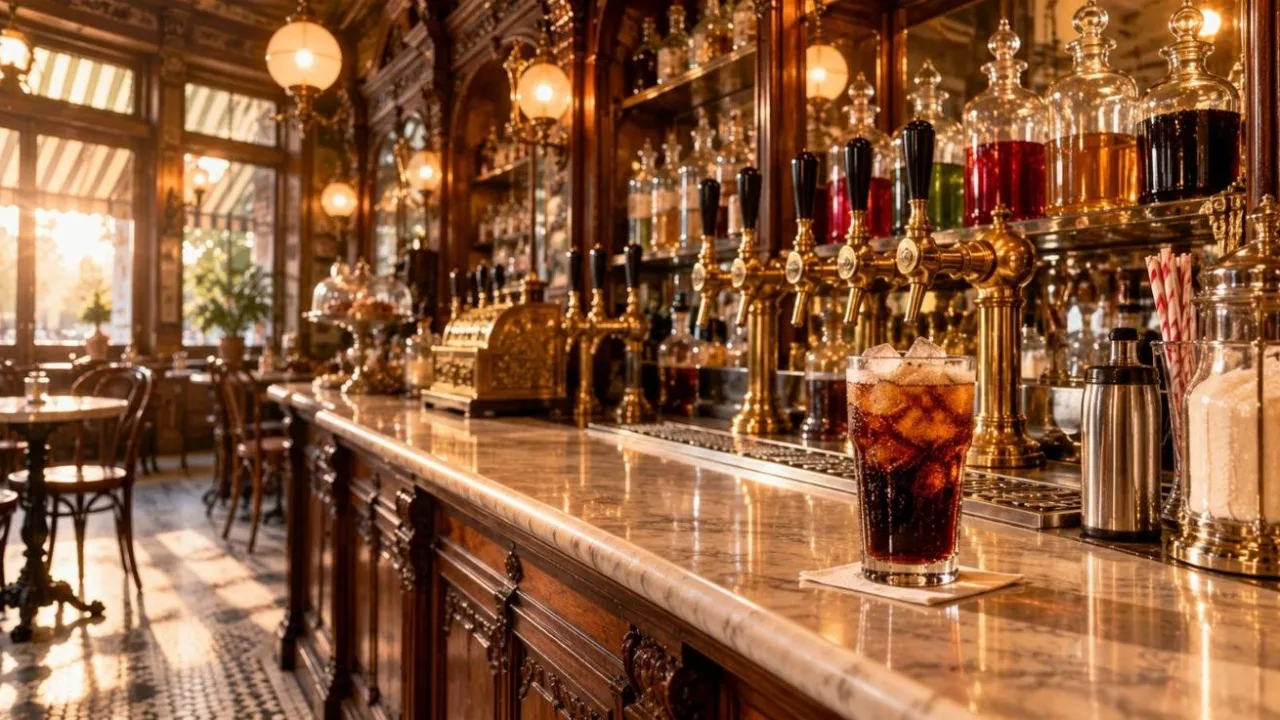
Today it is sold in more than 200 countries and territories. But in its first year, Coca-Cola reportedly sold an average of just nine glasses a day. Welcome to How Global Giants Began, a 10-part series on the humble, messy and surprising origins of the world's biggest companies. We start in 1886, at a pharmacy counter in Atlanta.
A pharmacist's experiment
John Stith Pemberton was a pharmacist and Confederate veteran in Atlanta, Georgia. Like many chemists of his time, he experimented with "tonics" sold as remedies. In May 1886 he created a new syrup and took it to Jacobs' Pharmacy, where it was mixed with carbonated water and sold at the soda fountain for five cents a glass.
His bookkeeper, Frank Robinson, suggested the name Coca-Cola, thinking the two Cs would look good in advertising. Robinson also wrote the name in the flowing Spencerian script that is still used today. That simple decision about name and lettering became one of the most valuable brand assets in history.
The first owner did not get rich
Sales were small, and Pemberton was in poor health and short of money. He sold off portions of the business to several partners before his death in 1888. Ownership became confusing, with different people claiming rights to the formula and name.
Asa Candler: the first marketer
Atlanta businessman Asa Griggs Candler bought up the rights between 1888 and 1891 for a total commonly cited at about $2,300. He founded The Coca-Cola Company in 1892 and turned a local soda-fountain drink into a national product.
Candler was an aggressive marketer. He handed out coupons for free drinks, and he put the Coca-Cola name on clocks, calendars, urns and other items placed in shops. Getting people to try the drink once, he believed, was the key to repeat sales.
The $1 deal that built a system
In 1899, two lawyers from Chattanooga, Benjamin Thomas and Joseph Whitehead, asked Candler for the rights to bottle Coca-Cola. Candler, who saw the business as a soda-fountain drink, reportedly sold them the bottling rights for most of the country for just $1.
It looked like a giveaway, but it created the company's famous model: Coca-Cola makes and sells the concentrate, while independent bottlers invest in factories, trucks and local distribution. The system let Coca-Cola grow quickly without spending its own capital everywhere, a lesson many franchise businesses later copied.
A bottle you can recognise in the dark
As the drink spread, copycats appeared with names like "Koke" and look-alike bottles. In 1915, the company asked glassmakers to design a bottle so distinctive that it could be recognised by touch in the dark or even when broken. The Root Glass Company of Indiana created the contour bottle, which became a design icon and a legal shield against imitators.
Robert Woodruff and going global
In 1919, a group led by banker Ernest Woodruff bought the company for about $25 million. His son, Robert Woodruff, became president in 1923 and led the company for decades. His goal was to put Coca-Cola "within an arm's reach of desire."
Woodruff pushed the six-bottle carton, improved quality standards and expanded abroad. During World War II, he promised that every American serviceman could get a bottle for five cents wherever he was. Bottling plants were set up near the front lines, and when the war ended, the brand was known across Europe and Asia.
Business lessons from Coca-Cola
- The product is not always the whole story. Branding, distribution and consistency turned a simple drink into a giant.
- Name and design are assets. A memorable name, script and bottle shape built recognition that lasted over a century.
- Partners can multiply your reach. The bottler system grew the business faster than one company could alone.
- Protect your identity. Trademarks and distinctive packaging fought off copycats.
- Founders do not always profit. Pemberton invented the drink; Candler and Woodruff built the business.
The takeaway
Coca-Cola's rise shows that great businesses are often built by the people who see what a product could become, not just by those who invent it. In Part 2, we travel to Japan, where a weaving loom gave birth to one of the world's largest carmakers: Toyota.
How Global Giants Began: the full series
- Part 1: Coca-Cola (you are here)
- Part 2: Toyota
- Part 3: LEGO
- Part 4: Samsung
- Part 5: IKEA
- Part 6: McDonald's
- Part 7: Nike
- Part 8: Apple
- Part 9: Amazon
- Part 10: Google
Dates, prices and figures are commonly cited historical values and may vary slightly between sources. Company names and trademarks belong to their respective owners; HorizonDesk is not affiliated with any company mentioned.