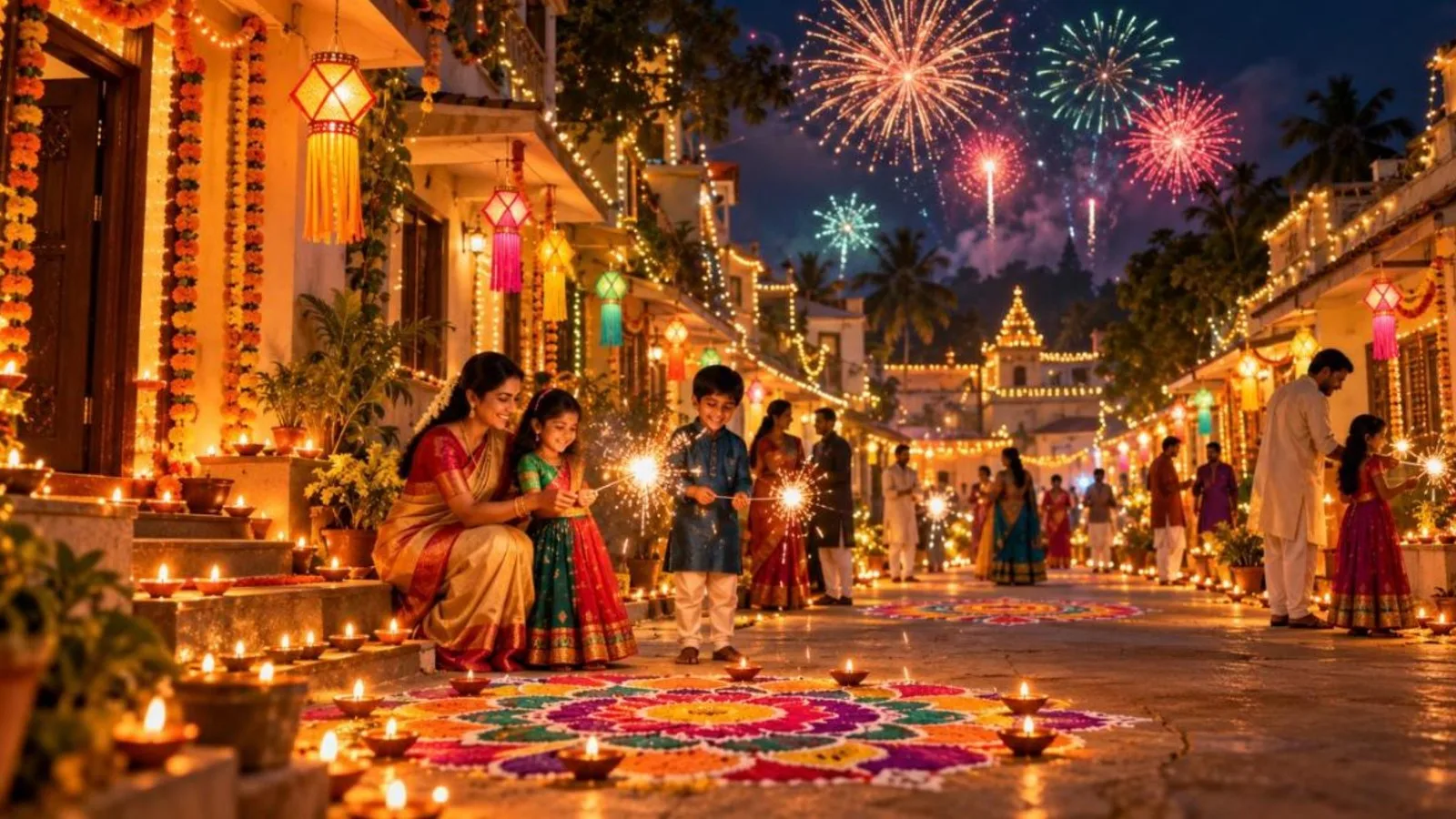
Diwali is celebrated by more than a billion people, but it is not one festival with one story. Across India, the "festival of lights" takes on different names, legends, dates and rituals. In 2026, the main celebrations fall between November 6 and November 11, with Lakshmi Puja on Sunday, November 8. Here is how the festival looks in different parts of the country.
The legends behind Diwali
- Rama's return to Ayodhya: in North India, Diwali marks Lord Rama's homecoming with Sita and Lakshmana after 14 years of exile and his victory over Ravana. The people of Ayodhya lit rows of lamps to welcome him; Deepavali literally means "row of lamps".
- Krishna and Narakasura: in South India and Goa, the focus is Lord Krishna (with Satyabhama) defeating the demon Narakasura, freeing thousands of captives.
- Goddess Lakshmi: Lakshmi, goddess of wealth, is believed to have emerged from the churning of the ocean and is worshipped on the new moon night for prosperity.
- Goddess Kali: in Bengal, Odisha and Assam, the night belongs to Kali, the fierce form of the goddess who destroys evil.
Tamil Nadu: Deepavali at dawn
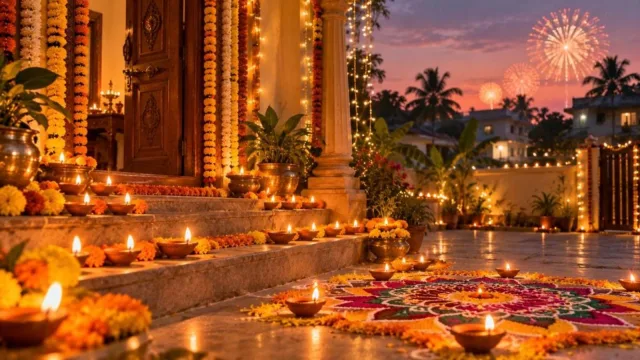
In Tamil Nadu, the main celebration is in the early morning of Naraka Chaturdashi, which in 2026 falls on Sunday, November 8. Families wake before sunrise for the traditional oil bath (Ganga snanam), with warm sesame oil and shikakai, followed by new clothes, a visit to the temple and bursting crackers. Many homes prepare Deepavali legiyam, a herbal digestive paste, to balance the rich festive food. Sweets like athirasam, murukku and mysore pak are shared with neighbours. Newly married couples celebrate Thalai Deepavali, their first Deepavali, with the bride's family.
Karnataka, Andhra Pradesh and Telangana
In Karnataka, Bali Padyami honours the generous demon king Bali, who is believed to visit the earth on this day. In Andhra Pradesh and Telangana, effigies of Narakasura are burnt in some areas, and families decorate homes with clay lamps. Lakshmi Puja is performed on the new moon evening.
Kerala
Diwali is relatively low-key in Kerala compared to Onam and Vishu, but many families still light lamps, burst crackers and celebrate Krishna's victory over Narakasura.
Goa: Narkasur effigies
On the night before Narak Chaturdashi, neighbourhoods across Goa build giant, often frightening, effigies of Narkasur. These are paraded through the streets and burnt at dawn. Many villages hold competitions for the best effigy.
Maharashtra
Diwali in Maharashtra begins with Vasubaras, honouring cows and calves, and includes Diwali Padwa, celebrating the bond between husband and wife, and Bhau Beej for brothers and sisters. Homes hang colourful paper lanterns called akash kandil, children build small clay forts, and families prepare the famous faral platter of chakli, karanji, shankarpali and laddoos.
Gujarat: the New Year
In Gujarat, Diwali marks the end of the year in the Vikram Samvat calendar. Businesses perform Chopda Pujan, worshipping new account books, and the day after Diwali is celebrated as Bestu Varas, the Gujarati New Year, with visits to family and friends.
North India
In Uttar Pradesh, Delhi, Rajasthan and neighbouring states, Diwali is about Rama's return and Lakshmi-Ganesh Puja. Ayodhya's Deepotsav, when lakhs of diyas are lit along the Saryu river, has become a national spectacle. Families also play cards on Diwali night in some regions, a tradition linked to good luck for the year ahead.
West Bengal, Odisha and Assam: Kali Puja
In Bengal, the new moon night is Kali Puja. Grand pandals are set up, much like Durga Puja, and devotees worship the goddess late into the night. The day before, many families light 14 lamps for their ancestors on Bhoot Chaturdashi. In Odisha, families burn jute sticks to light the way for ancestors' spirits, a ritual known as Kauriya Kathi.
Punjab: Bandi Chhor Divas
For Sikhs, the day coincides with Bandi Chhor Divas, marking Guru Hargobind Ji's release from Gwalior Fort along with 52 kings. The Golden Temple in Amritsar is lit with lamps and fireworks, making it one of the most beautiful places to experience the festival.
Jain Diwali
For Jains, Diwali marks the nirvana of Lord Mahavira, the 24th Tirthankara, at Pavapuri in 527 BCE. The day is observed with prayer, fasting and the lighting of lamps symbolising the light of knowledge.
Nepal and beyond
In Nepal, the festival is called Tihar and honours crows, dogs, cows and oxen on different days, ending with Bhai Tika. Indian communities around the world, from Singapore and Malaysia (where it is a public holiday) to the UK and US, celebrate with their own blend of traditions.
One festival, many meanings
Whatever the story, the message is the same: light over darkness, good over evil and knowledge over ignorance. If you are celebrating this year, see our Diwali 2026 calendar and muhurat guide.
Sources
Drik Panchang (2026 dates); Ministry of Culture and state tourism departments; standard references on Diwali, Kali Puja, Tihar and Bandi Chhor Divas.