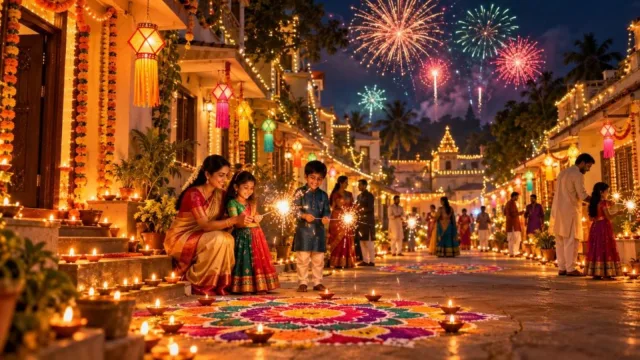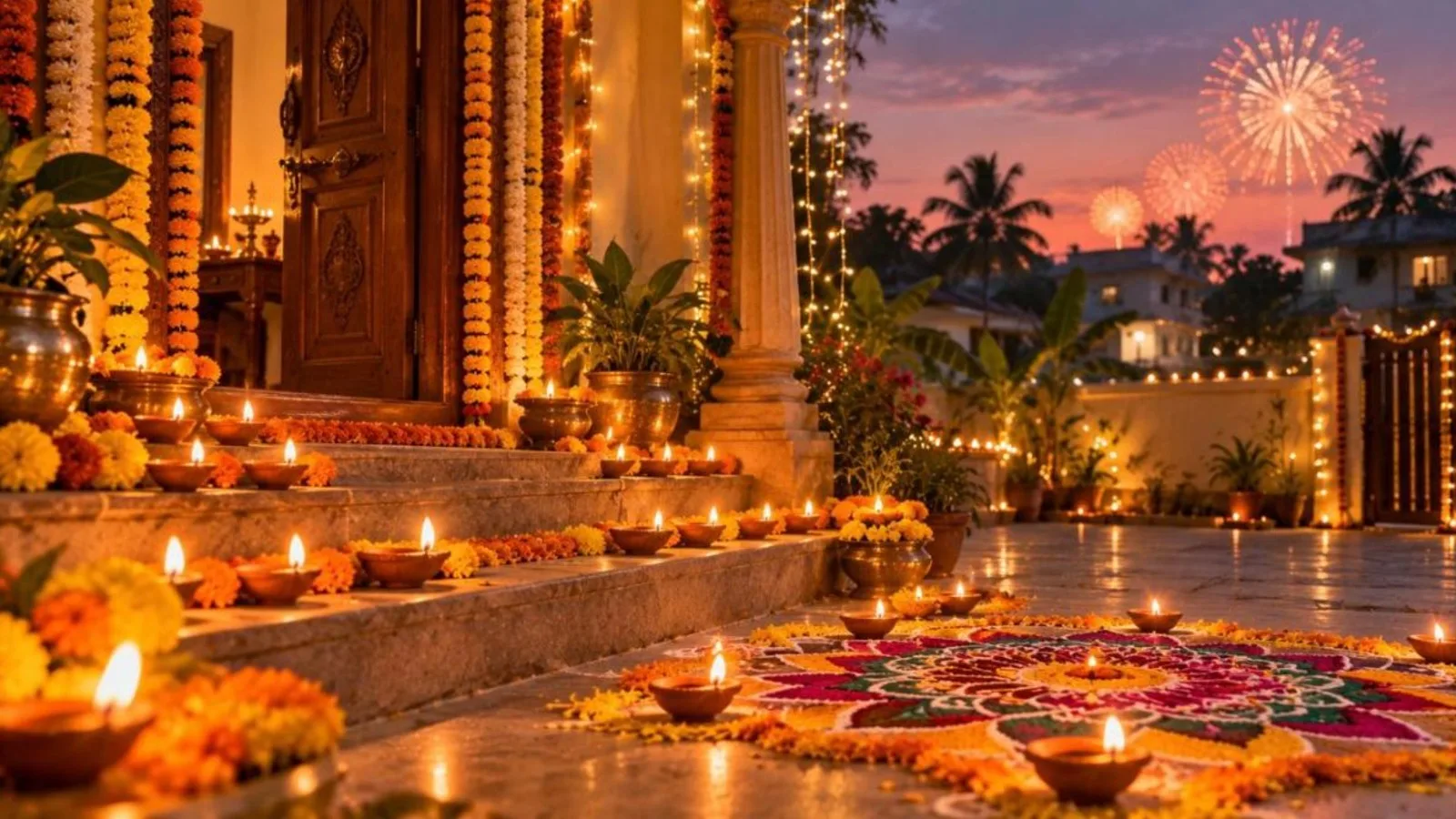
Diwali, the festival of lights, is India's biggest celebration of the year. In 2026, the main day of Diwali and Lakshmi Puja falls on Sunday, November 8. The festivities stretch across five days, beginning with Dhanteras on Friday, November 6, and ending with Bhai Dooj.
Here is the full calendar, the auspicious timings for Lakshmi Puja in major cities, and what each day means.
Diwali 2026 calendar at a glance
- Friday, November 6: Dhanteras (Dhantrayodashi)
- Saturday, November 7: Choti Diwali / Kali Chaudas (in many regions)
- Sunday, November 8: Naraka Chaturdashi (early morning) and Diwali Lakshmi Puja (evening)
- Tuesday, November 10: Govardhan Puja / Annakut (some calendars list Monday, November 9)
- Wednesday, November 11: Bhai Dooj
Dates are based on Drik Panchang's calendar for India. Regional calendars can differ by a day, so check with your family priest or local panchang.
Why Diwali 2026 is on November 8
Lakshmi Puja is performed on Amavasya (new moon) during the evening period called Pradosh Kaal. In 2026, Amavasya tithi begins at about 11:27 AM on November 8 and ends at about 12:31 PM on November 9. Because the new moon covers the evening of November 8, that is the day for Lakshmi Puja.
An interesting point this year is that Naraka Chaturdashi and Lakshmi Puja fall on the same day. The Chaturdashi tithi is still running at dawn on November 8, so the traditional early-morning oil bath and Naraka Chaturdashi rituals take place that morning, followed by Lakshmi Puja in the evening. For Tamil Nadu, where Deepavali is celebrated with the pre-dawn oil bath, Deepavali falls on Sunday, November 8.
Lakshmi Puja muhurat 2026 by city
There is no single national muhurat. The best time is the overlap of Pradosh Kaal (after local sunset) with the fixed Vrishabha lagna, so it changes by city. Approximate timings for November 8, 2026:
- Delhi: 5:54 PM to 7:50 PM
- Mumbai: 6:27 PM to 8:27 PM
- Kolkata: 5:20 PM to 7:18 PM
- Chennai: 6:06 PM to 8:09 PM
- Bengaluru: 6:17 PM to 8:20 PM
- Hyderabad: 6:07 PM to 8:08 PM
- Ahmedabad: 6:22 PM to 8:20 PM
- Pune: 6:24 PM to 8:24 PM
- Jaipur: 6:03 PM to 7:59 PM
Some traditions also observe the late-night Nishita Kaal for special worship, but Pradosh Kaal is the recommended time for household Lakshmi Puja.
What each day of Diwali means
Day 1: Dhanteras (November 6)
Dhanteras marks the start of Diwali. It is considered auspicious for buying gold, silver, utensils and new items for the home. Lord Dhanvantari, the god of Ayurveda and health, is also worshipped, and many families light a lamp for Yama, the god of death, in the evening. The Dhanteras puja muhurat in New Delhi is around 5:42 PM to 7:38 PM.
Day 2: Choti Diwali / Kali Chaudas (November 7)
In many parts of north and west India, this is "small Diwali", when homes are cleaned, decorated and lit with the first diyas. In Gujarat it is observed as Kali Chaudas, a day to ward off negative forces.
Day 3: Naraka Chaturdashi and Lakshmi Puja (November 8)
The morning celebrates Lord Krishna's victory over the demon Narakasura, with an early oil bath, new clothes and firecrackers, especially in South India. In the evening, families perform Lakshmi Puja, light diyas across the home and share sweets. For many business communities, this also marks the start of a new financial year, with Chopda Pujan (worship of account books). In Bengal and parts of eastern India, the same night is celebrated as Kali Puja.
Day 4: Govardhan Puja (November 10)
This day recalls Krishna lifting Govardhan hill to protect villagers from Indra's storms. Devotees prepare Annakut, a "mountain of food" offered to Krishna. In Gujarat, the following day marks the Gujarati New Year (Bestu Varas), and in Maharashtra, Diwali Padwa is celebrated by couples.
Day 5: Bhai Dooj (November 11)
Bhai Dooj celebrates the bond between brothers and sisters. Sisters apply tilak, pray for their brothers' long life and receive gifts in return. It is known as Bhau Beej in Maharashtra and Bhai Phonta in Bengal.
Quick tips for Diwali 2026
- Use your own city's muhurat rather than a national time.
- Choose eco-friendly or green crackers and follow local rules on timings.
- Keep a bucket of water and sand nearby when lighting diyas and crackers.
- If you are travelling, note that airfares are higher this season; read our guide to Diwali airfares.
- Planning sweets? Try our kaju katli and besan ladoo recipes.
Sources
Drik Panchang; Divine Hindu (city-wise muhurat); SmartPuja (Dhanteras). Timings are approximate; consult a local panchang.