This explainer reflects reports available as of about 7:30am IST on Thursday, 22 October 2026. The situation is moving fast, and casualty figures and official statements may change.
The fighting between Saudi Arabia and Yemen's Iran-backed Houthi movement has escalated sharply. On Wednesday, 21 October, three people were killed in separate incidents inside Saudi Arabia: one at a major airport in the Eastern Province and two at an oilfield. The same day, the United States ordered non-emergency government staff and their families to leave the kingdom. Here is what happened, why it is happening now, and what it could mean for oil prices, India and the wider region.
What happened on 21 October?
A deadly attack on Dammam's airport
Saudi Arabia's General Authority of Civil Aviation (GACA) said an attack on King Fahd International Airport in Dammam late on Wednesday killed one resident and injured eight people. The injuries ranged from minor to critical, according to Al Jazeera and Reuters. The airport suffered material damage, and flight-tracking service Flightradar24 reported that flights were diverted. GACA did not say who carried out the attack. The Hindu, citing Reuters, reported that the Houthis had not commented on it.
Two killed near the Shaybah oilfield
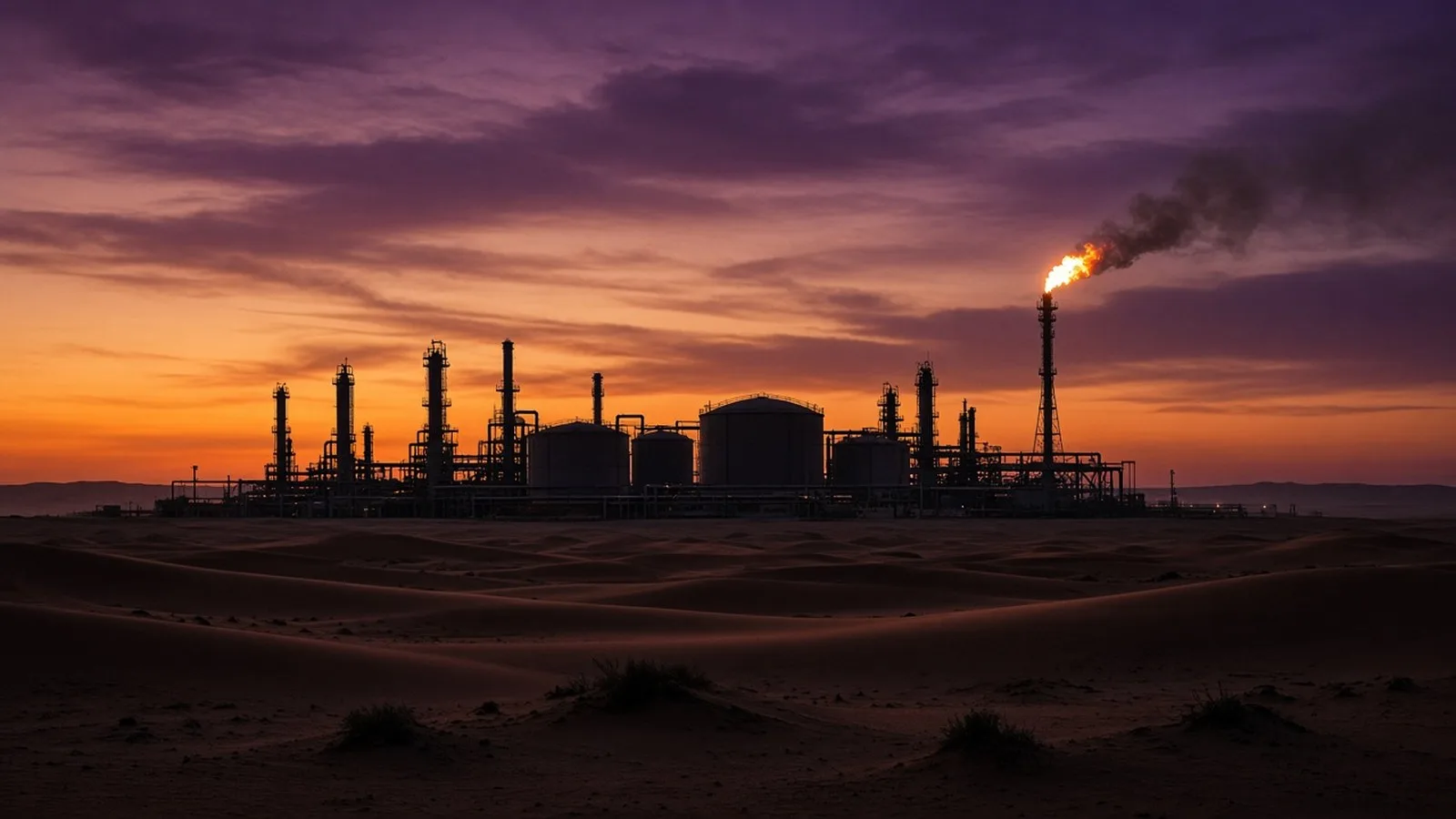
Earlier that day, Saudi air defences intercepted a drone that Saudi Arabia's energy ministry said was trying to hit a processing facility at Saudi Aramco's Shaybah oilfield. Shaybah lies in the remote south-east of the kingdom, near the border with the UAE. Falling debris killed two people, one Filipino and one Nepali, and injured two others, one Pakistani and one Indian. The debris set fire to a contractor's vehicle outside the facility's perimeter. The ministry said there was no impact on operations. It did not say who launched the drone.
Six drones intercepted, including over Madinah
The Saudi-led coalition fighting in Yemen said it intercepted six drones launched towards the kingdom on Wednesday. Spokesman Turki al-Malki said these included interceptions over the Eastern Province and the Madinah region, home to one of Islam's holiest sites, with a later drone downed over the south. Houthi military spokesman Yahya Saree denied that the group had carried out operations "deep" in Saudi territory. Because of these competing claims, responsibility for each individual strike is not independently confirmed.
Houthi strikes inside Yemen
The Houthis also hit targets held by the Saudi-backed government in Yemen. A Yemeni government military source and a local official told Reuters, via Dawn, that the group attacked Al-Rayan (Riyan) airport in Mukalla, the capital of Hadramout province. Saree said the target was military equipment that Saudi cargo planes had flown in; he gave no evidence. Xinhua reported, citing a local security official, that Houthi drones also targeted the area around the Al-Dhabba oil export terminal near Al-Shihr. The Hadramout local government said the earlier airport attack caused no casualties. Arab News reported a separate missile strike on Aden airport's runway.
Timeline: how we got here
| Date (2026) | Event |
|---|---|
| Late February | The US-Israeli war on Iran begins. Iran later attacks US facilities across the region (Reuters). |
| Early March | The US embassy in Riyadh and a CIA station it hosts are attacked by drones (Reuters). |
| July | Saudi Arabia strikes Sanaa airport to stop a Houthi delegation's plane returning from Iran. The Houthis declare the four-year truce over and announce a naval blockade on Saudi ships (CNN, TIME). |
| September | Houthi strikes on Saudi oil infrastructure, including the East-West pipeline, intensify, and airports become targets (CNN, TIME). |
| 10–11 October | Attacks on Riyadh's King Khalid International Airport. GACA said at least 12 people were killed and more than 300 injured on 10 October, and one more person died on 11 October (Al Jazeera). |
| 13–14 October | An attack on Aramco offices in Dhahran causes a limited fire. The Houthis vow more strikes on "Saudi depths" (TIME). |
| 21 October | Two killed at Shaybah. Six drones intercepted. The US orders non-emergency staff to leave Saudi Arabia. Houthi strikes in Hadramout. One killed and eight injured at Dammam airport. |
| 26 October | Egypt's parliament is due to vote on authorising military support for Saudi Arabia (Dawn). |
Why are the Houthis attacking Saudi Arabia now?
Saudi Arabia led a military coalition against the Houthis from 2015. A UN-brokered truce in April 2022 brought years of relative calm. According to CNN and TIME, that truce collapsed in July 2026. Saudi Arabia struck the Houthi-held airport in Sanaa to stop a plane carrying a Houthi delegation back from Iran. The Houthis responded by declaring the ceasefire dead, launching missiles at the kingdom and starting an offensive along Yemen's Red Sea coast.
The wider backdrop is the US-Israeli war on Iran, which began in late February. The Houthis are Iran's most important remaining regional ally, though analysts quoted by TIME say they also pursue their own agenda. Experts told TIME the strikes on airports and oil sites aim to put economic pressure on Riyadh, forcing it to lift what the Houthis call a blockade of their ports and airports and to recognise their authority in Sanaa. CNN's analysis also points to Saudi Arabia's split with the UAE late last year, which left gaps in the anti-Houthi coalition on the ground.
For travellers, the airport strikes have already caused major disruption. See our guides on the Riyadh airport closure and Saudi travel advice and airlines delaying their return to Saudi Arabia.
The US departure order: what it means
State Department spokesperson Tommy Pigott said in a post on X that the department had ordered the departure of "non-emergency US government employees and their family members in Saudi Arabia only". He cited Houthi attacks on "civilian airports and other critical infrastructure resulting in civilian casualties and severe travel disruptions". The BBC reported that the department also warned that "the hostilities have the potential to escalate rapidly". The US embassy in Riyadh issued a separate security alert about possible further attacks.
An "ordered departure" is mandatory for the staff it covers. It is a step above an "authorized departure", which is voluntary. The embassy does not close: essential diplomats stay and consular services may be reduced.
The scope is disputed. Four US officials told Reuters that US missions in other Gulf states would also order family members to leave. Pigott, however, said an earlier media report about departures across the Gulf was "inaccurate", and his statement covered Saudi Arabia only. As of this writing, the only confirmed order applies to Saudi Arabia.
The move is a reversal. Reuters noted that Washington had recently returned some diplomats to the region after pulling many out when Iran attacked US facilities earlier this year.
Egypt, Iran and other regional players
Egyptian President Abdel Fattah al-Sisi said Cairo's proposed military support for Riyadh would "defend Saudi territory, and does not include an attack on Yemen", according to state-linked Al-Qahera News as reported by Dawn and Reuters. Egypt's parliament has delayed its vote on authorising that support until 26 October.
Iran's foreign minister Abbas Araghchi warned that any outside interference in Yemen would make the conflict "more difficult" to resolve. He has also offered to help broker talks, but said Iran had received no response from Saudi Arabia or the Houthis (Reuters via CNBC).
Others have stepped in too. CNN reports that France and Britain have sent defensive support and that more than 100 US military advisers are assisting Saudi forces. Dawn reported that French President Emmanuel Macron arrived in Riyadh on a "solidarity visit", which comes as France deals with unrest at home.
Impact on oil and markets
- Crude prices: Reuters, via CNBC, reported that Brent crude settled at $108.79 a barrel on Tuesday, 20 October, after touching a five-month high of $111.99, and traded near $109–110 early on Wednesday. US benchmark WTI was around $97–98. Reports of crude "around $98" refer to WTI, not Brent.
- Shipping: Shiptracker Kpler counted at least 18 attacks on vessels over two weeks. Iranian media claimed a supertanker hit a mine south of the Strait of Hormuz. That claim, and other reports of explosions near Hormuz, have not been independently verified.
- Diesel: Diesel is especially tight. The EU average hit a record €2.24 a litre at the start of October (Euronews), and the IEA expects the diesel squeeze to last into 2027 (CNBC). US officials say they are working with refiners to raise output.
Read more in our explainer on Brent crude near $110.
What it means for India and Indian workers
India imports most of its crude, so prices near $110 add to pressure on inflation, the rupee and fuel costs. Indian markets have been watching crude closely, as our market outlook for 19–23 October explains.
The human cost is also direct. Saudi Arabia has a very large Indian community, and an Indian national was among those injured at Shaybah on Wednesday. Indian media reported that an Indian was killed in the 10 October Riyadh airport strike. The Indian Embassy in Riyadh has issued advisories telling Indians to follow Saudi emergency alerts, stay indoors and away from windows during aerial attacks, and avoid filming or gathering near attack sites (Mint, Business Standard). Indians in Saudi Arabia should keep checking the embassy's official channels for helpline numbers and updates.
What happens next?
- Further strikes: The Houthis have said strikes on Saudi targets will continue, and the US has warned hostilities could "escalate rapidly". More airport closures and flight cancellations are likely.
- More US departures: Watch whether other US missions in the Gulf announce family departures, as officials told Reuters they would.
- Egypt's vote on 26 October: A yes vote would bring Egyptian forces into Saudi Arabia's defence, though Sisi says they would not go into Yemen.
- Diplomacy: Iran's mediation offer, earlier US contacts with the Houthis in Oman, and the course of the wider war with Iran will shape whether this front cools or widens.
- Oil: Any hit that disrupts Saudi output or Red Sea and Gulf shipping could push Brent back above $110.
Sources
- Reuters (via Yahoo): US orders diplomats to depart Saudi Arabia amid Houthi strikes (21 Oct)
- Al Jazeera: US orders departure of personnel from Saudi Arabia (21 Oct)
- BBC: US State Department orders some staff to leave Saudi Arabia
- Al Jazeera: One killed, eight injured in attack on King Fahd airport (22 Oct)
- Saudi Press Agency: GACA statement on King Fahd International Airport
- Saudi Press Agency: Drone intercepted near Shaybah field
- The Hindu (AP): Two killed by falling debris at oil facility
- AFP (via Business Recorder): Coalition intercepts six drones
- Dawn: Saudis intercept more drones as conflict spirals (Sisi, Mukalla, Iran)
- Xinhua: Houthis intensify attacks on airport, oil terminal in Hadramout
- CNN: How a series of miscalculations restarted Saudi Arabia's war in Yemen
- TIME: Who are the Houthis and why are they attacking Saudi airports?
- CNBC (Reuters): Oil rises on Middle East supply worries
- Euronews: EU diesel hits new record
- Mint: India issues fresh advisory for nationals in Saudi Arabia