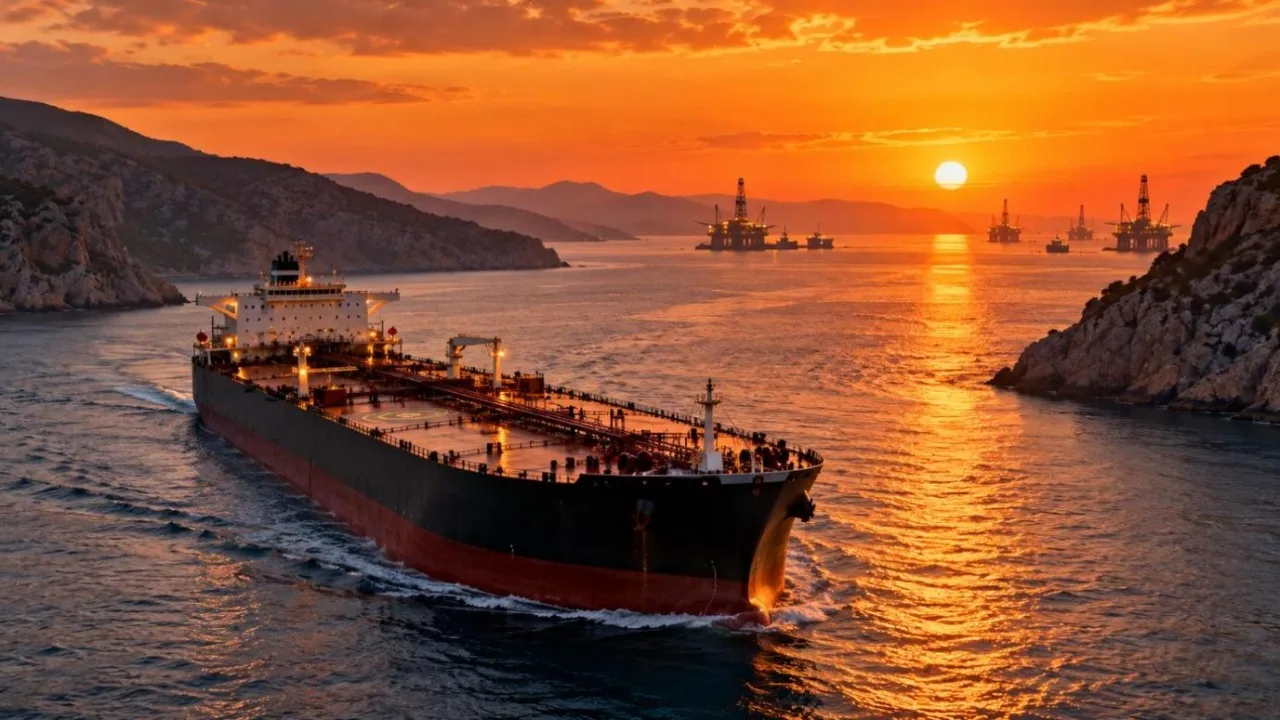
Oil prices are once again flirting with $110 a barrel. Brent crude, the global benchmark, touched about $110.70 on Monday, 19 October 2026, and was trading just above $110 on Tuesday morning. A fresh wave of attacks on Saudi energy sites and Gulf shipping is keeping a hefty risk premium in prices, outweighing Washington's move to ease sanctions on Russian energy. Here is what is driving the market and why it matters beyond the oil patch.
Prices this week
| Date | Brent | WTI (US) | Key event |
|---|---|---|---|
| Thu 14 Oct | About $106 | About $95 | Houthi strike on an Aramco building in Dhahran |
| Fri 16 Oct | About $105.50 | About $97.40 | Tanker attacks near Hormuz; US eases Russia sanctions |
| Mon 19 Oct | $109.55 (high ~$110.70) | $103.66 (Nov contract) | Weekend Houthi attack claims; tanker mine blast |
| Tue 20 Oct (morning) | About $110.07 | About $104 (Nov) | Gains continue |
The November WTI contract settled at its highest level since mid-September on 19 October, in thin trading before it expired on 20 October.
What is driving prices
1. Attacks on Saudi Arabia
On 14 October, a Houthi missile and drone attack hit an Aramco administrative building in Dhahran, causing a limited fire. Over the weekend of 18 October, the Yemen-based Houthis claimed further attacks on an Aramco facility in Yanbu, the Shaybah oilfield and airports in Riyadh and Abha. Saudi Arabia has not confirmed those claims, and Reuters could not verify them.
2. Shipping in the Strait of Hormuz
Iranian media reported that a tanker caught fire and exploded after hitting a naval mine in the southern Strait of Hormuz. The data firm Kpler said the seven-day average of crude flows through the region fell to about 8.5 million barrels a day last week from more than 20 million the week before, with at least 10 confirmed incidents involving commercial vessels.
3. A Russia sanctions waiver that has not calmed markets
On 16 October, President Trump signed an executive order waiving some sanctions and tariffs on Russian energy exports. Reuters reported that the administration wants lower energy prices before the 3 November midterm elections. But details of how and for how long the waiver will apply are unclear, and it does nothing to fix the physical disruption in the Gulf. We covered the waiver in detail in our earlier report.
How we got here
The Gulf has been the centre of the energy market all year. Iran's war with a US–Israel coalition led to the closure of the Strait of Hormuz in late February 2026, disrupting roughly a fifth of the world's oil supply in what the International Energy Agency called the largest supply disruption in oil market history. Brent peaked near $118 in late March. A ceasefire in April allowed traffic to resume partially, and Brent fell to about $70 in early July, before climbing back above $100 by late July as tensions rose again.
What analysts say
- Gelber and Associates: the waiver may free up more Russian fuel exports, but uncertainty over how it will be applied limits confidence in any lasting supply boost.
- Phillip Nova (Priyanka Sachdeva): the waiver does little about the physical disruption in Hormuz.
- SEB (Bjarne Schieldrop): higher Hormuz volumes may not last, because Iran could escalate before the US midterms.
- ING: prices remain supported by a sizeable geopolitical risk premium.
Why it matters to you
- Fuel and travel costs: higher crude feeds into petrol, diesel and airfares.
- Inflation and interest rates: Brent above $100 keeps pressure on central banks, including the US Federal Reserve, which meets on 27–28 October.
- Markets: energy stocks benefit, while airlines and other fuel-heavy sectors suffer.
What to watch
| Date | Event |
|---|---|
| 21 October | US EIA weekly petroleum inventory report |
| 26 October | Egypt’s parliament votes on military support for Saudi Arabia against the Houthis |
| 27–28 October | US Federal Reserve meeting |
| 3 November | US midterm elections |
| Ongoing | Details of the Russia waiver; shipping incidents in Hormuz |
For the interest-rate side of the story, read our report on US Treasury yields above 5%. This article is general information, not investment advice.
Frequently asked questions
Why are oil prices so high?
Attacks on Gulf shipping and Saudi energy infrastructure have disrupted flows through the Strait of Hormuz, adding a large geopolitical risk premium to prices.
What is the difference between Brent and WTI?
Brent is the international benchmark based on North Sea crude; WTI (West Texas Intermediate) is the main US benchmark.
Will the Russia sanctions waiver lower prices?
Analysts say it may add some supply, but uncertainty over its scope and the disruption in the Gulf limit its effect.
Sources
- Reuters via Yahoo Finance – Brent crude edges lower, even after Houthi attacks on Saudi infrastructure (19 Oct 2026)
- Grafa – Oil prices rise as Brent hits $110 amid Gulf tensions (20 Oct 2026)
- investingLive – Oil gains as Houthis strike Aramco and Iran flags new tactics against tankers (14 Oct 2026)
- CNBC – Brent oil tops $109 after Houthi militants claim attacks on Saudi airports and Aramco facilities (18 Oct 2026)