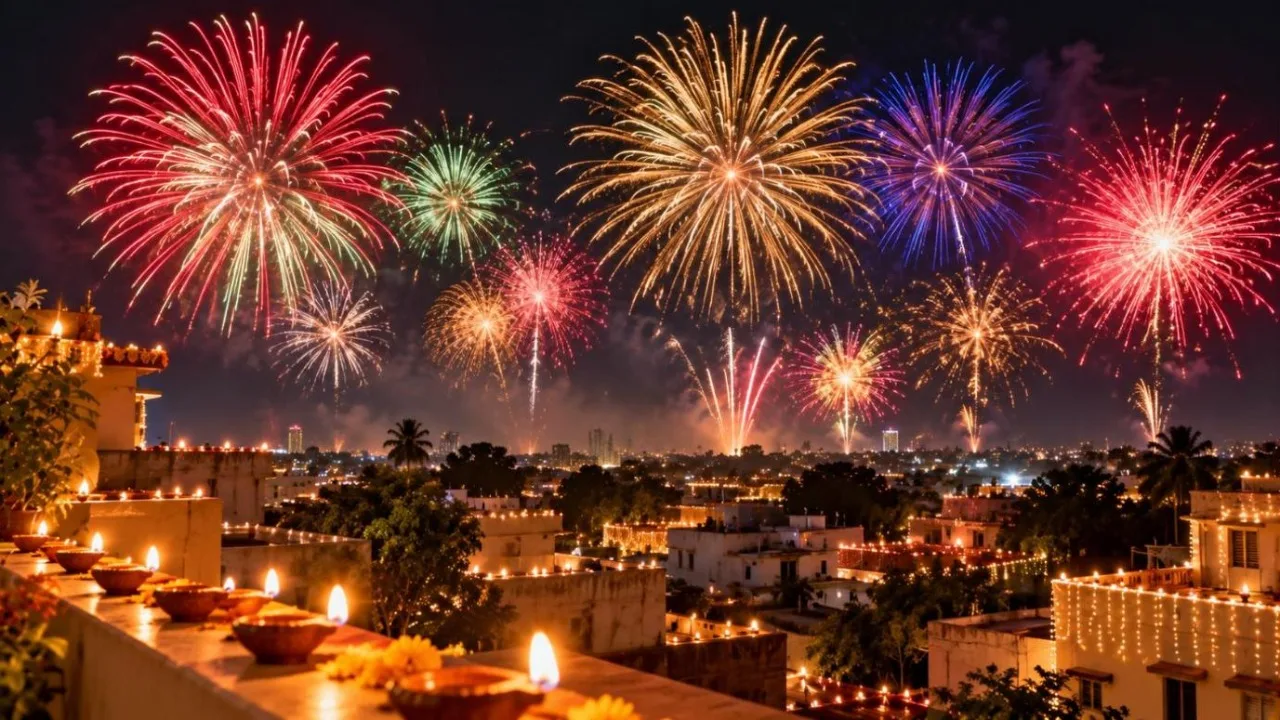
For most Indians, Diwali means diyas, sweets and the sound of crackers lighting up the night sky. Yet fireworks are a relatively recent addition to a festival that is thousands of years old. As debates about pollution and green crackers return every October, here is a look at how firecrackers became part of India's festive life.
Diwali before fireworks
Ancient texts describe Deepavali as a festival of lamps. People celebrated with rows of oil lamps, prayers, feasts and gifts. There are no references to explosive fireworks in early Diwali traditions because gunpowder had not yet been invented.
Gunpowder travels from China
Gunpowder was developed in China, probably around the 9th century. The Chinese used it in bamboo firecrackers and later in weapons and rockets. Knowledge of gunpowder spread west and south over the following centuries through trade, warfare and the movement of armies across Central Asia.
Fireworks in medieval India
By the 15th century, fireworks were clearly part of royal celebrations in India. A frequently cited account comes from the Persian envoy Abdur Razzaq, who visited the Vijayanagara Empire in 1443 and described dazzling displays during the Mahanavami festival. Historians, notably P. K. Gode, later collected references to fireworks at weddings, festivals and court celebrations across India between the 15th and 19th centuries.
Under the Mughals, aatish-baazi (fireworks displays) became a spectacle at weddings, royal birthdays and festivals including Diwali and Shab-e-Baraat. Paintings from the period show courts lit up by rockets and sparklers. For centuries, though, fireworks remained a luxury for royals and the rich.
Sivakasi: India's fireworks capital
The big change came in the 20th century in Sivakasi, a dry town in Tamil Nadu's Virudhunagar district. In the 1920s, two local entrepreneurs, P. Ayya Nadar and A. Shanmuga Nadar, travelled to Calcutta to learn match-making and started match factories back home. The hot, dry climate was ideal for drying chemicals and paper.
After the colonial government's explosives regulations allowed licensed manufacturing around 1940, Sivakasi's units moved into fireworks. Over the following decades, the town grew into the heart of India's industry, and today it is widely estimated to produce the large majority of the country's firecrackers, employing lakhs of workers directly and indirectly.
From luxury to mass celebration
Cheaper, mass-produced crackers from Sivakasi brought fireworks within reach of ordinary families. By the second half of the 20th century, bursting crackers had become a central part of Diwali in many parts of India, especially in cities.
The modern debate: pollution and safety
- Air quality: Diwali falls at the start of winter, when still air traps smoke. Crackers add to already high pollution in many north Indian cities.
- Noise and animals: loud bursts distress elderly people, infants and pets.
- Worker safety: accidents at fireworks units have repeatedly highlighted the risks faced by workers.
- Green crackers: scientists at CSIR-NEERI developed "green" crackers that are designed to reduce emissions compared with conventional ones, and courts and state governments have increasingly restricted the sale of traditional crackers.
The bottom line
Fireworks are only a few centuries old in India's long Diwali story, which began with simple lamps. Today's challenge is to balance tradition, livelihoods in places like Sivakasi, and the health of everyone who breathes the air after the celebrations.