The French Revolution is often remembered through dramatic images: the storming of the Bastille, the guillotine and the rise of Napoleon. But at its heart was something that will sound familiar to anyone following the news on government finances: a state drowning in debt, an unfair tax system and a public that had run out of patience. Between 1789 and 1799, France went from absolute monarchy to republic to military rule, and in the process spread ideas about rights, citizenship and democracy that still shape constitutions around the world, including India's.
A kingdom in financial trouble
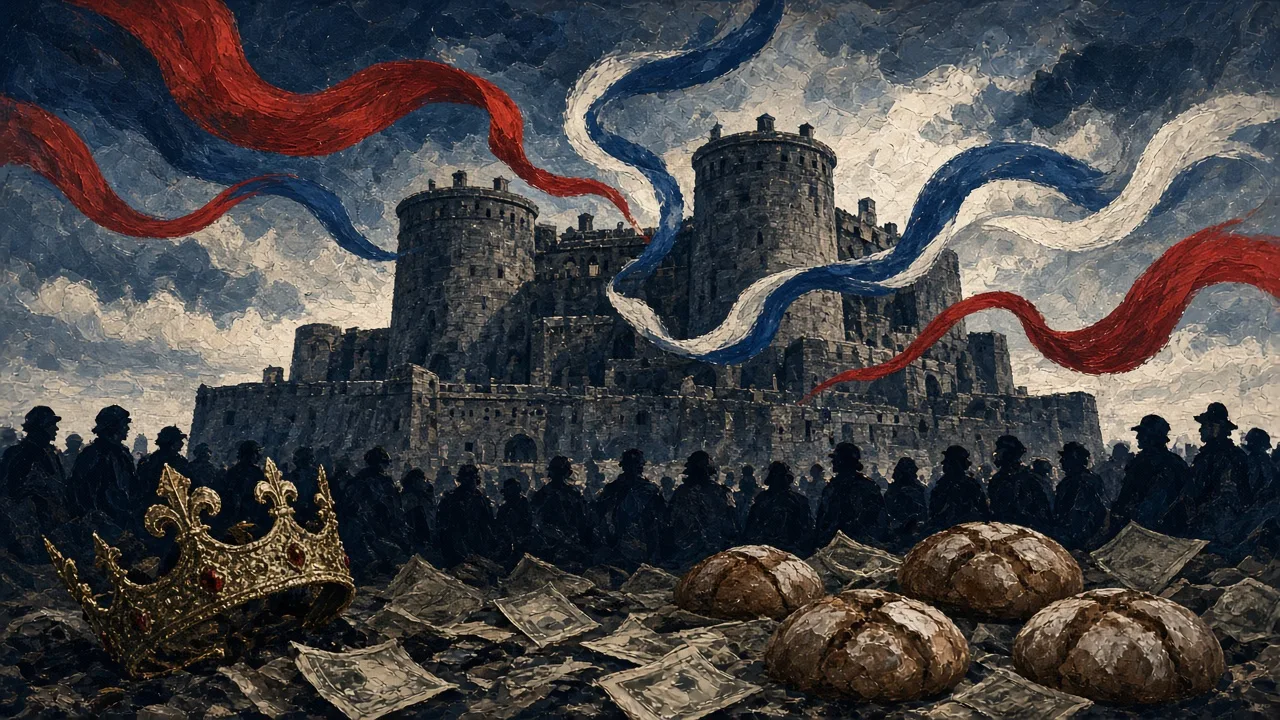
By the late 1780s, the French monarchy under Louis XVI was in deep financial difficulty. Costly wars, including France's support for the American Revolution, had added heavily to the national debt. At the same time, the tax system was riddled with privileges. Society was divided into three "estates": the clergy, the nobility and everyone else, the Third Estate, which made up the vast majority of the population. Much of the tax burden fell on the Third Estate, while many nobles and clergy enjoyed exemptions.
Poor harvests in the late 1780s pushed up bread prices, hitting ordinary families hard. When the government's attempts at financial reform failed, Louis XVI agreed to summon the Estates-General, a representative assembly that had not met since 1614.
From reform to revolution
The Estates-General opened at Versailles on May 5, 1789. Disputes over voting quickly erupted, because voting by estate meant the two privileged orders could outvote the Third Estate. In June, the Third Estate's deputies declared themselves a National Assembly. On June 20, locked out of their usual hall, they gathered at a nearby indoor tennis court and swore the Tennis Court Oath, vowing not to disperse until France had a constitution.
Tensions spilled onto the streets. On July 14, 1789, crowds in Paris stormed the Bastille, a royal fortress and prison and a powerful symbol of royal authority. The date is still celebrated as France's national day.
A declaration of rights
On August 26, 1789, the National Constituent Assembly adopted the Declaration of the Rights of Man and of the Citizen. It proclaimed that men are born and remain free and equal in rights, that sovereignty rests with the nation and that the law should be the same for everyone. The declaration had major blind spots: it did not extend equal rights to women, and the question of slavery in French colonies remained contested for years. Yet its language of universal rights became hugely influential.
Money, land and inflation
The revolutionaries still faced the debt crisis they had inherited. Their solution was bold. They nationalised Church property and issued assignats, according to Britannica first issued in December 1789 as interest-bearing bonds backed by the confiscated Church lands. Over time, assignats became paper currency. The government printed more and more to pay its bills, and by the mid-1790s they had lost much of their value. They were replaced in 1796. The episode is often cited by economists as an early case of inflation caused by excessive money printing.
Radicalisation and the Terror
As war broke out with other European monarchies and internal divisions deepened, the Revolution turned more radical. The monarchy was abolished in 1792 and France was declared a republic. Louis XVI was tried and executed by guillotine on January 21, 1793. During the period known as the Reign of Terror (roughly 1793-94), the Committee of Public Safety, in which Maximilien Robespierre was a leading figure, oversaw mass arrests and executions of people deemed enemies of the Revolution. Robespierre himself was overthrown and executed in July 1794.
A more moderate government, the Directory, followed, but it struggled with economic problems, corruption and war. In November 1799, the general Napoleon Bonaparte seized power in a coup, bringing the revolutionary decade to a close.
Timeline: key moments
- May 5, 1789: The Estates-General opens at Versailles.
- June 20, 1789: The Third Estate takes the Tennis Court Oath.
- July 14, 1789: Crowds storm the Bastille in Paris.
- August 26, 1789: The Declaration of the Rights of Man and of the Citizen is adopted.
- December 1789: The first assignats are issued.
- September 1792: The monarchy is abolished and a republic proclaimed.
- January 21, 1793: Louis XVI is executed.
- 1793-94: The Reign of Terror.
- November 1799: Napoleon Bonaparte seizes power.
What the Revolution left behind
- The language of rights and citizenship. The ideals of liberty, equality and fraternity became a rallying cry for movements far beyond France.
- The end of feudal privileges. Legal distinctions between nobles and commoners were abolished, and careers were, in principle, opened to talent.
- Modern administration. The revolutionary era introduced the metric system and reorganised France into departments. Napoleon's later Civil Code influenced legal systems in many countries.
- The left-right divide. The habit of describing politics as "left" and "right" comes from where factions sat in the revolutionary assemblies.
Why it matters today
The French Revolution is not just a European story. Its lessons echo in finance, politics and governance today.
- Public debt can topple governments. France's crisis began with unsustainable borrowing and a tax system seen as unfair. Today, high debt and tax fairness remain flashpoints in many countries.
- Printing money has limits. The collapse of the assignats is an early warning about financing deficits by printing currency, a lesson central banks, including the Reserve Bank of India, keep in mind when they talk about inflation.
- Food prices are political. Bread prices helped fuel unrest in 1789. In India, the price of onions, tomatoes or pulses can become a major political issue, a reminder that inflation hits households first at the kitchen table.
- Rights in constitutions. The idea that citizens hold fundamental rights that the state must respect runs through modern constitutions. The Preamble to the Constitution of India speaks of liberty, equality and fraternity, words that many readers will immediately associate with the French Revolution, though India's framers drew on many traditions.
- Revolutions can devour their ideals. The Terror and Napoleon's rise show how quickly a movement for freedom can slide into violence and authoritarianism, a warning that still applies.
More than two centuries later, the French Revolution remains a case study in how economic stress, inequality and new ideas can combine to overturn an old order almost overnight.