For 28 years, a wall of concrete, wire and watchtowers split the city of Berlin in two. It became the most powerful symbol of the Cold War, the decades-long standoff between the US-led West and the Soviet-led East. Then, on the night of November 9, 1989, after a confused announcement at a press conference, crowds surged to the checkpoints and the border opened. Within a year Germany was reunified, and within about two years the Soviet Union itself had ceased to exist. The ripple effects reached far beyond Europe, including to India, where the collapse of a key trading partner was one of the pressures behind the economic reforms of 1991.
Why Berlin was divided
After Germany's defeat in World War II in 1945, the country was divided into occupation zones controlled by the United States, Britain, France and the Soviet Union. Berlin, deep inside the Soviet zone, was also split into four sectors. As Cold War tensions grew, two German states emerged in 1949: the Federal Republic of Germany (West Germany) and the German Democratic Republic (East Germany, or GDR), aligned with the Soviet Union.
West Berlin remained an island of the West inside East Germany. Through the 1950s, large numbers of East Germans, many of them young and skilled, left for the West through Berlin, draining the GDR's workforce and embarrassing its leadership.
Building the wall
In the early hours of August 13, 1961, East German forces began sealing the border around West Berlin with barbed wire and barriers, soon replaced by concrete walls. Over the years the system was expanded into a heavily fortified "death strip". According to East German border troop figures cited by the Berlin Wall Foundation's Chronicle of the Wall, the barrier was about 156 km long by 1989, with around 43 km running through the city itself and the rest encircling West Berlin.
The human cost was serious. The Berlin Wall Foundation states that between 1961 and 1989, at least 140 people were killed at the Wall or died in connection with the GDR border regime, including people shot while trying to escape. Families were separated for decades.
Winds of change in the 1980s
By the late 1980s, the Soviet bloc was under severe strain. Economies were stagnating, and Soviet leader Mikhail Gorbachev launched reforms known as glasnost (openness) and perestroika (restructuring). He signalled that the Soviet Union would be less willing to use force to keep allied regimes in power.
In 1989, change swept across Eastern Europe. Hungary began dismantling its border fence with Austria, creating an escape route for East Germans. In East Germany, peaceful mass demonstrations, especially in Leipzig, demanded freedom to travel and political reform.
The night of November 9, 1989
Under mounting pressure, the East German leadership drafted new, more relaxed travel rules. On the evening of November 9, Politburo spokesman Günter Schabowski announced the rules at a televised press conference. Asked when they took effect, he said, according to the German government's chronicle, that they applied immediately, without delay. In fact, the details had not been properly communicated to border guards.
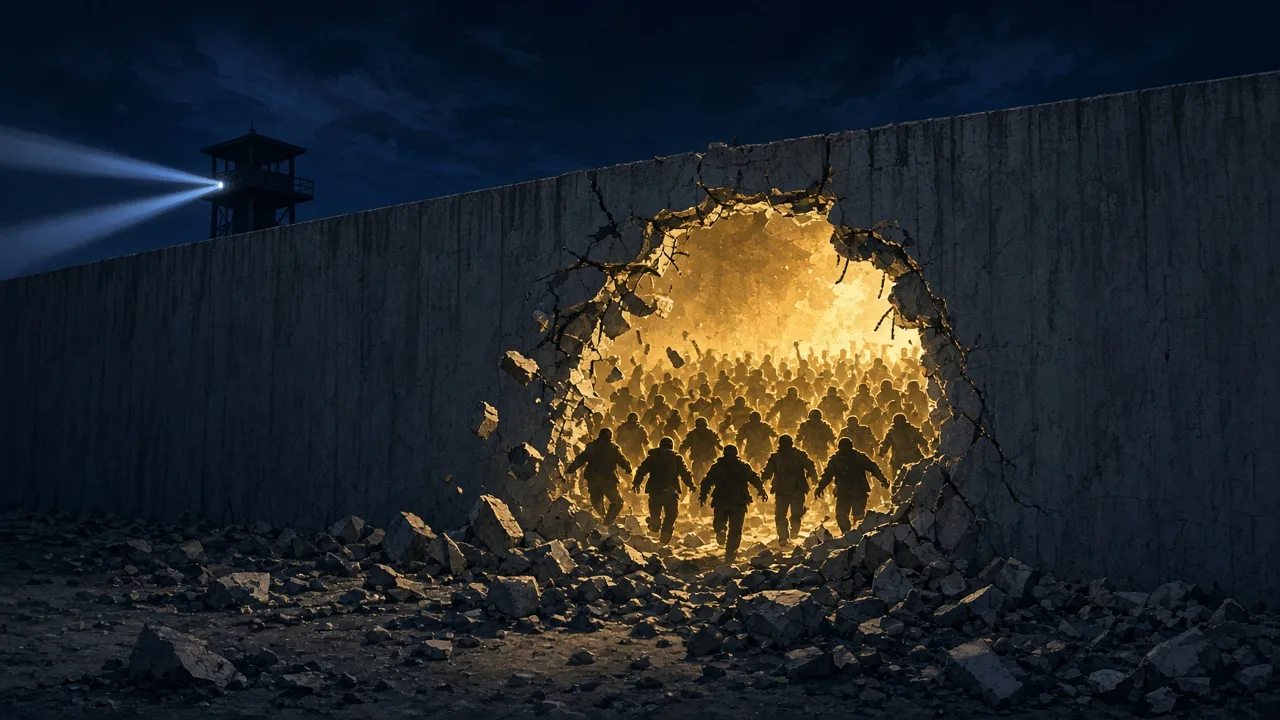
As the news spread, thousands of East Berliners rushed to the border crossings. At the Bornholmer Strasse checkpoint, overwhelmed guards opened the gates that night, and others followed. Crowds celebrated on top of the wall, and people began chipping away pieces of it. The Berlin Wall Foundation notes that the first segments were knocked out near Bernauer Strasse on the night of November 10 to create a new crossing.
From reunification to the end of the USSR
Events moved quickly. Germany was formally reunified on October 3, 1990. Across Eastern Europe, communist governments fell. In the Soviet Union, a failed coup attempt in August 1991 weakened the central government, and republics declared independence. Gorbachev resigned on December 25, 1991, and the Soviet Union was formally dissolved the next day. The Cold War was over.
Timeline: key moments
- 1949: Two German states are founded, West Germany and East Germany.
- August 13, 1961: East Germany begins sealing off West Berlin.
- 1985: Mikhail Gorbachev becomes Soviet leader and later launches reforms.
- 1989: Hungary opens its border; mass protests grow in East Germany.
- November 9, 1989: Schabowski's announcement; border crossings open that night.
- October 3, 1990: Germany is reunified.
- December 26, 1991: The Soviet Union is formally dissolved.
The India connection
The end of the Cold War reshaped India's economic and foreign policy. The Soviet Union had been a major trading partner and a key source of defence equipment, and much trade was conducted under special rupee-based arrangements. Its collapse disrupted that trade at a difficult moment.
In 1990-91, India faced a severe balance of payments crisis, driven by factors including the oil price shock from the Gulf War, lower remittances and exports, and political uncertainty, with the disruption of trade with the Soviet Union adding to the strain. In his Budget speech of July 24, 1991, Finance Minister Manmohan Singh described how foreign exchange reserves had fallen to levels that could pay for only about a fortnight's imports. The crisis set the stage for the liberalisation reforms of 1991, which opened India's economy to greater trade and investment. India also began rebalancing its foreign relations, building closer ties with the United States, Europe and East Asia while maintaining its relationship with Russia.
Why it matters today
- Walls cannot stop ideas forever. The Wall was built to keep people in, yet information, television broadcasts and the desire for freedom eventually overwhelmed it.
- Economic performance matters. The stagnation of planned economies was a key reason the Soviet bloc lost legitimacy. That lesson influenced reform debates in many countries, including India.
- Small mistakes can trigger big shifts. A muddled announcement at a press conference helped open the border. History often turns on chance as well as deep trends.
- The 1991 reforms began in a global shock. Many of the opportunities India's economy enjoys today, from IT services to foreign investment, trace back to reforms adopted amid the upheaval of 1990-91.
- Great-power rivalry has returned. Tensions between Russia and the West, and the rise of US-China competition, show that the post-Cold War order was not the end of history. India's careful balancing of partnerships reflects lessons learned when the old order collapsed.
Today, short fragments of the Wall stand in Berlin and in cities around the world as reminders of a divided era, and of how quickly that division ended.
Sources
- Berlin Wall Foundation: Victims at the Berlin Wall
- Berlin Wall Foundation: Bernauer Strasse
- Chronik der Mauer: FAQs (in German)
- German Federal Government: Chronicle of German Unity, November 9, 1989 (in German)
- US Office of the Historian: The Berlin Wall Falls and the USSR Dissolves
- Union Budget 1991-92: Speech of Finance Minister Manmohan Singh