This is Part 6 of Flavours of India, our series on India's regional cuisines. Start from Part 1: Chettinad or read the previous part, Part 5: Hyderabadi biryani.
Gujarat's cuisine is largely vegetarian, shaped by Jain and Vaishnav traditions and by a dry climate that encouraged clever use of pulses, gram flour and preserved foods. Its signature is balance: a touch of sugar or jaggery, a squeeze of lemon and a little heat often appear in the same dish.
What makes Gujarati cuisine special
- The thali: a single meal of dal, kadhi, shaak (vegetables), rotli, rice, farsan, pickles and a sweet.
- Farsan: savoury snacks such as dhokla, khandvi, fafda, handvo and patra.
- Gram flour (besan): the base of many snacks and the yoghurt curry, kadhi.
- Regional styles: Kathiawadi food is spicier, Surti food is known for undhiyu and locho, and Kutchi cooking uses millets like bajra.
Khaman vs dhokla
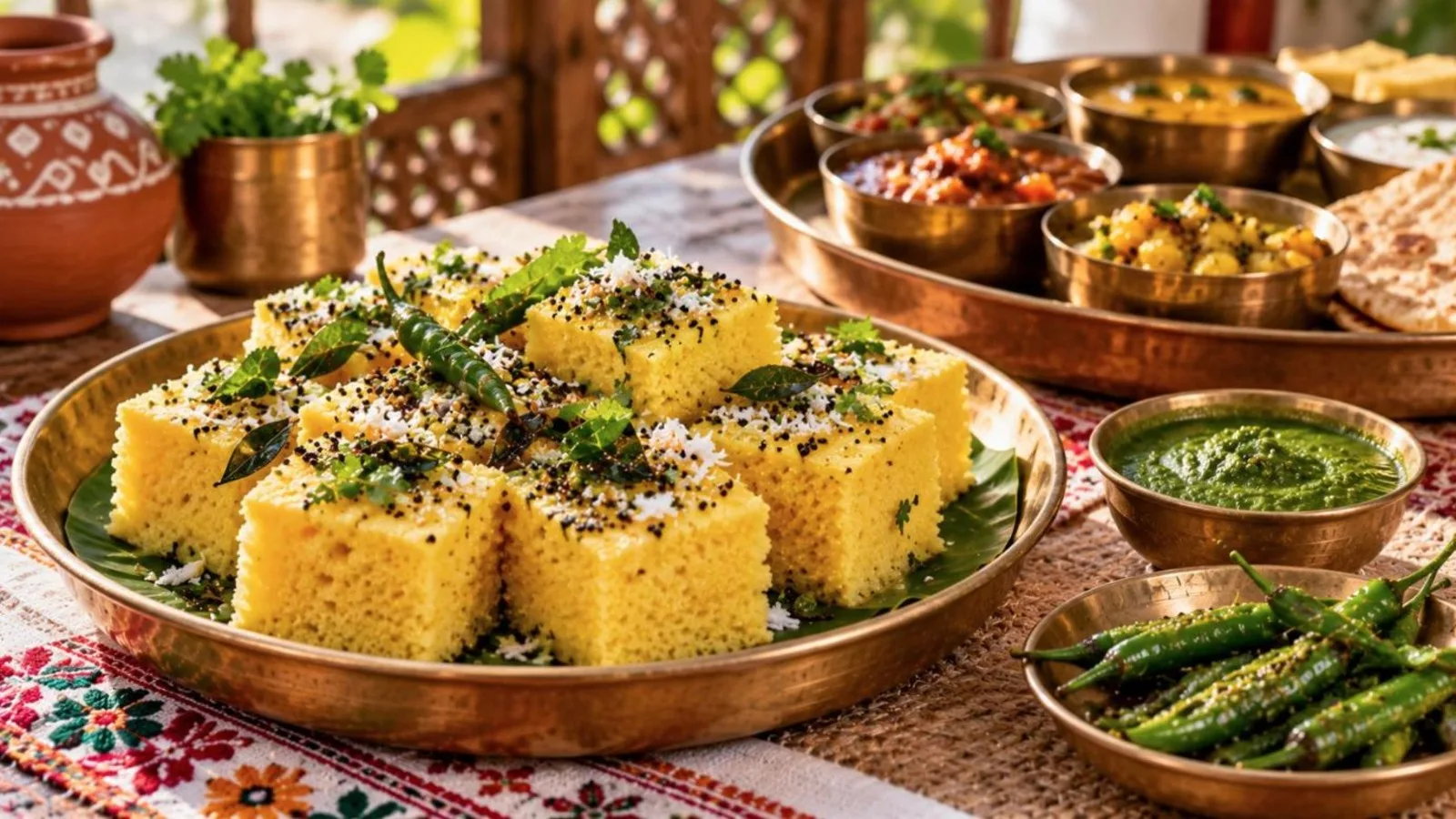
The two names are often used interchangeably, but strictly speaking dhokla is made from a fermented rice and lentil batter, while khaman is made from gram flour and is lighter and more yellow. Most "dhokla" sold outside Gujarat is actually khaman, which is what this recipe makes.
Khaman dhokla recipe
Serves: 4 · Prep: 10 minutes · Cook: 20 minutes
For the batter
- 1 1/2 cups besan (gram flour), sifted
- 1 tbsp semolina (optional, for texture)
- 1 tbsp sugar and 3/4 tsp salt
- 1 tsp ginger-green chilli paste
- 1/4 tsp turmeric
- 1 tbsp lemon juice and 1 tbsp oil
- About 1 cup water
- 1 1/2 tsp Eno fruit salt (or 1 tsp baking soda)
For the tempering
- 2 tbsp oil, 1 tsp mustard seeds, 1 tsp sesame seeds
- 2 green chillies, slit, and 10 curry leaves
- A pinch of hing
- 1/2 cup water with 1 1/2 tbsp sugar and 1 tbsp lemon juice
- Coriander and grated coconut to garnish
Method
- Grease a 7-8 inch tin and heat water in a steamer or large pan.
- Whisk besan, semolina, sugar, salt, turmeric, ginger-chilli paste, lemon juice and oil with water into a smooth, thick but pourable batter. Rest for 10 minutes.
- Just before steaming, add Eno with 1 tsp water on top and stir gently in one direction. The batter will turn frothy and nearly double.
- Pour immediately into the tin and steam on medium-high heat for 15-18 minutes, until a toothpick comes out clean. Don't open the lid for the first 12 minutes.
- Cool for 5 minutes and cut into squares.
- For the tempering, heat oil and add mustard seeds, sesame, hing, curry leaves and chillies. Add the sugar-lemon water, bring to a boil and pour evenly over the dhokla.
- Garnish with coriander and coconut and let it soak for a few minutes.
Tips
- Work fast after adding Eno; the bubbles are what make it spongy.
- A dense dhokla usually means the batter was too thick or the fruit salt was old.
- The sweet-sour tempering water keeps the dhokla moist and soft.
How to serve
Serve with green chutney, sweet tamarind chutney and fried green chillies, with a cup of masala chai.
Other Gujarati dishes to try
- Undhiyu: a winter mixed-vegetable dish slow-cooked with fenugreek dumplings.
- Khandvi: silky rolls of gram flour and buttermilk.
- Thepla: spiced fenugreek flatbreads, perfect for travel.
- Gujarati kadhi: a sweet-sour yoghurt curry.
- Shrikhand: strained yoghurt sweetened with sugar, saffron and cardamom.
Next in Flavours of India: Rajasthan's dal baati churma.