
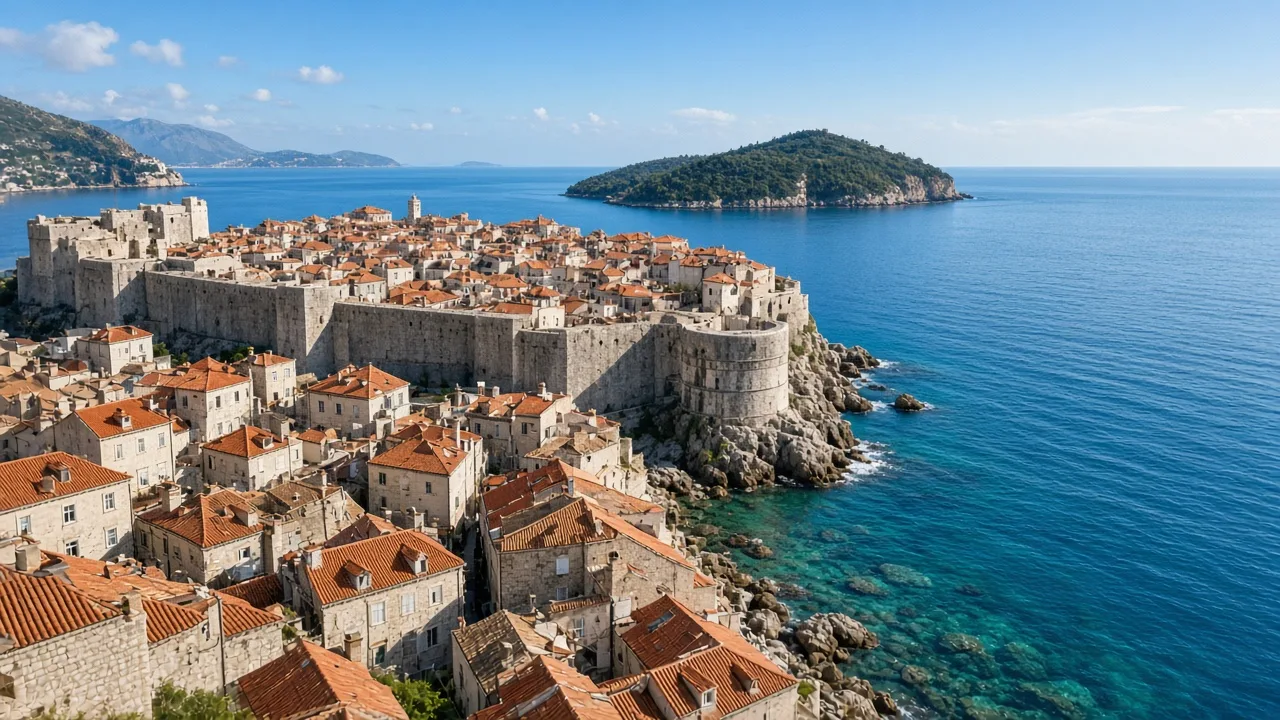
Dubrovnik, the "Pearl of the Adriatic", is a walled medieval city of limestone streets and terracotta roofs on Croatia's southern coast. The Old City is a UNESCO World Heritage site and one of Europe's most visited small cities, thanks partly to its starring role as King's Landing in Game of Thrones. It is beautiful but small, so timing your visit around the crowds is the key to enjoying it.
Why go
Walking the city walls above the sea is one of Europe's great experiences. Inside the walls you will find the Stradun, Dubrovnik's polished main street, along with Renaissance palaces, monasteries and hidden stairways. Beyond them are the island of Lokrum, the Elaphiti Islands, the oysters of Ston and easy day trips to Montenegro and Bosnia and Herzegovina.
Best time to visit
- May to June and September to October: warm sea, long days and fewer visitors than midsummer. This is the best time for most travellers.
- July and August: hot and busy. The Dubrovnik Summer Festival fills the city with theatre and music.
- Winter (November to March): mild by northern European standards, but many restaurants and hotels close, and ferries to the islands are reduced. Winter 2026-27 is ideal if you want to walk the walls in peace. The city stages a festive programme in December, and lower winter prices apply at many sights.
Top things to do
- City walls: a roughly 2 km circuit with views over the rooftops and sea. Start early in the morning or in the late afternoon to avoid heat and crowds. The ticket also covers Fort Lovrijenac.
- Stradun and the Old Town: the Rector's Palace, the Franciscan Monastery and its old pharmacy, and the Dominican Monastery.
- Cable car to Mount Srđ: panoramic views, especially at sunset.
- Lokrum Island: a short boat ride away, with botanical gardens, rocky swimming spots and peacocks.
- Sea kayaking: paddle around the walls and to Lokrum.
- Game of Thrones locations: Fort Lovrijenac, the Jesuit Stairs and other filming sites.
- Day trips: Ston for walls and oysters, the Elaphiti Islands, Kotor in Montenegro, and Mostar in Bosnia and Herzegovina (bring your passport).
Where to stay by area
- Old Town: magical once the day-trippers leave, but expensive, with many steps and limited vehicle access.
- Ploče: just east of the walls, with hotels overlooking the Old Town and Lokrum.
- Pile and Boninovo: walking distance to the Pile Gate, with a mix of guesthouses and hotels.
- Lapad and Babin Kuk: beaches, promenades and resort hotels, connected by frequent buses.
- Cavtat: a calmer seaside town near the airport, linked by boat in summer.
Getting there and around
Dubrovnik Airport is about 20 km south of the city, and airport shuttle buses and taxis run to the Old Town. Dubrovnik is also reached by ferry and catamaran from Split and the islands, and by bus along the coast. Within the city, Libertas buses are cheap and frequent. The Old Town itself is pedestrian-only. Driving into the centre is not recommended, as parking is scarce and expensive.
Indicative budget
Approximate per person per day in high season:
- Budget: about €70 to €110 with a hostel or private room, bakery and market food, and buses.
- Mid-range: about €180 to €300 for a hotel or apartment, restaurant meals and the city walls.
- Luxury: €450 and up for Old Town boutique hotels or Ploče resorts.
A city walls ticket costs about €40 for adults in the main season, with a reduced price in winter. Croatia uses the euro.
Practical tips: entry rules, taxes and crowd rules
- Entry: Croatia is in the Schengen Area, so the 90-in-180-day rule applies to visa-exempt visitors. The EU Entry/Exit System applies at external borders, including crossings to Montenegro and Bosnia and Herzegovina on day trips. ETIAS is not yet operating.
- Tourist tax: Dubrovnik-Neretva County sets a per-person, per-night tourist tax. In Dubrovnik it is about €2.65 in the high season (April to September) and lower the rest of the year. It is collected by your accommodation.
- Crowd management: under its "Respect the City" plan, Dubrovnik limits the number of cruise ships calling each day and staggers their arrivals. Check cruise schedules online and plan Old Town visits for when fewer ships are in port.
- Behaviour rules: the city has fined visitors for walking around the Old Town in swimwear or shirtless, and for sitting on monuments or eating in certain areas. Keep beachwear for the beach.
- Footwear: the polished limestone is slippery. Wear shoes with good grip.
FAQ
How many days do I need in Dubrovnik? Two to three days covers the city. Add days for Lokrum, the Elaphiti Islands or Kotor.
Do I need to book the city walls in advance? It is not required, but online tickets are available from the official operator and can save time.
Is Dubrovnik worth visiting in winter? Yes, if you prefer calm streets and lower prices. Many seasonal businesses close, though.


