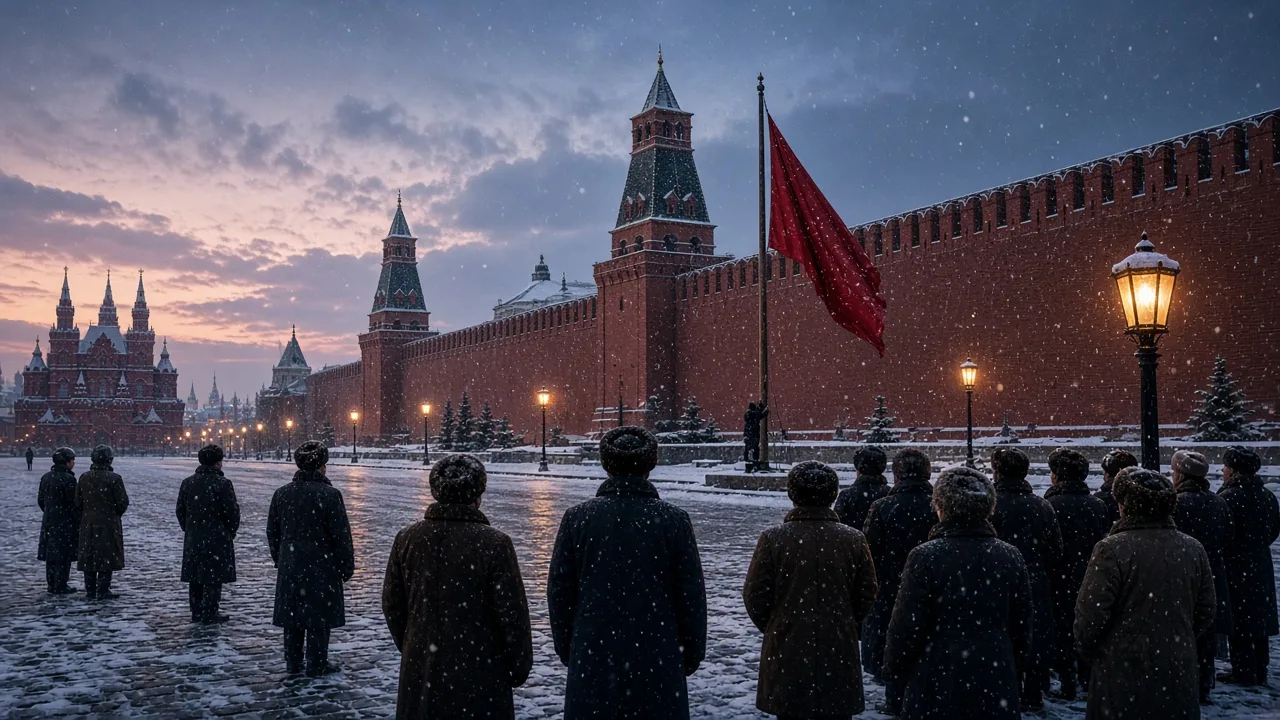
On the evening of December 25, 1991, the red hammer-and-sickle flag was lowered over the Kremlin for the last time. Mikhail Gorbachev had just resigned as president of a country that was ceasing to exist. Within days, the Union of Soviet Socialist Republics, a nuclear superpower that had rivalled the United States for more than four decades, was replaced by 15 independent countries. It was one of the most dramatic and largely peaceful collapses of a great power in history, and it forced India to rethink its economy and its foreign policy almost overnight.
A superpower in trouble
By the early 1980s, the Soviet Union was facing deep problems. Its centrally planned economy was stagnating, consumer goods were scarce and technology lagged behind the West. Heavy military spending and the costly war in Afghanistan, which began in 1979, drained resources. The economy also relied heavily on oil exports, and the fall in world oil prices in the mid-1980s hit government finances hard.
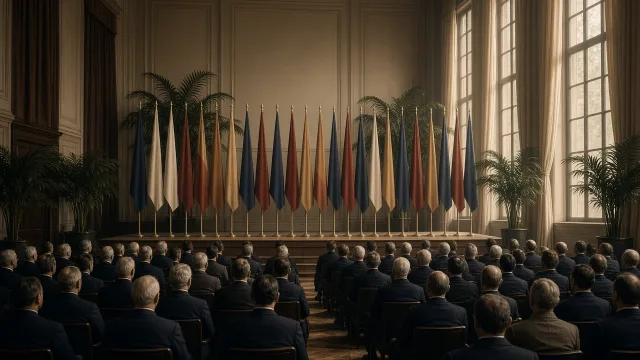
The country was also a union of many nations. Russians were the largest group, but Ukrainians, Kazakhs, Georgians, Lithuanians and many others had their own languages, histories and grievances, held in check by the Communist Party and the security services.
Gorbachev's gamble
Mikhail Gorbachev became leader of the Communist Party in March 1985, aiming to revive the system rather than end it. He launched perestroika (restructuring) to reform the economy and glasnost (openness) to allow more public debate. The Chernobyl nuclear disaster of April 26, 1986, and the government's initial secrecy about it, became a powerful argument for more openness.
Glasnost unleashed criticism that the leadership could not control. Newspapers exposed past crimes, including Stalin-era repression, and independent movements emerged. Economic reforms, meanwhile, disrupted the old system without creating a working market, leading to shortages and rising prices. In 1989, Gorbachev allowed Eastern European countries to go their own way, and communist regimes there fell one after another, including East Germany after the Berlin Wall opened.
The republics break away
Nationalist movements grew inside the Soviet Union itself. Lithuania declared its independence in March 1990, and other republics, including Russia under its newly elected leader Boris Yeltsin, declared their sovereignty. In January 1991, Soviet troops used force in Lithuania and Latvia, killing civilians and hardening opposition. Gorbachev tried to hold the country together with a new union treaty that would give the republics much more power.
The August coup
On August 19, 1991, the day before the new treaty was due to be signed, hardline Communist officials placed Gorbachev under house arrest at his holiday home in Crimea and declared a state of emergency. Tanks rolled into Moscow. But crowds gathered to defend the Russian parliament building, and Yeltsin famously climbed onto a tank to denounce the coup. Some military units refused to act, and the coup collapsed within three days.
The coup's failure destroyed what remained of central authority. Yeltsin's power rose, the Communist Party was suspended in Russia, and republic after republic declared independence, including Ukraine on August 24, 1991.
The end of the USSR
On December 8, 1991, the leaders of Russia, Ukraine and Belarus met near Brest in Belarus and declared that the Soviet Union had ceased to exist, creating a Commonwealth of Independent States (CIS) in its place. On December 21, eleven former republics joined the CIS at a meeting in Alma-Ata (now Almaty). Gorbachev resigned on December 25, and the Soviet parliament formally dissolved the union the next day. Some sources, including Britannica, give December 31, 1991, as the date the dissolution was completed.
Russia took over the Soviet Union's seat on the UN Security Council. The 1990s brought deep economic hardship to Russia and many other former republics as they moved, painfully, towards market economies.
Timeline: key moments
- 1979: The Soviet war in Afghanistan begins.
- March 1985: Gorbachev becomes Communist Party leader.
- April 26, 1986: The Chernobyl disaster.
- 1989: Communist regimes fall across Eastern Europe.
- March 1990: Lithuania declares independence.
- August 19-21, 1991: The failed coup in Moscow.
- August 24, 1991: Ukraine declares independence.
- December 8, 1991: Russia, Ukraine and Belarus sign the Belovezha Accords.
- December 25, 1991: Gorbachev resigns; the Soviet flag is lowered.
- December 26, 1991: The Soviet Union is formally dissolved.
The India connection
For India, the Soviet collapse was a major shock. The two countries had signed a Treaty of Peace, Friendship and Cooperation in 1971, and the Soviet Union had been a leading supplier of defence equipment, a diplomatic supporter and an important trading partner, with much trade settled in rupees rather than scarce dollars.
The disruption came just as India faced its 1991 balance-of-payments crisis. In his Budget speech of July 24, 1991, Finance Minister Manmohan Singh noted that foreign exchange reserves were enough to pay for only about a fortnight's imports. The crisis, driven by several factors including the Gulf War oil shock, helped trigger the liberalisation reforms of 1991. Defence planners, meanwhile, had to find new ways to source spare parts for Soviet-built equipment scattered across newly independent states.
India adapted by building relations with the new Russian state, signing a new Treaty of Friendship and Cooperation in 1993 and a strategic partnership in 2000, while also opening up to the United States, Europe and East Asia. That multi-directional diplomacy remains a feature of Indian foreign policy today.
Why it matters today
- Economies decide the fate of superpowers. Military strength could not save a system that failed to deliver prosperity.
- Reform is risky. Opening up a rigid system without a clear path can unleash forces leaders cannot control.
- The breakup still shapes geopolitics. Many of today's conflicts and tensions in Eastern Europe and Central Asia have roots in 1991.
- Diversified partnerships are a safety net. India learned in 1991 the danger of relying too heavily on a single partner, a lesson reflected in its balancing between major powers today.
Frequently asked questions
When did the Soviet Union collapse?
The Soviet Union formally dissolved in late December 1991. Gorbachev resigned on December 25, and the Soviet parliament declared the union dissolved on December 26. Some sources date the completion to December 31.
Why did the Soviet Union collapse?
Historians point to a combination of economic stagnation, falling oil revenues, the costly Afghan war, nationalist movements in the republics, Gorbachev's reforms and the failed coup of August 1991.
How did the Soviet collapse affect India?
India lost a major trade and defence partner just as it faced a severe balance-of-payments crisis. The shock contributed to India's 1991 economic reforms and a broader, more diversified foreign policy.